

When planning stretcher transport in Austin, preparation is critical to ensuring safety, comfort, and a smooth experience. Here’s what you need to know:
- Stretcher Transport Basics: Designed for patients needing to stay horizontal during travel, this service is ideal for those recovering from surgery, with chronic conditions, or severe mobility issues. It’s a cost-effective alternative to emergency ambulance services for non-urgent needs.
- Key Requirements: Essential documents like a Physician Certification Statement (PCS) and medical records are required, especially for Medicare coverage. Ensure all paperwork is accurate and complete.
- Patient Preparation: Explain the process to the patient, dress them appropriately, and pack essentials like medications or comfort items. Address emotional needs to help reduce anxiety.
- Provider Standards: Choose a provider that complies with ADA and Texas healthcare regulations, offering secure vehicles and trained staff.
- Why Zyvra Mobility? They offer reliable, patient-focused services with ADA-compliant vehicles, trained professionals, and features like AI-powered scheduling and real-time tracking.
Proper planning – from gathering documents to preparing the patient – ensures a safe and stress-free transport experience.
Patient Transport: Transporting a Patient on a Stretcher
What Is Stretcher Transport in Austin?
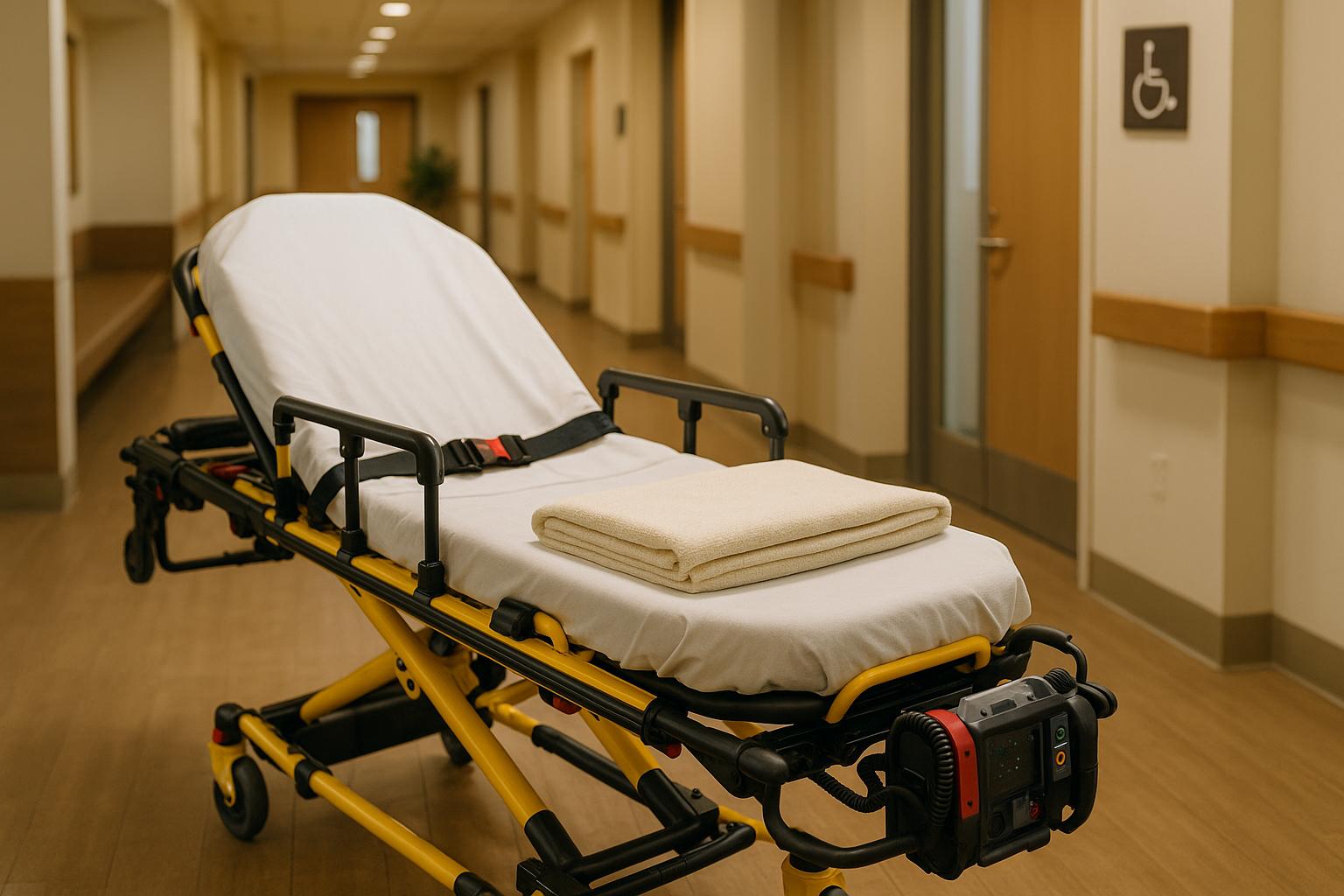
Stretcher transport is a type of non-emergency medical transportation (NEMT) designed for patients who need to remain in a horizontal, secure position during travel. This service is ideal for individuals who cannot safely sit upright in standard seating. The vehicles used are specially outfitted with securement systems to keep the stretcher stable and are typically staffed by two trained professionals who handle safe loading and unloading. For non-urgent medical appointments or treatments, stretcher transport offers a more budget-friendly option compared to emergency ambulance services. While ambulances are equipped for critical, life-threatening situations with advanced medical support, stretcher transport focuses on comfort and safety for planned medical trips.
Patients Who Benefit from Stretcher Transport
This service caters to a variety of patients with mobility challenges. It’s commonly used by individuals recovering from surgery, bariatric patients weighing between 300 and 500 pounds, elderly individuals with severe mobility restrictions, and those with chronic illnesses or conditions that make ambulatory or wheelchair transport unsafe.
Meeting Local and ADA Standards
In Austin, stretcher transport providers must follow strict regulations to ensure accessibility and patient safety. These include compliance with the Americans with Disabilities Act (ADA) and specific Texas state laws. The ADA Accessibility Guidelines for Transportation Vehicles (36 CFR Part 1192) outline requirements like slip-resistant flooring, clear doorways, handrails, and accommodations for mobility aids. Additionally, providers must adhere to the Texas Architectural Barriers Act and Texas Accessibility Standards (TAS), along with other state codes.
Stretcher transport vehicles must also be wheelchair accessible, featuring lifts or ramps, securement areas, and trained operators who prioritize patient care. Safety measures include secure lap and shoulder belts, as well as hands-on assistance during boarding, travel, and exiting the vehicle. Local organizations like the Capital Metropolitan Transportation Authority (CapMetro) and the Capital Area Rural Transportation System (CARTS) demonstrate compliance by offering accessible vehicles, well-trained staff, and clear ADA grievance procedures.
Why Choose Zyvra Mobility for Stretcher Transport

Zyvra Mobility provides dependable non-emergency medical transportation in Austin, with a strong emphasis on safety and care. Founded by Wesley Burris, the company is guided by a vision of patient-centered service, designed specifically for those needing stretcher transport. Whether it’s for medical appointments, hospital discharges, outpatient procedures, or rehabilitation visits, Zyvra Mobility ensures a reliable and compassionate experience. By incorporating AI-powered scheduling and real-time tracking, they make each trip smooth and worry-free, setting a high standard for care and efficiency.
Zyvra Mobility Stretcher Transport Features
Zyvra Mobility prioritizes quality and reliability with features tailored to meet strict standards. Their ADA-compliant vehicles are equipped to accommodate both wheelchair and stretcher transport, ensuring accessibility for all. Drivers are highly trained to provide safe and efficient service, guiding patients through every step of their journey. Leveraging advanced AI-powered scheduling and routing, Zyvra Mobility optimizes trip planning and offers real-time tracking, so patients and caregivers stay informed about arrival times. Additionally, the company strictly follows HIPAA guidelines, protecting patient privacy and ensuring all trip details remain confidential.
How Zyvra Mobility Maintains Patient Dignity and Comfort
Patient dignity and comfort are at the heart of Zyvra Mobility’s mission. With a focus on clear communication and attentive care, their team works tirelessly to make each trip as smooth and reassuring as possible. Every effort is made to ensure patients feel respected and supported throughout their journey.
sbb-itb-8e5d2ef
How to Prepare for Your Stretcher Transport
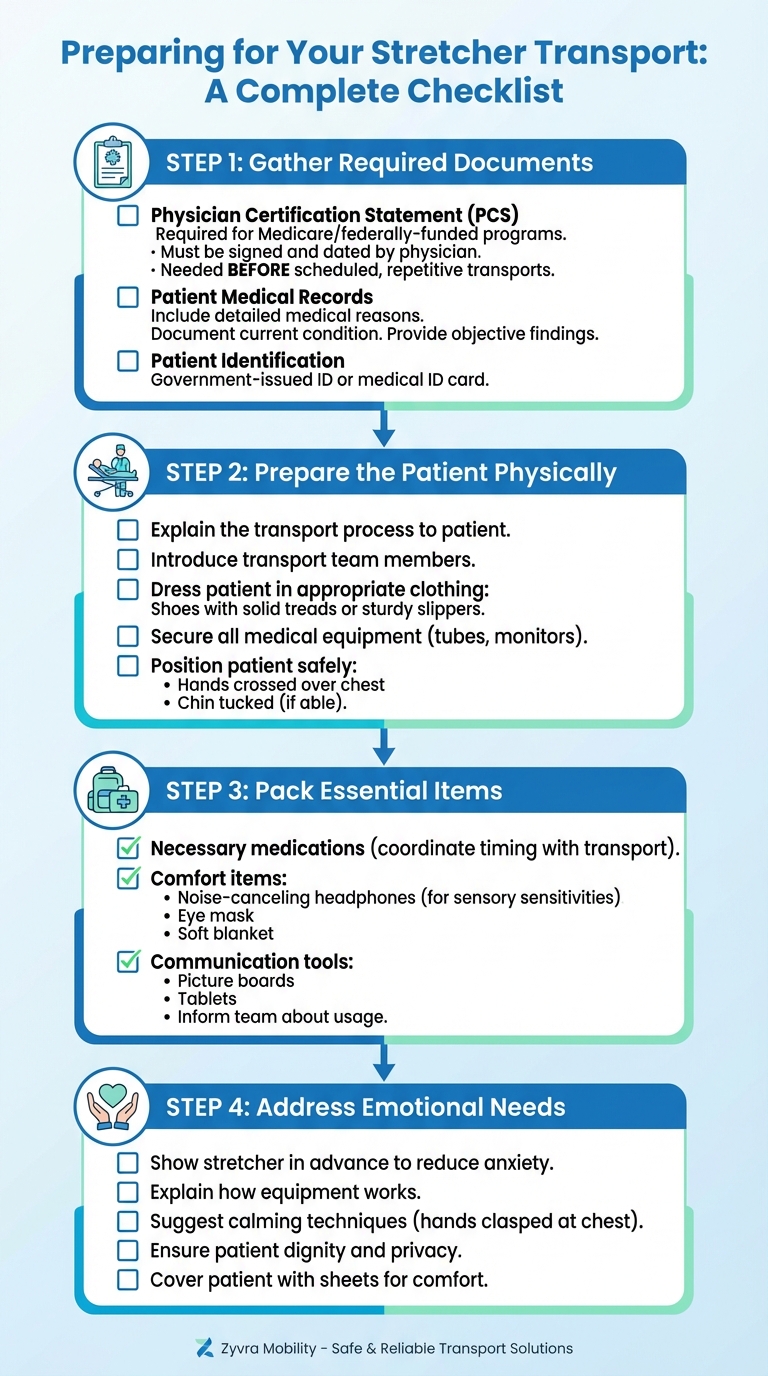
Stretcher Transport Preparation Checklist for Austin Patients
Planning ahead is key to ensuring a safe and comfortable stretcher transport experience. Taking the time to organize the necessary paperwork and prepare the patient can make the process much smoother.
Required Documents and Paperwork
In Austin, non-emergency stretcher transport requires specific documentation to confirm it’s medically necessary. The most critical document is the Physician Certification Statement (PCS). This form is essential, especially if Medicare or other federally-funded programs will cover the transport costs. The PCS must be backed by the patient’s complete medical records, which should include objective findings and detailed explanations for why stretcher transport is required.
For patients needing scheduled, repetitive transports – like routine trips for dialysis or wound care – the attending physician must sign and date the PCS before the transport begins.
| Document Type | Purpose | Austin-Specific Requirements |
|---|---|---|
| Physician Certification Statement (PCS) | Confirms medical necessity for stretcher transport | Required for Medicare and federally-funded programs; must be signed and dated by the physician |
| Patient Medical Records | Provides evidence supporting the need for transport | Must include detailed medical reasons and documentation of the patient’s current condition |
| Patient Identification | Verifies identity and protects privacy | Government-issued ID or medical identification card |
Once you’ve gathered all the necessary paperwork, you can shift your focus to preparing the patient for the journey.
Getting the Patient Ready for Transport
Preparing the patient – both physically and emotionally – is just as important as having the right documents. Start by explaining the process to them. Introduce the transport team, outline what will happen during the trip, and let them know how they can assist. If the patient has difficulty communicating, use hand signals or visual aids to help them understand.
Make sure the patient is dressed appropriately. Shoes with solid treads or sturdy slippers are ideal, and any medical equipment like tubes or monitors should be securely in place. For safety, position the patient with their hands crossed over their chest and their chin tucked, if they’re able to do so.
Pack a few essentials to ensure the patient’s comfort during the trip. Bring along any necessary medications and coordinate their timing with the transport schedule. For patients with sensory sensitivities, items like noise-canceling headphones or an eye mask can help reduce overstimulation. A soft blanket is also a great idea for added comfort and to minimize sensory discomfort. If the patient uses communication tools like picture boards or tablets, make sure to bring them and inform the transport team about how to use them. Caregivers can also provide insights into specific calming techniques or comfort items that might make the journey easier.
If the patient is nervous, let them see the stretcher in advance and explain how it works. For those feeling anxious, suggest they clasp their hands close to their chest to feel more secure. Throughout the process, prioritize the patient’s dignity and privacy. Ensure they’re at ease and covered with sheets for added comfort.
What Happens During Zyvra Mobility Stretcher Transport
Once everything is prepped, the transport process begins. Understanding how it works can help ease any concerns. Below, we’ll break down the factors that influence costs and the safety measures in place for every journey.
Stretcher Transport Costs and Pricing
The cost of stretcher transport depends on a few key factors, including the distance traveled, the level of supervision required, and the type of equipment needed. For a more accurate estimate, you’ll need to reach out to Zyvra Mobility directly. In some cases, Medicare and Medicaid may help cover these costs, provided you have the necessary documentation.
Safety Procedures and Equipment
Zyvra Mobility prioritizes safety by using top-quality gurneys equipped with adjustable settings, sturdy side rails, and secure locking mechanisms. Before every trip, the team thoroughly inspects all equipment, including wheels and brakes, to ensure everything is in perfect working order.
When it’s time to transfer the patient, staff follow proper lifting techniques – bending at the knees and keeping their backs straight – to minimize risk. Once the patient is on the gurney, they are secured with safety straps, and the side rails are adjusted for extra stability. Throughout the journey, the team keeps a close eye on the patient and explains each step of the process to keep them comfortable.
To maintain hygiene and reliability, all equipment is cleaned and inspected between trips. For patients with specific medical needs, the gurneys are designed to accommodate additional devices like oxygen cylinders or IV poles, ensuring a smooth and safe experience.
Conclusion
Planning ahead is key to ensuring a smooth and hassle-free stretcher transport in Austin. Start by organizing all necessary paperwork, clearly outlining your patient’s specific needs, and choosing a provider that emphasizes safety, comfort, and individualized care.
Stretcher transport goes beyond simply relocating someone – it’s about creating a thoughtful and patient-centered experience. Taking steps like confirming required documents, checking equipment needs, and maintaining open communication helps pave the way for a seamless process. These efforts align perfectly with the high-quality care offered by Zyvra Mobility.
Zyvra Mobility combines skilled professionals, ADA-compliant equipment, and a dedication to treating every patient with dignity and care throughout their journey. If you’re looking for reliable stretcher transport services in Austin that meet these high standards, reach out to Zyvra Mobility to schedule your transport.
FAQs
What documents are required for non-emergency stretcher transport in Austin?
To schedule non-emergency stretcher transport in Austin, you’ll usually need a few key documents:
- Medical records detailing the patient’s condition, such as clinical evaluations, mobility assessments, or wound care needs.
- Proof of medical necessity indicating the patient cannot walk or sit upright. This may include details about muscle strength, transfer limitations, or other related factors.
- Physician’s orders or certification for transport, particularly if the patient is bed-bound or requires special care during the journey.
Having these documents prepared can help streamline the scheduling process and ensure compliance with local healthcare transportation guidelines.
How does Zyvra Mobility keep patients safe during stretcher transport?
Zyvra Mobility places a strong emphasis on patient safety, adhering to rigorous safety protocols throughout the entire transport process. This means using well-maintained equipment, securely fastening stretchers and wheelchairs, and ensuring drivers are thoroughly trained in CPR, defensive driving, and patient care.
Every service aligns with ADA regulations and local healthcare transportation standards. Vehicles undergo regular inspections to guarantee they meet high safety and cleanliness requirements. On top of that, patient well-being is carefully monitored during transit to ensure a secure and comfortable journey.
How can I help a patient feel more at ease before stretcher transport?
To help a patient feel more comfortable before stretcher transport, focus on communicating with clarity and kindness. Walk them through the process step by step, addressing any questions or concerns to ease their fears. Let them know their safety and comfort are your main priorities.
Creating a calm and reassuring environment also helps. Keep the patient covered to preserve their dignity and ensure they’re physically at ease. If it’s possible, involve them in small choices – like selecting a blanket or adjusting a pillow – to give them a sense of control. A thoughtful and empathetic approach can go a long way in supporting their emotional well-being during the transport.