
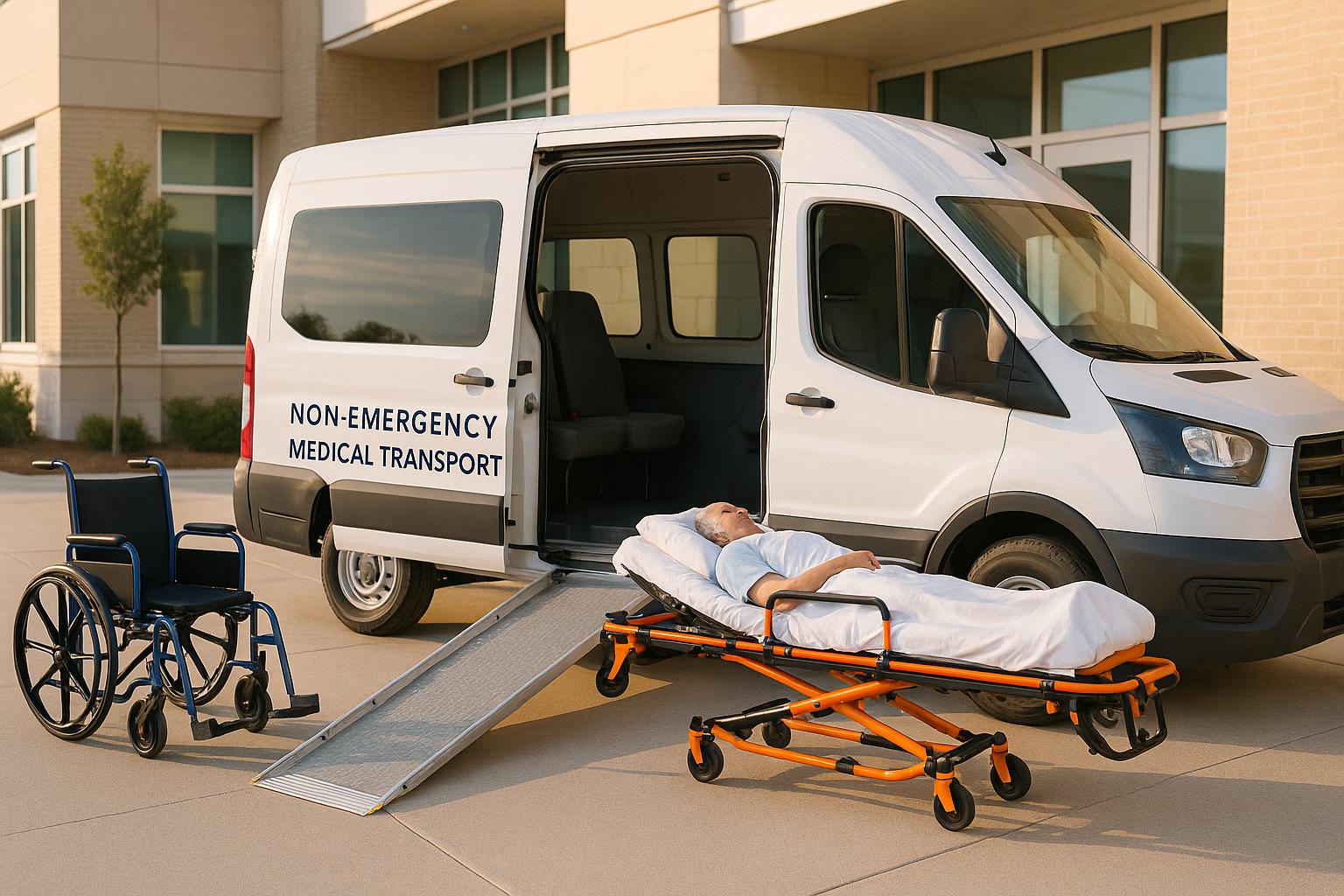
- Wheelchair vehicles: Designed for individuals who can sit upright but need mobility support. Equipped with ramps or lifts and securement systems for wheelchairs. Commonly used for routine medical appointments or outpatient visits.
- Stretcher vehicles: Built for patients who must lie flat during transport. Include powered lifts, stretchers, and sometimes basic medical equipment like oxygen. Ideal for bedridden individuals or those recovering from surgeries.
Quick Overview:
- Wheelchair vehicles: Cost less, faster boarding, suited for seated patients.
- Stretcher vehicles: Larger, more expensive, and specialized for lying-down patients.
| Feature | Wheelchair Vehicles | Stretcher Vehicles |
|---|---|---|
| Patient Position | Seated upright | Lying flat |
| Vehicle Type | Smaller vans | Full-size vans |
| Entry System | Ramps or lifts | Powered lifts |
| Medical Equipment | Basic accessibility | Oxygen, climate control |
| Staff Requirements | 1 trained operator | 2 trained operators |
| Cost | Lower | Higher |
Both vehicle types meet ADA standards and prioritize patient safety with securement systems and trained staff. Understanding these differences ensures patients receive safe and comfortable transport tailored to their needs.
Ford Transit NEMT with Side Wheelchair Lift | AMS Vans

Wheelchair Vehicles: Features and Uses
Wheelchair vehicles are designed to transport individuals who can sit upright but need mobility assistance. They are essential for those who have difficulty walking or transferring on their own.
Design Features of Wheelchair Vehicles
These vehicles are built with a focus on accessibility and safety. Typically, they are modified vans or minibuses equipped with ADA-compliant lifts or ramps, allowing for smooth entry and exit. Inside, securement systems keep wheelchairs stable during transit, and the spacious interior layout ensures enough room for easy maneuvering. These thoughtful design elements make travel safe and comfortable, while also highlighting the differences in how stretcher vehicles address other patient needs.
When to Use Wheelchair Vehicles
Wheelchair vehicles are ideal for patients with mobility challenges caused by various conditions, such as:
- Neurological disorders: Spinal cord injuries, cerebral palsy, multiple sclerosis, Parkinson’s disease, or stroke.
- Orthopedic issues: Severe fractures, advanced osteoarthritis, or muscular dystrophy.
- Cardiovascular or respiratory conditions: Heart failure or chronic obstructive pulmonary disease (COPD).
- Postoperative recovery: Patients recovering from surgeries or trauma.
- Age-related conditions: Osteoporosis or neurodegenerative diseases like Alzheimer’s.
These vehicles are especially helpful for geriatric patients attending routine medical appointments or outpatient procedures. They also provide essential support for individuals with amputations or significant vision impairments, ensuring they can travel safely and comfortably.
With their ability to meet a wide range of mobility needs, wheelchair vehicles play a critical role in scheduled medical transportation. They provide a safe, reliable, and comfortable option for patients requiring specialized care during transit.
Stretcher Vehicles: Features and Uses
Stretcher vehicles are specially designed to meet the needs of patients who cannot sit upright, offering a safe and efficient way to transport individuals requiring a lying-down position due to medical conditions or recovery needs.
Design Features of Stretcher Vehicles
Built on a full-size van chassis, stretcher vehicles provide the necessary space, stability, and capacity to accommodate a medical stretcher, patient, and essential equipment. Their interiors are designed with wide entry doors and powered lifts or ramps, ensuring smooth and secure boarding for patients and caregivers alike.
The interior layout is versatile, allowing for the addition of extra medical equipment as needed. Safety is a top priority, with securement systems in place to stabilize stretchers or gurneys during transit. These systems prevent movement, keeping patients steady even during sharp turns or sudden stops.
Many of these vehicles are equipped with basic life support systems, including oxygen supplies, to assist patients requiring continuous care during transport. Climate control systems ensure a comfortable environment, which is especially important for long journeys. Additionally, the spacious interior provides ample room for medical staff to attend to the patient as needed.
When to Use Stretcher Vehicles
The unique features of stretcher vehicles make them essential for specific situations. Unlike wheelchair-accessible vehicles, which cater to patients sitting upright, stretcher vehicles are designed for those who must remain lying down.
These vehicles are crucial for patients who are bed-bound or unable to sit upright for medical reasons. They are especially helpful for individuals whose conditions require flat positioning to reduce discomfort or physical strain.
Whether transferring patients from the hospital to another facility or returning them home, stretcher vehicles ensure a safe and comfortable journey for those with limited mobility. They are also ideal for long-distance transfers, providing secure positioning, effective climate control, and enough space to minimize disruptions throughout the trip.
Wheelchair vs. Stretcher Vehicles: Side-by-Side Comparison
Understanding the differences between wheelchair and stretcher vehicles is key for medical transport providers, healthcare facilities, and families looking to make informed decisions. While both serve the same industry, they are designed with different purposes, features, and patient needs in mind.
Design and Equipment Differences
The design and equipment of these vehicles are tailored to meet specific patient requirements. Wheelchair vehicles are typically built on a minivan or smaller van chassis, offering enough room for a seated passenger and their mobility device. These vehicles prioritize ease of movement and fuel efficiency while maintaining sufficient interior height for wheelchair users.
Stretcher vehicles, on the other hand, are constructed on full-size van chassis to accommodate patients lying flat, along with medical equipment and attending staff. The larger dimensions provide space for a stretcher, caregivers, and, when necessary, life support systems.
The entry systems also differ based on the patient’s condition. Wheelchair vehicles often feature rear-entry or side-entry ramps, making it easy for users to roll into the vehicle. Some models include hydraulic lifts for heavier power wheelchairs. Stretcher vehicles, however, use powered lifts or heavy-duty ramps designed to handle the combined weight of the stretcher and patient.
| Feature | Wheelchair Vehicles | Stretcher Vehicles |
|---|---|---|
| Chassis Type | Minivan or mid-size van chassis | Full-size van chassis |
| Interior Space | Room for seated passenger and wheelchair | Space for lying patient, equipment, and staff |
| Entry System | Ramps or lifts for wheelchair access | Powered lifts or heavy-duty ramps |
| Securement | 4-point wheelchair tie-down systems | Automatic locking systems |
| Medical Equipment | Basic accessibility features | Oxygen supplies, climate control, life support |
| Passenger Capacity | Seats multiple passengers | Typically one stretcher patient plus attendants |
As shown, wheelchair vehicles rely on four-point tie-down systems to secure mobility devices, while stretcher vehicles use automatic locking mechanisms with backup safety straps. These design features are crucial for ensuring safety and compliance with regulations.
ADA and Regulatory Requirements
Both vehicle types must adhere to the accessibility standards outlined by the Americans with Disabilities Act (ADA). These standards ensure that individuals with disabilities have equal access to reliable transportation. ADA compliance covers areas like doorway width, interior clearance, and climate control to maintain patient comfort during transit.
Safety during transport largely depends on securement practices. Wheelchair vehicles use all four tie-down points to stabilize the mobility device, while stretcher vehicles rely on automatic locking systems, often supplemented with additional safety straps. Regular inspections of securement equipment are essential to ensure they remain in proper working condition. Any worn or damaged equipment should be replaced promptly, following manufacturer guidelines.
Meeting these standards also involves training staff on securement techniques and patient care protocols, which play a critical role in maintaining safety and comfort during medical transportation.
Safety and Staff Training Requirements
Because wheelchair and stretcher vehicles have distinct operational needs, staff training is tailored accordingly to ensure patient safety and comfort. Drivers require more than basic driving skills – they must be trained in securement techniques, patient communication, and emergency procedures.
For wheelchair vehicles, training focuses on correctly using tie-down systems. Staff learn to identify proper anchor points, adjust straps to the right tension, and ensure the wheelchair is securely fastened before transport. Knowledge of various wheelchair types – manual, powered, or scooters – helps operators adapt to different situations.
Stretcher vehicle operators require more advanced training. This includes monitoring patients during transit, recognizing signs of distress, and responding to emergencies. Drivers are also trained to operate onboard medical equipment like oxygen systems and climate controls. Additionally, attendants learn how to properly position patients to prevent complications, monitor vital signs, and communicate effectively with healthcare facilities.
Both types of operators are trained in defensive driving techniques and emergency protocols specific to medical transport. Smooth driving, careful braking, and thoughtful route planning contribute to a safer and more comfortable experience for patients. Maintaining accurate trip records and performing regular equipment checks are also emphasized as part of comprehensive training programs.
sbb-itb-8e5d2ef
Cost and Operations
While patient care shapes vehicle design, financial considerations play a key role in operational decisions. These decisions often revolve around vehicle selection, where providers must weigh upfront costs, maintenance expenses, and operational efficiency to maintain high-quality service. Let’s dive into the details of acquisition and maintenance costs.
Purchase and Maintenance Costs
Wheelchair vehicles generally come with a lower price tag compared to stretcher vehicles. This is because wheelchair-accessible vehicles are often modified from smaller vans, which already have lower base prices and tend to be more fuel-efficient. On the other hand, stretcher vehicles require extensive modifications to larger chassis. These changes accommodate specialized lift systems and medical equipment, leading to higher initial costs and increased insurance premiums.
Maintenance costs also differ. Wheelchair vehicles are less expensive to maintain due to their simpler systems. In contrast, stretcher vehicles demand a more rigorous maintenance schedule. Their heavier build and complex equipment, like lift mechanisms, require more frequent servicing.
Over time, both types of vehicles will need equipment replacements. Wheelchair tie-down systems and safety restraints for stretcher vehicles must be periodically updated. However, components for stretcher vehicles are often more specialized and therefore more expensive.
Beyond these costs, day-to-day operations also play a significant role in determining overall efficiency.
Scheduling and Efficiency
Operational efficiency hinges on matching the right vehicle to each patient’s needs. Wheelchair vehicles have an edge when it comes to quicker boarding. Their straightforward loading systems allow for faster turnover at stops, enabling providers to complete more trips in a single day. Additionally, these vehicles can sometimes transport multiple passengers on a single route, further enhancing efficiency and reducing overall mileage.
In contrast, stretcher vehicles require more time for loading and unloading. The operation of lift systems and the need to secure both the patient and any accompanying medical equipment make the process longer. As a result, fewer trips can be completed in a day. The larger size and design of stretcher vehicles also demand careful route planning. Drivers must account for factors like clearance heights, turning radii, and accessible loading zones, which can lead to longer or less direct routes.
Many providers find that maintaining a mixed fleet strikes the right balance. By combining wheelchair and stretcher vehicles, operators can address a wide range of patient needs while maximizing fleet efficiency and ensuring the high service standards discussed throughout this article.
NEMT Services in Austin, TX
Austin’s growing healthcare network – spanning facilities like Dell Seton Medical Center and various specialty clinics – has created a rising need for dependable, long-distance non-emergency medical transportation (NEMT). With an aging population and a thriving medical community, the demand for wheelchair-accessible and stretcher transportation remains steady. Many residents require wheelchair vehicles for routine medical visits, while stretcher vehicles are often essential for post-surgery travel or for individuals unable to sit upright.
Navigating Austin’s notorious traffic adds another layer of complexity. Major routes like I-35 and the MoPac Expressway are prone to heavy congestion, particularly during rush hours, which can significantly extend travel times. This makes punctuality and smart route planning absolutely essential for ensuring patients arrive on time for their appointments. These challenges highlight the critical role of standardized, ADA-compliant transportation services in the city.
ADA-Compliant Services for Austin Residents
To meet these demands, local NEMT providers in Austin have tailored their services to address the city’s unique challenges. ADA-compliant vehicles and skilled personnel are central to delivering reliable transportation in this environment.
Zyvra Mobility offers a fleet of wheelchair and stretcher vehicles designed to meet the diverse mobility needs of Austin residents. Each vehicle undergoes regular maintenance, and advanced scheduling systems are in place to ensure timely service – even during periods of heavy traffic.
Drivers receive extensive training in securement techniques and patient assistance, ensuring every passenger is treated with care and respect. Whether it’s a trip to a routine medical appointment or a ride home after an outpatient procedure, the focus is on providing a dignified and comfortable experience.
The company’s scheduling technology plays a key role in coordinating pickups and drop-offs across Austin’s sprawling geography. It factors in appointment times, traffic conditions, and the specific vehicle requirements of each patient to create efficient routes. This not only improves operational efficiency but also ensures that patients’ individual needs are prioritized.
Real-time tracking adds another layer of convenience, allowing patients and healthcare providers to monitor vehicle locations. This feature is especially useful when coordinating hospital discharges, as it reduces uncertainty about arrival times.
Understanding whether a wheelchair or stretcher vehicle is required is crucial for patients navigating the healthcare system. Those who can sit upright benefit from the faster boarding and scheduling flexibility of wheelchair vehicles. On the other hand, individuals recovering from surgeries or managing conditions that require lying down rely on the specialized functionality of stretcher vehicles to travel safely and comfortably.
Conclusion
Wheelchair vehicles and stretcher vehicles serve different mobility needs, ensuring that patients receive the care and comfort they require during transport. Wheelchair vehicles are ideal for individuals who can remain seated upright, making them a convenient option for routine trips like medical appointments, dialysis, or outpatient visits. On the other hand, stretcher vehicles are designed for patients who need to lie flat, such as those recovering from surgery or dealing with critical health issues.
Wheelchair vehicles are equipped with ramps and securement systems to keep passengers safe while seated, whereas stretcher vehicles rely on specialized loading mechanisms to handle patients in a horizontal position. Due to the advanced equipment involved, stretcher vehicles typically come with higher upfront costs and require more frequent maintenance.
Both types of vehicles comply with ADA standards, ensuring proper securement systems and well-trained staff to guarantee safety throughout the journey. These standards form the backbone of reliable and secure patient transport.
FAQs
What should you consider when deciding between a wheelchair vehicle and a stretcher vehicle for medical transportation?
When choosing between a wheelchair vehicle and a stretcher vehicle, it’s important to think about the patient’s mobility, the level of medical care needed, and the travel distance involved.
Wheelchair vehicles work best for individuals who can stay seated upright during the ride and only need basic assistance or equipment. In contrast, stretcher vehicles are specifically designed for those who need to remain lying down or require advanced medical support while being transported.
It’s also crucial to make sure the vehicle meets ADA standards and is properly equipped to offer a safe, comfortable experience that aligns with the patient’s specific needs.
What features make wheelchair and stretcher vehicles safe and comfortable for patients?
Wheelchair and stretcher vehicles are built with a focus on ensuring patient safety and comfort throughout the journey. Wheelchair vehicles are equipped with secure restraints to keep wheelchairs firmly in place during transit. They also feature ergonomic seating, designed to reduce strain and provide a more comfortable ride. Plus, they allow patients to stay seated upright, which can help prevent motion sickness and offer a more respectful and pleasant experience.
Stretcher vehicles, by contrast, are tailored for patients who need to lie flat. These vehicles provide a cushioned, level surface for lying down, often with adjustable positioning to deliver the right support and enhance safety during travel. Both types of vehicles are generally ADA-compliant, making them accessible and user-friendly for individuals with diverse mobility needs.
Why do stretcher vehicles typically cost more than wheelchair vehicles, and what features account for this difference?
Stretcher vehicles tend to come with a higher price tag because they are outfitted with specialized medical equipment and demand extra resources. These vehicles are designed with secure fixtures for stretchers, oxygen tanks, and other critical medical tools to ensure patient safety during transport.
On top of that, they often require trained EMTs or paramedics on board to provide care for patients who might need medical assistance while en route. This combination of advanced equipment and skilled personnel makes them more expensive than wheelchair-accessible vehicles, which are built for simpler transportation needs.