
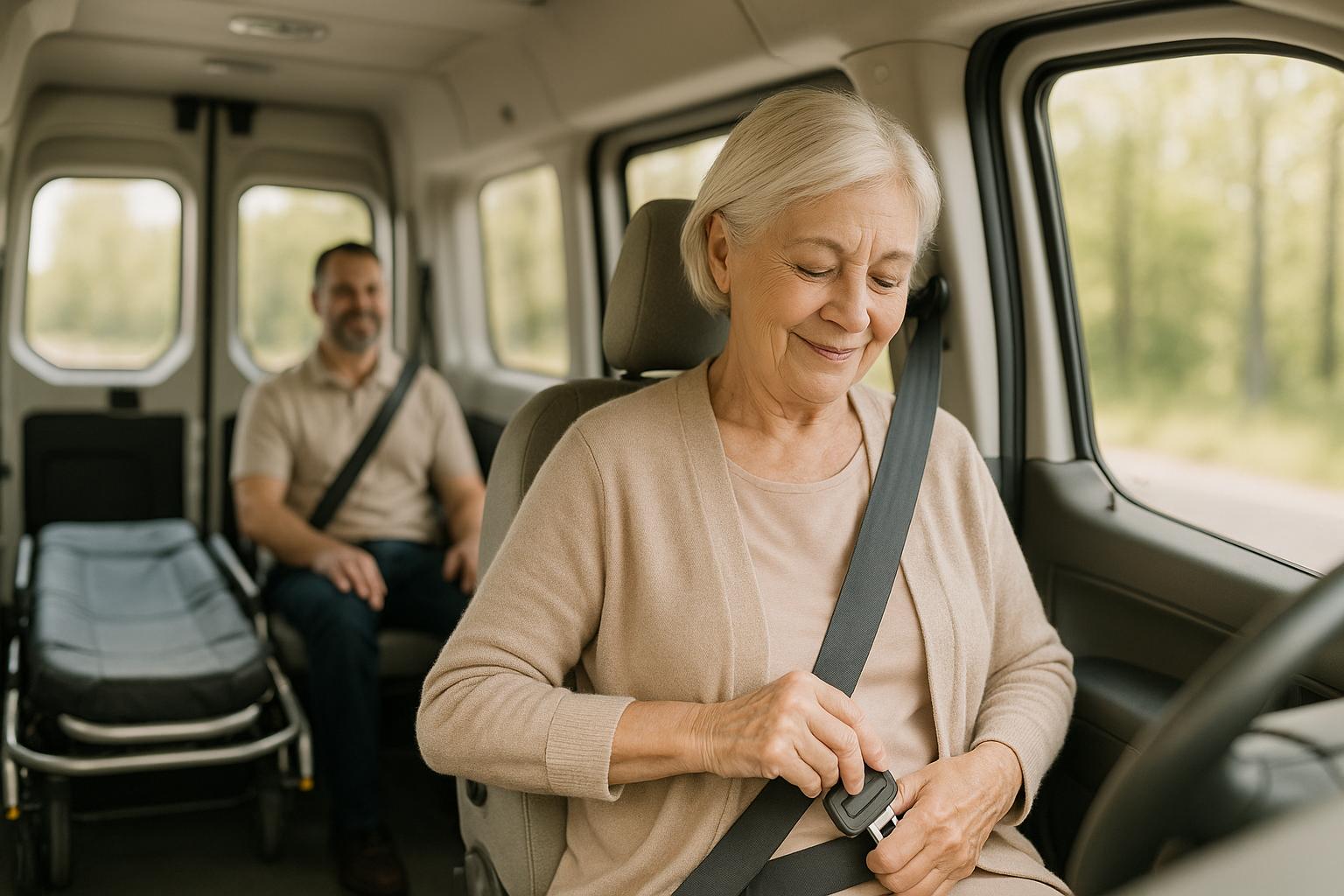
Getting to medical appointments can be challenging for seniors, especially when managing health conditions, mobility aids, or medications. Proper planning ensures a safe and smooth experience. Here’s how:
- Documents: Bring a photo ID, insurance card, and any required medical forms. Include a list of medications and emergency contacts.
- Mobility: Check and prepare mobility aids like wheelchairs or walkers. Confirm the transport provider can accommodate your needs.
- Comfort Items: Pack essentials like medications, snacks, water, weather-appropriate clothing, and a fully charged phone.
- Safety: Verify the provider’s driver training, vehicle safety features, and emergency protocols.
- Scheduling: Double-check appointment details and confirm your transportation booking 24-48 hours in advance.
What Is Non-Emergency Medical Transport For Seniors?
Required Documents and Appointment Information
Getting your paperwork in order is key to ensuring a hassle-free medical transport experience. Missing documents can lead to delays or even canceled appointments. With about 3.6 million people in the U.S. missing out on medical care each year due to transportation issues, being prepared is more important than ever.
Once your appointment is confirmed, take the time to gather all the necessary documents and medical details to support your trip.
Verify Appointment Details
Double-checking your appointment details can save you from costly mistakes. Medical transportation services often juggle multiple passengers, so timing is critical. A simple mix-up with dates or times could mean missing your ride – and potentially life-saving treatments like chemotherapy or dialysis.
Make sure to confirm the exact date, time, and location of your appointment with your healthcare provider. Write down the full address, including building numbers and entrances, and ask about any specific instructions or accommodations you might need.
Additionally, confirm your transportation reservation at least 24 to 48 hours before your scheduled appointment. Many paratransit and NEMT services require advance bookings and may involve shared rides.
Collect Required Documents
Having the right paperwork on hand can help you avoid unnecessary delays. Make sure all documents clearly display the patient’s name and date of birth to prevent any verification issues.
Here’s what you’ll need:
- A government-issued photo ID
- Your insurance card
- Any prior authorization forms
It’s a good idea to make copies of these documents for your records. If your doctor has provided a referral or transport order, be sure to bring the original document with you.
Organize Medical Information
Prepare a concise packet with all your essential health information. Start by listing your current medications, including schedules, and pack them in their original, labeled containers. Don’t forget to include over-the-counter medications, vitamins, or supplements you take regularly.
Make a note of any known allergies and ensure your emergency contact information is updated and easy to access.
If possible, bring any relevant test results from the past 30 days to give your healthcare provider the most accurate picture of your condition. Also, if you have advance directives, include copies with your other documents.
Finally, create a brief medical history summary. This should include details about recent procedures, ongoing treatments, allergies, medical equipment you use, and any special accommodations you might require. Having this information ready can make your appointment go smoothly and ensure you receive the care you need.
Mobility and Accessibility Needs
Preparing for mobility challenges ahead of time is key to ensuring a safe and smooth medical transport experience. Start by evaluating your mobility equipment needs and communicating them clearly to secure the right accommodations. It’s also important to double-check that all necessary supports are in place for your journey.
Check Mobility Aid Requirements
Take stock of the mobility aids you rely on, such as wheelchairs, walkers, or portable oxygen equipment. Think about any additional medical devices you use in combination with your primary mobility aid.
Consider the support you’ll need for transferring between the vehicle and your destination. If your appointment involves covering longer distances, you might need extra assistance to navigate comfortably.
For those using portable oxygen, it’s crucial to notify your transportation provider in advance. Oxygen concentrators and tanks require careful handling, and making the provider aware ensures they can accommodate your equipment safely.
Request Accessibility Features from Your Provider
Once you’ve booked your transport, reach out to the provider to specify any accessibility features you’ll need. This might include an ADA-compliant vehicle, a wheelchair lift, or a stretcher. Be as detailed as possible when explaining your requirements, and don’t hesitate to ask questions about the available features.
Confirm that the vehicle can fit your specific wheelchair dimensions and that it has the necessary ramps and space for safe transport. While paratransit services typically offer "curb to curb" service in ADA-compliant vans, private medical transport providers may differ in their accessibility offerings. Always double-check what is available well before your appointment.
After confirming the vehicle’s accommodations, take a moment to ensure your own mobility equipment is in good working order.
Test Personal Mobility Equipment
Inspect and test all mobility equipment at least 24 hours before your scheduled transport. Check wheels for any wear or damage, and ensure brakes are functioning properly.
If you use powered equipment, make sure the battery is fully charged. Bring a spare charger, especially if your trip might be extended due to appointment delays or wait times.
Clean your mobility equipment to minimize the risk of infection. Double-check that safety harnesses and straps are secure and properly adjusted. If you use a wheelchair cushion, make sure it’s firmly in place and won’t shift during the ride.
Measure your equipment, including any attachments, to confirm it will fit in the transport vehicle. Verify that the vehicle has secure tie-downs to keep your equipment stable during the trip.
It’s also a good idea to have a backup plan. Carry essential spare parts if possible, and know who to contact in case of equipment malfunctions on the day of transport. This preparation can help you avoid missing critical medical appointments.
Personal Items for Comfort and Safety
Packing the right personal items can make your trip smoother and more comfortable. The goal is to stay prepared without overloading your bag. Focus on essentials that cater to your health, comfort, and any unexpected delays. A well-thought-out, compact kit can make all the difference.
Pack a Small Bag with Essentials
Keep your travel bag organized and practical by including these basics:
- Medications: Bring all necessary medications, plus an extra dose in case of delays. Keep them in their original containers, and pack a small snack and water if you need to take them during the trip.
- Important documents: Store critical documents – like IDs, insurance cards, or travel papers – in a separate, easy-to-reach compartment.
- Snacks and hydration: Carry a reusable water bottle and light snacks such as nuts, granola bars, or pre-cut fruit.
- Weather-appropriate clothing: Wear comfortable shoes and pack for the conditions. This might include a hat, sunglasses, and sunscreen for sunny days, or warm layers and rain gear for cooler or wet weather.
- Comfort items: Think about bringing a seat cushion for added comfort or an extra blanket for warmth.
- Hygiene and first aid: Include hand sanitizer, tissues, wet wipes, and a small first-aid kit for minor emergencies.
Prepare Communication Tools
A fully charged cell phone is essential. Don’t forget to pack your charger or a portable power bank. If you use a medical alert device, ensure it’s in working order and bring spare batteries if necessary.
Create and carry an updated list of emergency contacts. This list should include phone numbers, email addresses, and any important account details for family members, doctors, insurance providers, and others. Print several copies and keep them in different accessible places. Share the list with a trusted caregiver or companion for added security.
Arrange for a Companion
Traveling with someone you trust can ease anxiety and improve safety. A companion can help with communication, provide reassurance, and act as a second set of eyes during the trip.
If having a companion physically present isn’t possible, set up a clear communication plan with a family member or caregiver. For example, send a text or make a quick call at key points: when the driver arrives, once you’re in the vehicle, upon arrival at your destination, and when you return home. Sharing details about the vehicle, like its description, can add an extra layer of security. Apps like Life360 can also help loved ones stay updated on your location.
"Regular check-ins with older adults about how they’re feeling can help identify any issues early." – SummerHouse Senior Living
"Transport services offer significant relief to family caregivers by taking over the responsibility of driving seniors to various destinations. This allows caregivers to have more personal time and reduces their stress levels." – Rey Albert, Milford Transit
sbb-itb-8e5d2ef
Safety Measures and Health Precautions
When it comes to medical transportation, your safety hinges on the provider’s training standards and emergency preparedness. Taking the time to verify these details before your trip can significantly reduce risks.
Check Provider Training and Vehicle Safety
The expertise of the driver plays a major role in ensuring your comfort and safety during transport. Drivers should undergo specialized training, so don’t hesitate to ask about their qualifications and the safety features of the vehicles being used.
Driver training requirements should focus on safe driving techniques tailored to senior passengers. As Wisdom Care Transportation explains, "Professional training includes safe driving techniques, emergency preparedness, and proper passenger assistance." This means drivers are trained to handle vehicles smoothly, avoiding abrupt stops or sharp turns that could lead to discomfort or injury for frail passengers.
Sensitivity training is equally important, particularly for addressing cognitive and anxiety-related challenges. Drivers should be equipped to manage confusion, medical emergencies, or passenger distress with patience and professionalism. This is especially vital for seniors with conditions like dementia or Alzheimer’s, who may feel disoriented or anxious during transport.
Vehicle safety features must also meet the specific needs of senior passengers. Look for vehicles with proper seat belts and four-point tie-down restraints. If you rely on mobility aids, confirm that drivers know how to operate wheelchair lifts and secure your equipment safely.
Once you’re confident in the driver’s training and the vehicle’s safety, it’s time to focus on emergency preparedness.
Confirm Emergency Preparedness
After ensuring the driver’s qualifications and the vehicle’s suitability, take a close look at the provider’s emergency protocols. Knowing how prepared they are for unexpected situations can make a big difference in your peace of mind.
First aid and CPR training should be mandatory for all transportation staff. This ensures that drivers and other personnel can provide immediate assistance while waiting for professional medical responders.
Providers must also have clear emergency procedures in place. Confirm that drivers can quickly contact 911, communicate with caregivers, and evacuate passengers if needed. Ask about their protocols for handling situations like medical emergencies, vehicle breakdowns, or severe weather conditions.
Additionally, drivers should be capable of accurately relaying your location to emergency services and sharing any relevant medical information if you’re unable to do so yourself. This is particularly critical if your medications might affect your ability to respond during an emergency. These precautions can make all the difference in ensuring your safety during transport.
Scheduling and Trip Coordination
Planning ahead is key to making medical rides stress-free. By addressing the details early and ensuring clear communication, you can set the stage for a smooth and safe journey.
Confirm Your Details
Once you’ve ensured safety measures and equipment are ready, the next step is finalizing your transportation schedule. Be specific about your mobility needs when booking medical transport. For instance, if you use a wheelchair or walker, inform the provider so they can assign a vehicle equipped to meet your requirements. Double-check your pickup address and other essential details to avoid any confusion. After everything is confirmed, take advantage of real-time tracking to stay updated on your trip’s progress.
Use Real-Time Tracking and Communication
Many transportation apps now include real-time tracking, allowing you and your loved ones to monitor the ride’s progress. These apps often display the vehicle’s location, estimated arrival time, and key driver details like their name and license plate number. If technology feels overwhelming, a family member or caregiver can step in to book and track the ride for you, offering peace of mind and ensuring everything runs smoothly.
Clear communication with your transportation provider is another must. Make sure they have your correct contact information and, if needed, let them know about any communication preferences, such as text messaging for those with hearing challenges. Keeping a list of important phone numbers handy can also provide extra reassurance.
Zyvra Mobility takes this a step further with advanced scheduling tools that include real-time tracking, keeping both passengers and their families informed every step of the way.
Conclusion: Preparing for a Safe and Stress-Free Journey
Getting ready for a trip to a medical appointment doesn’t have to be overwhelming. Careful planning can turn what might feel like a stressful experience into a smooth and manageable journey. By following a clear checklist, you can ensure that essential documents, items, and details are all in place.
Good communication is key. Keeping seniors informed and reassured about the process can ease their anxiety, while involving family members fosters a sense of support and teamwork. This open line of communication also helps in choosing a transportation service that prioritizes safety and accessibility.
The right vehicle can make all the difference. Features like easy access, enough room for mobility aids, and secure seat belts create a safe and comfortable environment. Pair that with professional drivers who are trained to handle specific needs, and you’ve got an added layer of confidence for the journey.
Having a solid emergency plan in place, complete with easily accessible contacts, adds another level of preparedness. It’s a small step that can make a big difference in peace of mind.
When you combine these preparations with Zyvra Mobility’s tailored services, you’re not just arranging transportation – you’re ensuring that the journey is both safe and comfortable. By focusing on individual preferences, involving seniors in planning, and respecting their unique needs, the experience becomes more than just a trip; it becomes a moment of empowerment. With the right approach, medical appointments can feel like a manageable and even positive part of maintaining health and independence.
FAQs
What should I do if I forget an important document or medication right before my medical transport arrives?
If you suddenly remember you’ve left behind an essential document or medication right before your medical transport arrives, notify your driver immediately. Depending on their schedule, they might be able to wait for a short time while you grab the item.
To steer clear of this kind of stress, try making a checklist in advance. This way, you can double-check that you’ve got everything you need – like your ID, insurance cards, prescriptions, or mobility aids – ready to go before the transport shows up. It’s a simple step that can save you a lot of last-minute scrambling.
How can I make sure my mobility equipment is properly handled during medical transportation?
When arranging medical transportation, it’s important to let the service provider know about your mobility equipment needs ahead of time. Be sure to discuss whether they can accommodate items like wheelchairs, walkers, or scooters, and inquire about storage options and any help they can offer with transfers.
When booking, share specifics about the size and type of your equipment. This helps the transportation team prepare properly, making the experience safer and more comfortable for you or your loved one.
What should I do if my senior medical transport is delayed or canceled?
If your scheduled medical transport faces delays or cancellations, being prepared can make all the difference. Start by carrying an extra supply of your essential medications to ensure your treatment isn’t interrupted. And don’t forget to have a fully charged cell phone with emergency contacts saved – this can be a lifesaver when you need to reach out quickly.
It’s also smart to have a backup plan. Keep a list of alternative transportation options handy so you can act swiftly if needed. Staying calm and thinking ahead can help you navigate these unexpected changes with ease.