Non-Emergency Medical Transportation (NEMT) drivers help individuals who face transportation challenges get to critical medical appointments safely and on time. Here’s what you need to know:
- Door-to-Door Support: Drivers assist passengers from their homes to the vehicle and into their medical appointments, ensuring safety and comfort.
- Punctuality: They rely on route planning and vehicle checks to avoid delays, especially for time-sensitive appointments like dialysis or surgeries.
- Mobility Assistance: Drivers are trained to operate wheelchair lifts, secure mobility devices, and follow ADA standards for accessibility. For patients who can travel without a wheelchair but still need assistance, Ambulatory NEMT provides safe and reliable transportation to and from medical appointments.
- Safety Training: Certifications like CPR, First Aid, and Passenger Assistance Safety and Sensitivity (PASS) ensure drivers are prepared for emergencies and can accommodate special needs.
- Professionalism: They maintain confidentiality (HIPAA compliance), treat passengers with respect, and prioritize a calm, supportive experience.
NEMT drivers go beyond transportation, providing care and reliability for those who need it most. When you’re ready to arrange transportation, you can easily schedule a ride based on your needs.
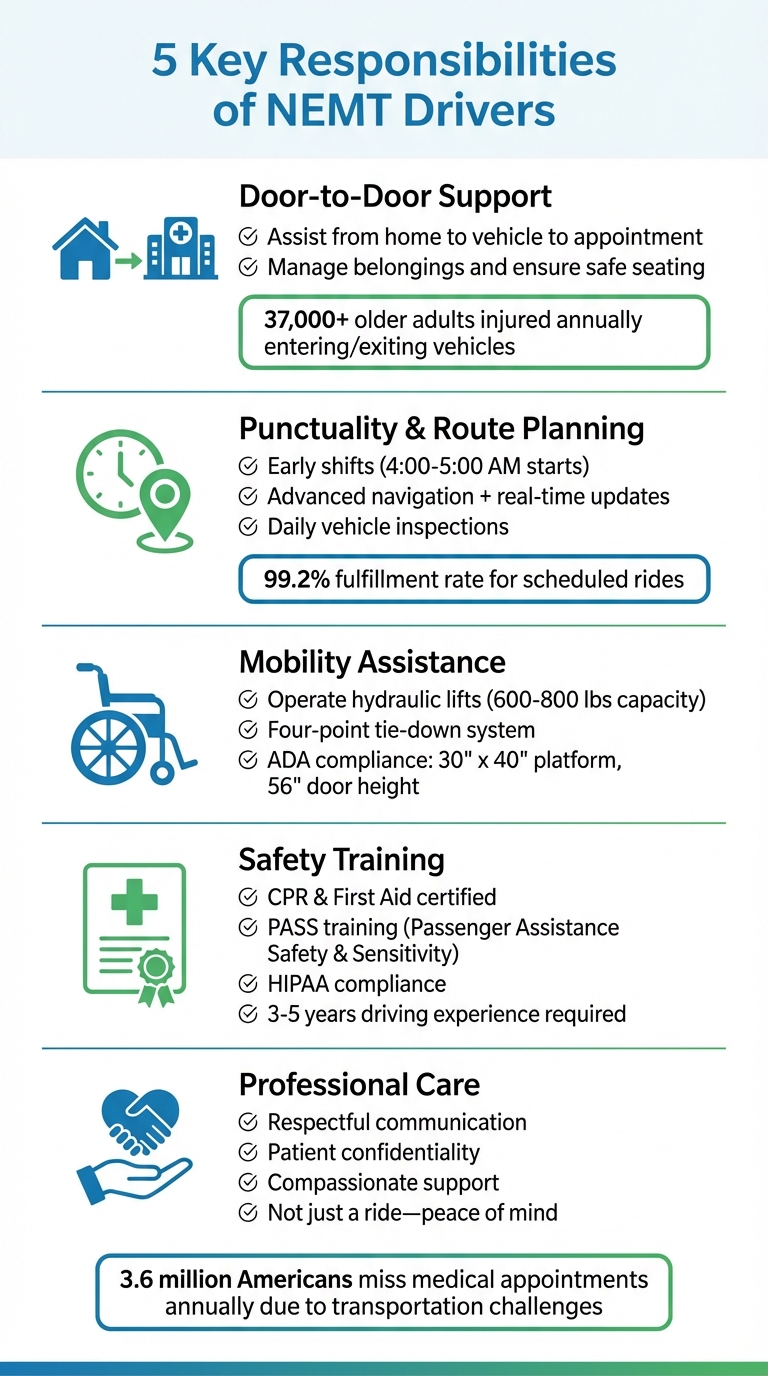
5 Key Responsibilities of NEMT Drivers: Safety, Training, and Passenger Care
NEMT Driver Training and Certification
Main Responsibilities of a NEMT Driver
NEMT drivers take on a dual role, blending expert transportation skills with attentive care for passengers. Their job goes beyond simply driving; they handle mobility equipment, follow strict schedules, and ensure the safety and comfort of their passengers. These responsibilities highlight the level of professionalism and compassion that defines NEMT services.
Door-to-Door Assistance
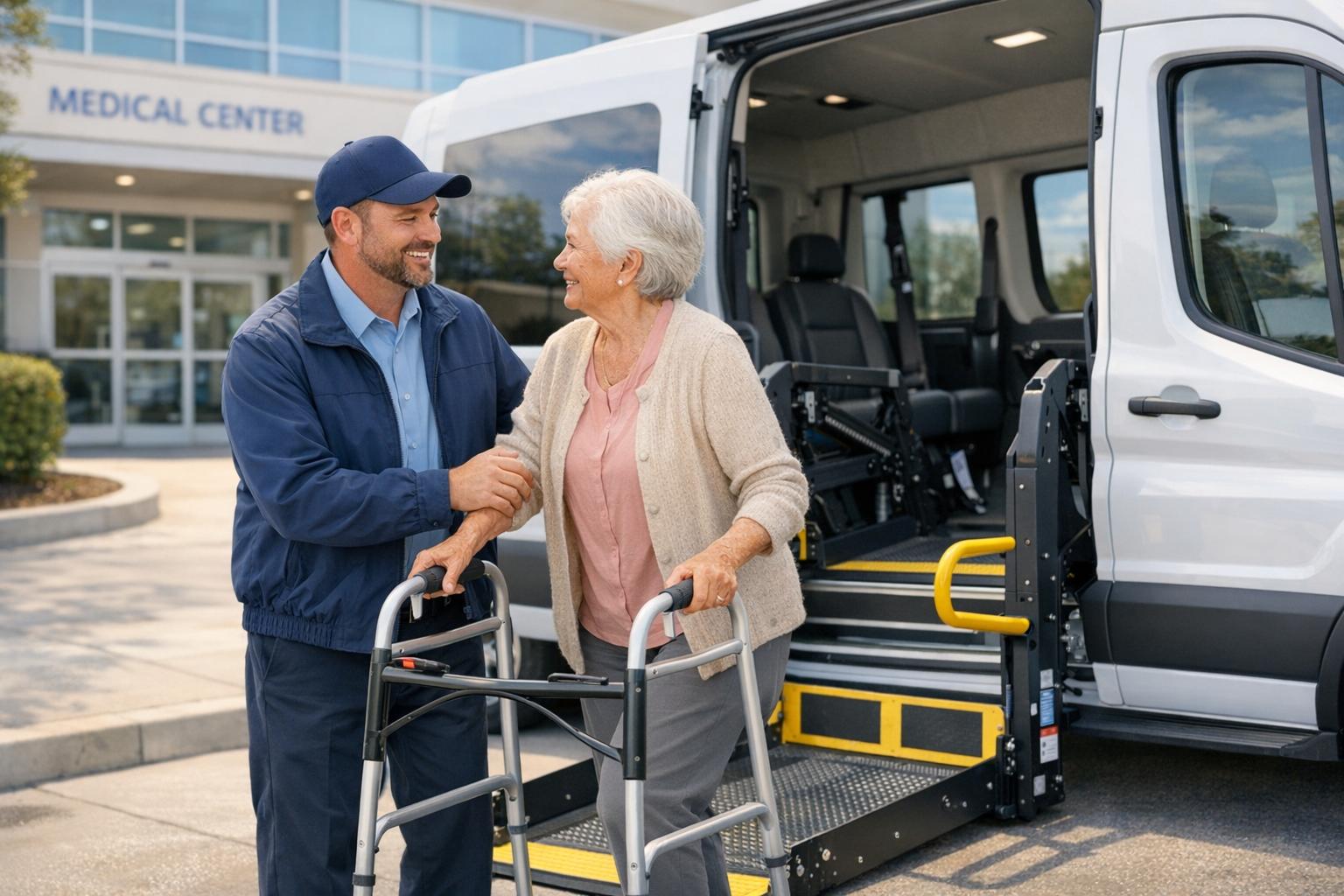
Unlike standard rideshare services, NEMT drivers offer true door-to-door assistance. This means they don’t just drop passengers off at the curb. They go the extra mile – helping individuals from inside their home to the vehicle and escorting them into their medical facility or appointment. Along the way, they manage belongings and ensure passengers are safely seated in the vehicle.
“The driver was very kind and made sure I was comfortable throughout the journey”
This hands-on approach is crucial, especially considering that over 37,000 older adults are injured annually while getting in or out of vehicles. By providing this level of care, drivers ensure a safer, more comfortable experience from start to finish.
On-Time Arrivals and Route Planning
Timeliness is non-negotiable in medical transportation. Many medical appointments, such as surgeries or dialysis, require patients to arrive early in the morning, so drivers often start their shifts as early as 4:00 or 5:00 a.m. To meet these demands, drivers rely on advanced navigation tools, real-time updates from dispatchers, and thorough vehicle inspections. These daily checks – covering fluid levels, tire pressure, and brakes – help prevent unexpected delays.
SafeRide Health exemplifies this commitment to reliability with a 99.2% fulfillment rate for scheduled rides. This level of precision ensures patients get to their appointments on time, reducing stress and supporting their care plans.
Wheelchair and Mobility Device Support
For passengers using wheelchairs or other mobility devices, NEMT drivers are trained to provide specialized support. They operate hydraulic wheelchair lifts and use a four-point tie-down system to securely anchor wheelchairs to the vehicle floor. Additionally, passengers are secured with integrated lap and shoulder belts for added safety. ADA-compliant lifts must meet specific standards, including a platform size of 30″ x 40″ and a door opening height of at least 56″.
“As an NEMT driver, your service can range anywhere from being a total hands-off experience to one that requires physically helping a patient into the vehicle, securing them, and walking them into their appointment”
Safety and Training Requirements for NEMT Drivers
NEMT drivers go through a detailed screening and training process to ensure they can safely transport passengers who have medical needs. Having a valid driver’s license is just the baseline – most providers expect drivers to have 3 to 5 years of driving experience and a clean Motor Vehicle Record (MVR) to meet insurance requirements. Depending on the state and the size of the vehicle, some drivers may also need a Commercial Driver’s License (CDL) or chauffeur’s license, especially for vehicles carrying more than 15 passengers. To maintain safety, providers often conduct unannounced drug and alcohol tests throughout a driver’s employment. These initial steps lay the groundwork for the in-depth training drivers receive.
Driver Licensing and Background Checks
Beyond the basic screening, drivers undergo a more thorough licensing and background review to ensure they are fully prepared. This process includes fingerprinting, criminal history checks, drug testing, and physical medical exams. These steps confirm that drivers are physically capable of assisting passengers with mobility challenges. Such measures not only protect passengers but also meet strict insurance standards. Insurance companies are particularly selective, making a spotless driving record a must for employment and liability coverage.
Passenger Safety and Sensitivity Training
Safety certifications are a cornerstone of NEMT driver training. CPR and First Aid certifications are now widely expected, even in states without formal medical training requirements. TobiCloud highlights the importance of these skills:
“Learning first aid and CPR equips drivers with life-saving skills for those unforeseen medical emergencies during a ride. These lessons transform them from drivers into caretakers.”
Drivers also complete Passenger Assistance Safety and Sensitivity (PASS) training, which includes hands-on instruction for wheelchair lift operation, securement of four-point tie-down systems, and compliance with the Americans with Disabilities Act (ADA). This training extends to accommodating service animals, where drivers learn to ask only the two ADA-approved questions about the animal’s role and tasks. Additionally, HIPAA training ensures drivers understand how to maintain patient confidentiality and privacy during trips.
Continued Training and Compliance
Ongoing training is a key part of maintaining safety standards. Drivers regularly renew their licenses through refresher courses and updated knowledge tests. Providers monitor driver performance through reviews of logs and address any passenger concerns. Certain state programs, like Arizona’s AHCCCS and Minnesota’s Health Care Programs, require specialized certifications to meet their rigorous safety protocols. Daily vehicle inspections – covering essentials like lights, turn signals, and fluid levels – are another critical component, ensuring both drivers and passengers remain safe.
Vehicle and Accessibility Standards
When it comes to Non-Emergency Medical Transportation (NEMT), safety and punctuality are key, but maintaining high vehicle standards is just as important. NEMT vehicles must adhere to strict accessibility guidelines to ensure safe and comfortable transportation for passengers with mobility challenges. The Americans with Disabilities Act (ADA) sets the baseline for these standards, requiring vehicles to accommodate wheelchairs, walkers, and other mobility aids.
ADA-Compliant Vehicle Features
NEMT vehicles are required to include specific ADA-compliant features to meet the needs of passengers with disabilities. For instance, wheelchair lifts or ramps must support a minimum of 600 pounds, though some are designed to handle up to 800 pounds. The lift platform should measure at least 30 inches by 40 inches. Additionally, door heights must be a minimum of 56 inches for smaller vehicles and 68 inches for those longer than 22 feet.
To ensure safety during transit, vehicles must have designated wheelchair securement areas with clear floor space measuring at least 30 inches by 48 inches. Wheelchairs are secured using a four-point tie-down system, and positioning must be forward-facing or rear-facing with a padded barrier – side-facing arrangements are not allowed. Other essential safety features include slip-resistant flooring, contrasting color bands on step edges for visibility, and interior handrails to assist passengers with balance. Additionally, a gearshift interlock system is required to prevent the vehicle from moving while passengers are boarding or exiting. These robust accessibility measures lay the groundwork for reliable and safe transportation.
Vehicle Cleanliness and Maintenance
Accessibility is just one part of the equation – cleanliness and regular maintenance are equally vital. A clean, well-maintained vehicle not only upholds professional standards but also ensures passenger health and safety. Daily inspections of accessibility equipment, lights, signals, and fluid levels are crucial for avoiding delays and maintaining operational safety.
Seat belts, both lap and shoulder, must be in proper working order, and adequate lighting inside and outside the vehicle near doorways is essential for safe boarding, especially during early morning or evening trips.
Passenger Comfort and Security
Comfort and security are just as important as accessibility in NEMT vehicles. Functional heating and air conditioning systems are mandatory to ensure passengers remain comfortable, regardless of the season. Proper climate control helps prevent heat-related issues in the summer and provides warmth during colder months.
Drivers trained in securement procedures play a critical role in ensuring that mobility devices remain stable throughout the journey. Some providers go a step further by incorporating kneeling technology, which lowers the vehicle floor to reduce the slope of the ramp, making it easier for passengers with limited mobility to board. These thoughtful features create a safe and pleasant environment for all passengers.
sbb-itb-8e5d2ef
Professional Conduct and Compassionate Care
An NEMT driver’s ability to connect with people is just as important as their driving skills. These professionals provide more than just transportation – they offer a calm and caring experience during what can often be stressful medical trips. Their approach to passengers blends seamlessly with the safety and technical standards discussed earlier, ensuring every journey is handled with dignity and attentiveness.
Treating Passengers with Respect
NEMT drivers represent the heart of the service by prioritizing kindness, empathy, and effective communication. Their goal is to make passengers feel valued and comfortable throughout the journey. This involves addressing passengers politely, honoring their preferences, and being mindful of differences in age, mobility, and background. Many drivers undergo sensitivity and disability awareness training, equipping them to create a welcoming and supportive environment. A friendly demeanor can go a long way in reducing the stress often associated with medical travel.
Patient Privacy and Confidentiality
Protecting passenger privacy is a fundamental part of an NEMT driver’s role. HIPAA training is a standard requirement, ensuring drivers understand how to safeguard medical information. This means keeping details about a passenger’s condition, destination, or health status strictly confidential, sharing such information only with authorized care teams. Drivers also rely on secure systems to log trip details and communicate discreetly with dispatchers and medical staff. By maintaining confidentiality and respecting individual needs, they help build trust and enhance the overall experience.
Understanding Patient Needs and Concerns
NEMT drivers are often the first and last touchpoint in a patient’s medical journey, making their role especially impactful. They ensure accuracy by verifying passenger details, provide clear instructions about boarding or route changes, and maintain a calm, professional attitude throughout the trip. This role goes beyond simply driving – it’s about offering reassurance and a sense of security. As DriveBossAI aptly states, “At the end of the day, you’re not just giving a ride – you’re giving someone peace of mind”.
How to Assess Your NEMT Driver’s Performance
Evaluating your Non-Emergency Medical Transportation (NEMT) driver’s performance is crucial to ensuring your safety and comfort. By paying attention to specific aspects of their service, you can determine if they meet professional standards. Focus on three main areas: professional behavior, safety procedures, and driver courtesy.
Checking Professional Behavior
A professional driver should exhibit punctuality, organization, and clear communication. Look for signs that they’ve conducted necessary pre-trip checks, confirmed your pickup details, and understood any specific assistance you might need. Their appearance should be neat, and their demeanor calm and composed, which reflects a commitment to professionalism.
Verifying Safety Procedures
Safety is non-negotiable. If you use a wheelchair, make sure the driver properly secures all four tie-down points. The vehicle should also be equipped with essential safety features like a fire extinguisher, a first aid kit, and a gearshift interlock. During the trip, smooth acceleration, gentle braking, and properly functioning lights are all signs of a driver who prioritizes safety.
Evaluating Driver Courtesy
Courtesy goes beyond basic politeness. A great driver listens to your requests, maintains a respectful attitude, and provides door-through-door assistance. This means they don’t just drop you off at the curb – they escort you to your destination, ensuring you’re settled. As RouteGenie emphasizes, “Drivers should be friendly, personable, relatable, and strive to provide the best service possible every single day”. Small but meaningful gestures, like waiting to confirm you’ve safely entered your home or checked in at your appointment, demonstrate genuine care and attentiveness. This level of courtesy not only enhances the overall experience but also builds trust – an essential element in healthcare transportation.
Conclusion
A professional NEMT driver carries out their role with a focus on safety, punctuality, compassion, and accessibility. These qualities are critical to ensuring that passengers, often in vulnerable situations, can attend essential medical appointments without added stress or risk. By prioritizing these principles, skilled drivers transform routine rides into experiences marked by reliability and care.
Each year, around 3.6 million Americans miss medical appointments, and over 37,000 older adults sustain injuries while entering or exiting vehicles. Professional NEMT drivers tackle these challenges head-on through specialized training, the use of ADA-compliant vehicles, and a deep commitment to passenger well-being.
In line with these high standards, Zyvra Mobility ensures that its drivers meet stringent regulatory and care-focused benchmarks in the Austin, Texas area. Through comprehensive training and efficient scheduling, Zyvra Mobility goes beyond state requirements to provide exceptional service.
“Learning first aid and CPR equips drivers with life-saving skills… These lessons transform them from drivers into caretakers.”
This perspective emphasizes the unique role of NEMT drivers as not just transport providers but as compassionate allies during critical healthcare moments.
Selecting a NEMT provider is about more than just transportation – it’s about choosing reliability, respect, and a commitment to dignified care for every medical journey.
FAQs
What qualifications and training do NEMT drivers need?
Non-Emergency Medical Transportation (NEMT) drivers must meet several qualifications to ensure the safety and comfort of their passengers. First, they need a valid state-issued driver’s license and a clean driving record, usually covering the past three to five years. Drivers must also be at least 18 years old. Beyond these basics, they typically undergo background checks, drug screenings, and sometimes even a physical exam to confirm their ability to perform tasks such as lifting up to 50 pounds or operating wheelchair lifts. Many employers also require CPR and First Aid certifications to prepare drivers for potential medical emergencies.
On top of these qualifications, NEMT drivers receive specialized training. This includes learning how to properly handle mobility aids like wheelchairs and stretchers, performing vehicle inspections, maintaining HIPAA confidentiality, and following emergency response procedures. To stay sharp, many employers mandate regular refresher courses. These combined requirements and training ensure that NEMT drivers are equipped to deliver safe, dependable, and compassionate transportation for patients and seniors alike.
How do NEMT drivers ensure passengers with mobility challenges travel safely and comfortably?
Non-Emergency Medical Transportation (NEMT) drivers put safety and comfort first. Before every trip, they conduct detailed inspections to make sure everything is in working order – seat belts, wheelchair locks, and other safety features get a thorough check. They’re also trained to handle mobility aids like wheelchairs and stretchers with care, making sure passengers are secure for the ride.
Creating a comfortable environment is just as important. Drivers adjust seating and climate controls to meet specific passenger needs. They also prioritize clear communication, taking the time to understand and address individual concerns. This personalized approach ensures passengers feel safe, supported, and valued throughout their journey.
How do NEMT drivers ensure patient privacy and confidentiality during transportation?
NEMT drivers go the extra mile to protect patient privacy and confidentiality, adhering strictly to HIPAA guidelines and established privacy protocols. They undergo specialized training to handle protected health information (PHI) responsibly, sign confidentiality agreements, and use secure systems for managing health-related details. For instance, electronic records are safeguarded with passwords, while paper logs are stored in locked compartments to ensure security.
During rides, drivers take deliberate steps to limit exposure to sensitive information. They speak quietly when discussing necessary details, avoid unnecessary conversations about a passenger’s health, and use privacy screens on devices displaying appointment or medical information. Additionally, mobility aids and medical equipment are secured in a way that prevents personal health details from being visible. After completing a trip, any notes or records are either securely archived or properly discarded to uphold confidentiality.
These measures underscore the dedication of NEMT drivers to respecting patient privacy while ensuring a safe and professional experience for every passenger.