

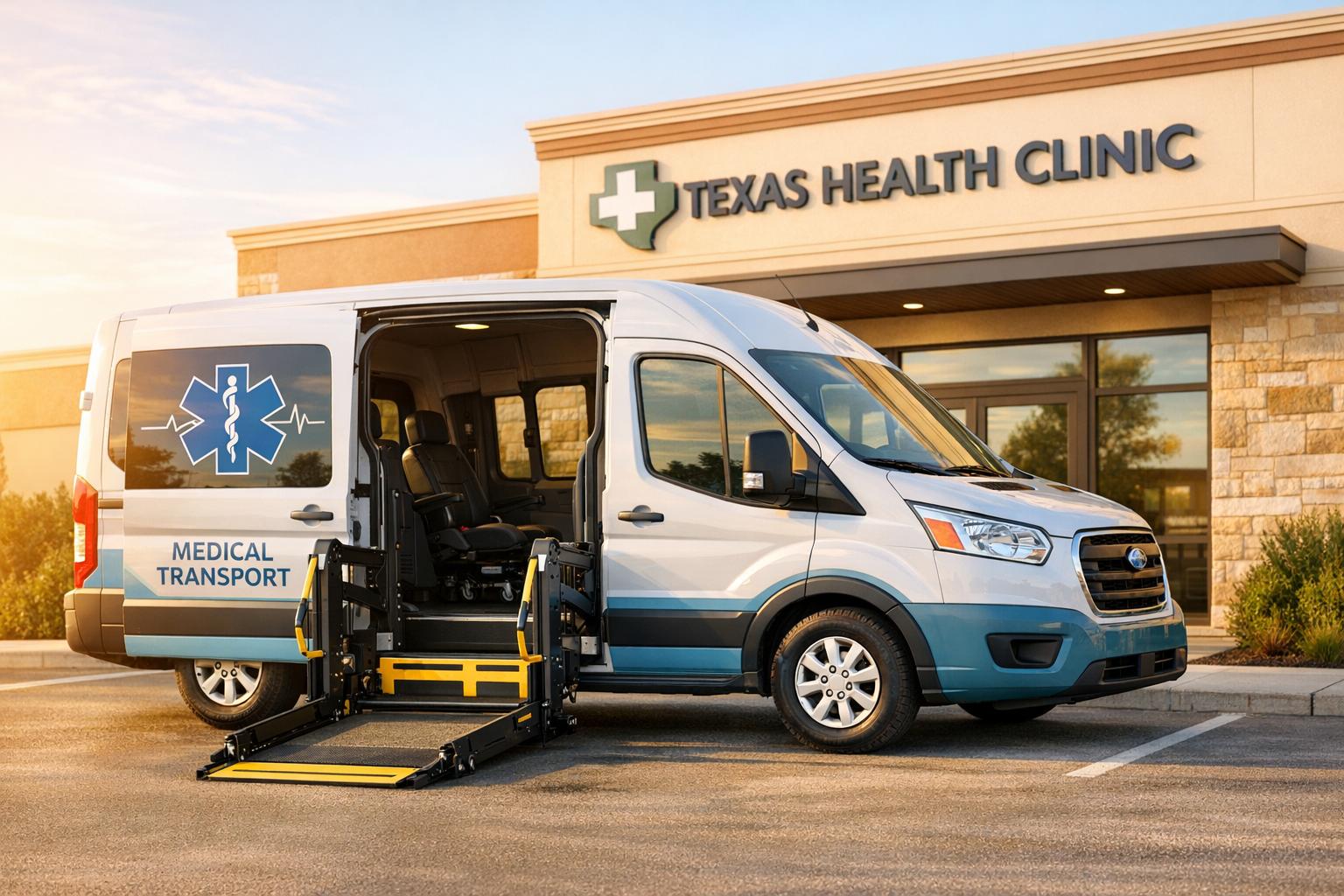
Non-Emergency Medical Transportation (NEMT) ensures Texans – especially Medicaid recipients, children with special healthcare needs, and indigent cancer patients – can access essential healthcare services without transportation barriers. By offering rides to doctor visits, pharmacies, and hospitals, NEMT reduces missed appointments, improves patient outcomes, and supports healthcare providers in managing schedules efficiently. Learn more about how these services work statewide in our Texas NEMT guide.
Key points:
- NEMT covers local and long-distance trips via buses, taxis, vans, and flights.
- Services are tailored for Medicaid patients under Managed Care Organizations (MCOs) or fee-for-service programs.
- Features include ADA-compliant vehicles, bilingual support, and safety-trained drivers.
- Technology like AI scheduling and real-time tracking enhances reliability and reduces administrative burdens.
For providers, NEMT minimizes no-shows, simplifies recurring treatment scheduling, and streamlines hospital discharges. With partnerships like Zyvra Mobility in Austin, healthcare systems benefit from centralized dashboards, automated updates, and dependable patient transport services. For local transportation support, explore our Austin NEMT Services page.
Non-Emergency Medical Transportation (NEMT) Coordination Topics #4 of 4 (Apr. 13, 2022)
Adding NEMT to Healthcare Operations
How to Schedule NEMT Transportation for Texas Healthcare Patients
Integrating non-emergency medical transportation (NEMT) into healthcare operations can significantly reduce missed appointments and improve patient outcomes. By letting patients know about free transportation options when scheduling their appointments, providers can help remove transportation barriers that might prevent patients from accessing essential care. Here’s how to streamline scheduling and maintain effective communication with NEMT providers.
Coordinating Patient Appointments with NEMT
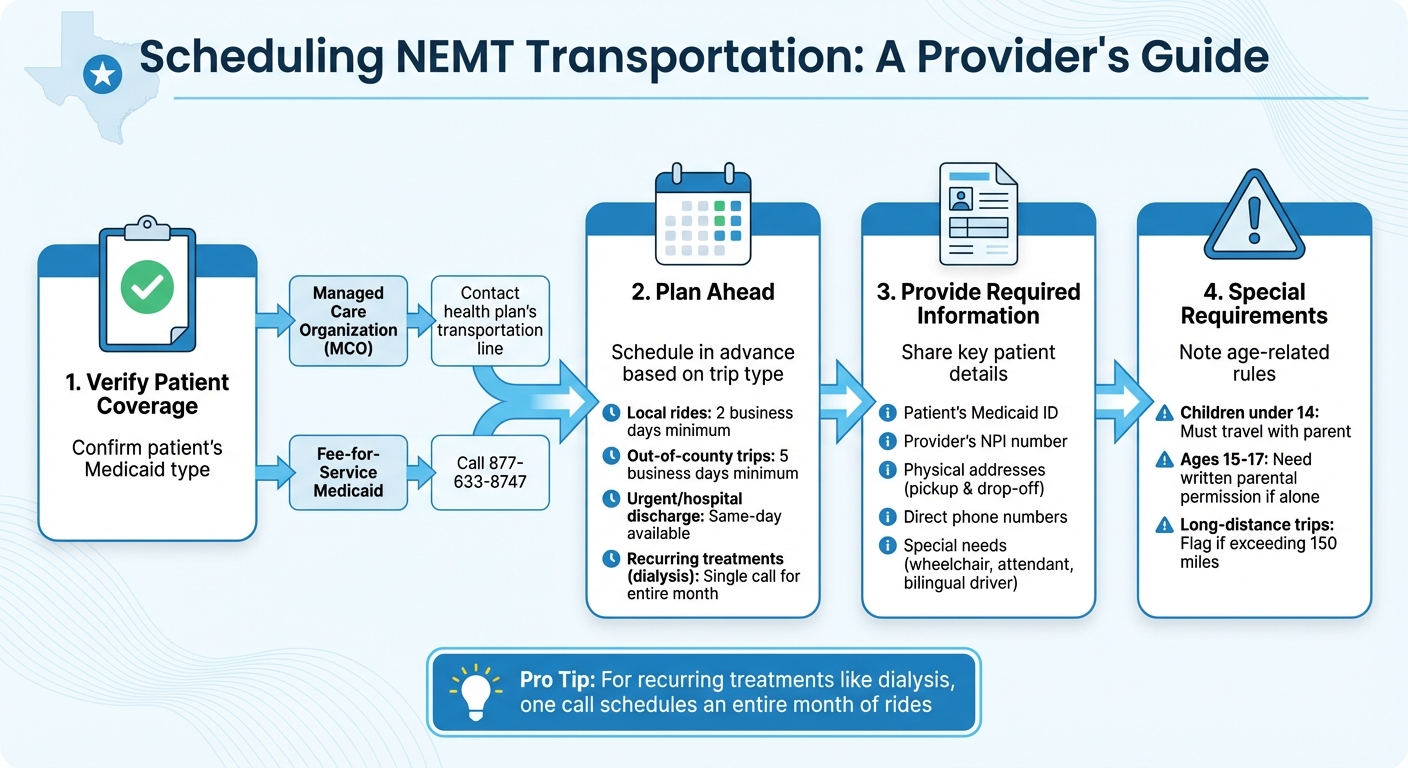
For local rides, schedule transportation at least two business days in advance, while trips outside the county should be arranged five business days ahead. In urgent situations, such as hospital discharges, same-day transportation can often be arranged.
For recurring treatments like dialysis, a single call can schedule transportation for an entire month. When making arrangements, provide key details like the patient’s Medicaid ID, the provider’s NPI, and any specific transportation needs, such as a wheelchair-accessible vehicle.
“With a single call, your office or patient can arrange travel for an entire month for ongoing appointments such as renal dialysis for kidney disease.” – Texas Health Steps
Building Clear Communication Between Providers and NEMT
Clear communication is essential to avoid delays or misunderstandings. Confirm whether the patient is enrolled in a Managed Care Organization (MCO) or traditional Medicaid. Patients with MCO coverage should contact their health plan’s transportation line, while those with fee-for-service Medicaid can call 877-633-8747.
When scheduling, document any special requirements, such as the need for an attendant, a bilingual driver, or long-distance trips exceeding 150 miles. Texas law also requires children under 14 to travel with a parent, while patients aged 15–17 need written parental permission if traveling alone. Be sure to include accurate physical addresses and direct phone numbers for both pickup and drop-off locations.
Meeting ADA Requirements and Keeping Patients Safe
Non-Emergency Medical Transportation (NEMT) plays a crucial role in ensuring patients not only arrive on time but also travel safely and comfortably. In Texas, NEMT providers adhere to strict ADA, federal, and state safety standards, particularly for those with mobility challenges. These services go beyond basic transportation, prioritizing vehicle safety and driver readiness to meet the needs of seniors and individuals with disabilities.
ADA-Compliant Vehicles and Equipment
NEMT fleets are equipped with vehicles designed for accessibility and safety. These include wheelchair-accessible vehicles (WAVs) with hydraulic lifts for both power and manual wheelchairs, stretcher vehicles with secure loading systems, and standard sedans for ambulatory patients. When booking a ride, it’s important to specify any equipment needs – such as a wheelchair lift, walker assistance, or stretcher transport – to ensure the appropriate vehicle is dispatched. Additionally, private NEMT providers with more than 15 employees must meet ADA requirements, including specifications for door dimensions and securement systems for mobility devices.
Driver Training and Safety Standards
Safety doesn’t stop at the vehicles – it extends to the drivers. NEMT drivers undergo comprehensive training in CPR, First Aid, HIPAA compliance, and ADA guidelines to ensure they’re prepared for any situation. They also pass multi-level background checks and regular drug tests to maintain high safety standards.
A key aspect of NEMT service is the “hand-to-hand” protocol, where drivers provide direct assistance to patients, guiding them from their point of origin to their destination. This approach offers added support, particularly for seniors and individuals with mobility limitations.
Using Technology for Better Efficiency and Tracking
Modern technology is reshaping the best medical transport options in Austin and beyond by simplifying scheduling, improving tracking, and cutting down on administrative tasks. These advancements ensure that patients reach their medical appointments on time, while also boosting overall safety and reliability.
AI-Powered Scheduling and Route Planning
Automated tools are changing the way rides are scheduled. With smart dashboards, healthcare coordinators can book rides instantly or plan them up to 30 days in advance. Machine learning steps in to predict driver availability and even handle bulk scheduling for recurring appointments, like weekly treatments.
The impact of these tools is clear. For example, during a two-year period ending in 2025, the US Veterans Health Administration reported that 83% of veterans would have missed their appointments without tech-enabled ride coordination. Similarly, OneWell Health Care estimated monthly savings of $407 per participant, while Adams Clinical found that addressing transportation challenges cut clinical trial dropout rates by 20%.
Real-Time Tracking
Real-time tracking takes the guesswork out of transportation. Centralized dashboards let coordinators monitor trips as they happen, reducing the need for constant status-check calls. Patients and clinics get automated updates – available in over 15 languages – via text or call, ensuring accessibility even for those without smartphones or facing language barriers.
Another game-changer is the use of “Attention Needed” alerts. These notifications flag potential delays or cancellations early, giving clinics a chance to adjust schedules and reduce downtime. Whether it’s a “driver on the way” update or a last-minute change, these systems keep everyone informed and on track.
sbb-itb-8e5d2ef
How Healthcare Providers Benefit from NEMT Partnerships
Healthcare organizations can streamline ride coordination and improve patient access through our Care Partners program. Healthcare providers often grapple with a recurring issue: missed appointments. These no-shows not only disrupt care plans but also waste valuable clinic time. One of the main culprits? Transportation challenges, particularly for Medicaid-eligible patients. This is where Non-Emergency Medical Transportation (NEMT) partnerships step in, offering a solution that ensures patients can reliably get to their appointments. With dependable transportation, appointment adherence improves significantly.
The impact of these partnerships is clear. According to Texas Health Steps:
“Medicaid rides help patients miss fewer appointments, reducing no-shows and the need to overbook appointments”.
When providers can count on patients showing up, they can reduce the need to overbook, leading to smoother daily operations. This predictability not only minimizes staff frustrations caused by last-minute cancellations but also creates a more efficient workflow.
For patients requiring regular treatments, like renal dialysis, NEMT simplifies scheduling. A single call can arrange transportation for an entire month, eliminating repetitive administrative tasks for staff. This frees up time for clinical responsibilities, allowing staff to focus on patient care instead of logistics.
NEMT also plays a crucial role in hospital discharge efficiency. Same-day transportation options mean patients don’t have to wait for family or friends to pick them up, which speeds up bed turnover and reduces delays in billing and capacity management. Additionally, these services help patients access pharmacies immediately after appointments, ensuring they don’t delay starting prescribed medications.
Language barriers, another common obstacle, are also addressed by NEMT services. In Texas, bilingual call center staff and language lines make it easier for non-English-speaking patients to schedule rides. When patients can arrange transportation in their preferred language, they’re more likely to attend appointments and stick to their treatment plans.
How Zyvra Mobility Partners with Austin Healthcare Providers
Zyvra Mobility collaborates with healthcare providers in Austin to tackle transportation challenges head-on. Using HIPAA-compliant dashboards, clinics and hospitals can request, manage, and track patient rides in real time. This system allows patients to arrange transportation even if they don’t have access to a smartphone.
These partnerships support a wide range of healthcare needs, from routine checkups to critical appointments for chronic conditions like dialysis or chemotherapy. Providers serving nearby communities can also explore our Round Rock NEMT Services page for more local transportation support. The service is also instrumental in ensuring safe and efficient hospital discharges. By addressing these logistical hurdles, Zyvra Mobility creates smoother pathways for care delivery.
What Sets Zyvra Mobility’s NEMT Services Apart
Zyvra Mobility focuses on safety and efficiency, leveraging robust driver vetting processes and seamless technology integration. Every driver undergoes thorough background checks, including license verification, driving history reviews, and criminal record screenings. To maintain high standards, drivers are re-screened annually and monitored continuously. The fleet also includes Wheelchair Accessible Vehicles (WAV) with door-to-door assistance, ensuring compliance with ADA requirements.
Through API integration, healthcare providers can link their systems directly to Zyvra’s platform, eliminating the need for manual data entry and simplifying scheduling. Both patients and care coordinators benefit from real-time trip tracking, along with automated notifications via SMS or phone that provide trip details and driver information. Additionally, “Attention Needed” alerts notify care teams of delays, enabling swift action to resolve issues.
Results from Healthcare Partnerships
Healthcare providers in Austin report smoother operations and improved patient attendance rates, thanks to Zyvra Mobility’s centralized dashboard system. By reducing the administrative load on clinic staff, the platform allows teams to focus more on patient care. Real-time tracking and automated alerts help care coordinators address transportation challenges quickly, minimizing missed appointments. This streamlined approach not only enhances operational efficiency but also ensures patients receive dependable transportation, breaking down barriers to accessing healthcare. We also support broader regional access through our Travis County NEMT services.
Conclusion
NEMT partnerships play a critical role in breaking down transportation barriers, making it possible for Texans – from Medicaid recipients to children with special needs – to access the healthcare they depend on.
These collaborations don’t just help patients; they also make life easier for healthcare providers. By lowering no-show rates, clinics and hospitals can run more smoothly, avoiding the need to overbook appointments to account for missed visits. For patients managing chronic conditions like kidney disease, scheduling a month’s worth of rides takes just one call. Meanwhile, same-day services handle urgent needs like hospital discharges or trips to the pharmacy without a hitch.
Educating patients about free transportation options reduces cancellations and leads to better health outcomes. Plus, bilingual support ensures that language isn’t a barrier to receiving care.
With advanced scheduling tools and robust safety measures in place, these partnerships are reshaping how healthcare is delivered. They ensure that mobility challenges or financial constraints don’t stand in the way of receiving timely and necessary care.
FAQs
How does NEMT help Medicaid patients in Texas access healthcare?
Non-Emergency Medical Transportation (NEMT) plays a crucial role in helping Medicaid patients in Texas access essential healthcare services. This includes trips to doctor’s appointments, dental visits, dialysis treatments, pharmacy runs, and even out-of-state specialty care. By offering transportation options like public buses, taxis, vans, and commercial flights, along with mileage reimbursements, gas cards, meals, and lodging for those who qualify, NEMT eliminates transportation challenges that might otherwise delay or prevent care.
This service makes a big difference in health outcomes by cutting down on missed appointments and helping patients stick to their care plans, such as attending regular dialysis sessions. For groups like children, pregnant women, and individuals undergoing intensive treatments, NEMT provides extra support, including allowing parents to accompany their children and offering assistance for multi-day care. These efforts lead to better disease management, fewer emergency room visits, and improved overall health for Medicaid patients across Texas.
What technologies does NEMT use to ensure reliable transportation?
Non-Emergency Medical Transportation (NEMT) uses cutting-edge technology to ensure dependable services. Features like real-time GPS tracking allow for precise monitoring of vehicle locations, making sure pickups and drop-offs happen on time. Automated trip verification systems simplify scheduling and confirm when trips are completed. On top of that, integrated software helps optimize routes, minimize delays, and enhance safety for patients during their journey.
How can Texas healthcare providers seamlessly integrate NEMT services into their workflows?
Healthcare providers in Texas can seamlessly integrate Non-Emergency Medical Transportation (NEMT) services into their operations by following state guidelines and embedding transportation planning into their workflows. A good starting point is utilizing the state-mandated request form to document key details like medical necessity, patient eligibility, and destination specifics. By incorporating this form into electronic health record (EHR) systems or practice management tools, staff can schedule rides at the same time they book appointments, ensuring patients without reliable transportation are accommodated.
To make the process smoother, staff training on NEMT procedures – such as verifying eligibility and scheduling rides – is essential. This not only reduces no-show rates but also improves overall efficiency. Leveraging technology with features like real-time ride tracking and automated reminders can further enhance patient safety and streamline operations. These steps ensure compliance with regulations, expand access to care, and lead to better outcomes for patients facing transportation barriers.