
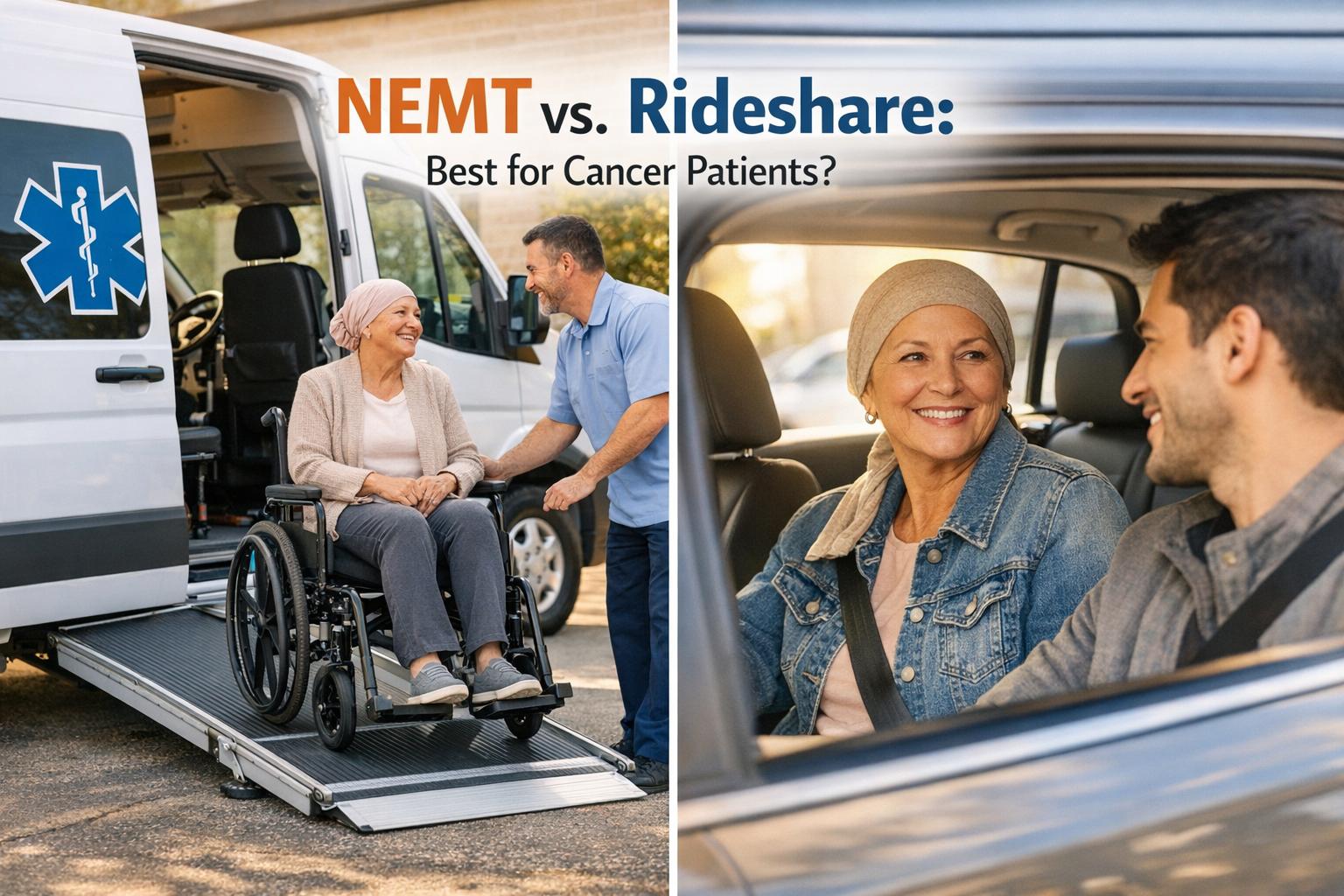
Non-Emergency Medical Transportation (NEMT) and rideshare services like Uber and Lyft offer different solutions for cancer patients needing transportation to medical appointments. Here’s the bottom line: NEMT is better suited for cancer patients with specific medical needs, while rideshare may work for those who are mobile and independent.
Key Differences:
- NEMT provides door-to-door or door-through-door assistance, trained drivers, and vehicles equipped for medical needs (e.g., wheelchairs, oxygen tanks). It’s often covered by Medicaid or Medicare Advantage plans.
- Rideshare offers curb-to-curb service with standard vehicles, limited assistance, and out-of-pocket costs unless covered by specific insurance plans.
Quick Comparison:
| Feature | NEMT Services | Rideshare Services |
|---|---|---|
| Service Level | Door-to-door or door-through-door | Curb-to-curb |
| Driver Training | CPR, First Aid, patient sensitivity | Basic driver background checks |
| Vehicle Equipment | Wheelchair lifts, stretchers, oxygen | Standard personal vehicles |
| Cost | Often covered by Medicaid/Medicare | Out-of-pocket or insurance partnerships |
| Scheduling | Pre-scheduled, reliable | On-demand, subject to availability |
For cancer patients requiring consistent and safe transportation, NEMT offers the reliability and specialized care rideshare lacks. However, rideshare may be a faster, more affordable option for those without medical equipment or assistance needs.
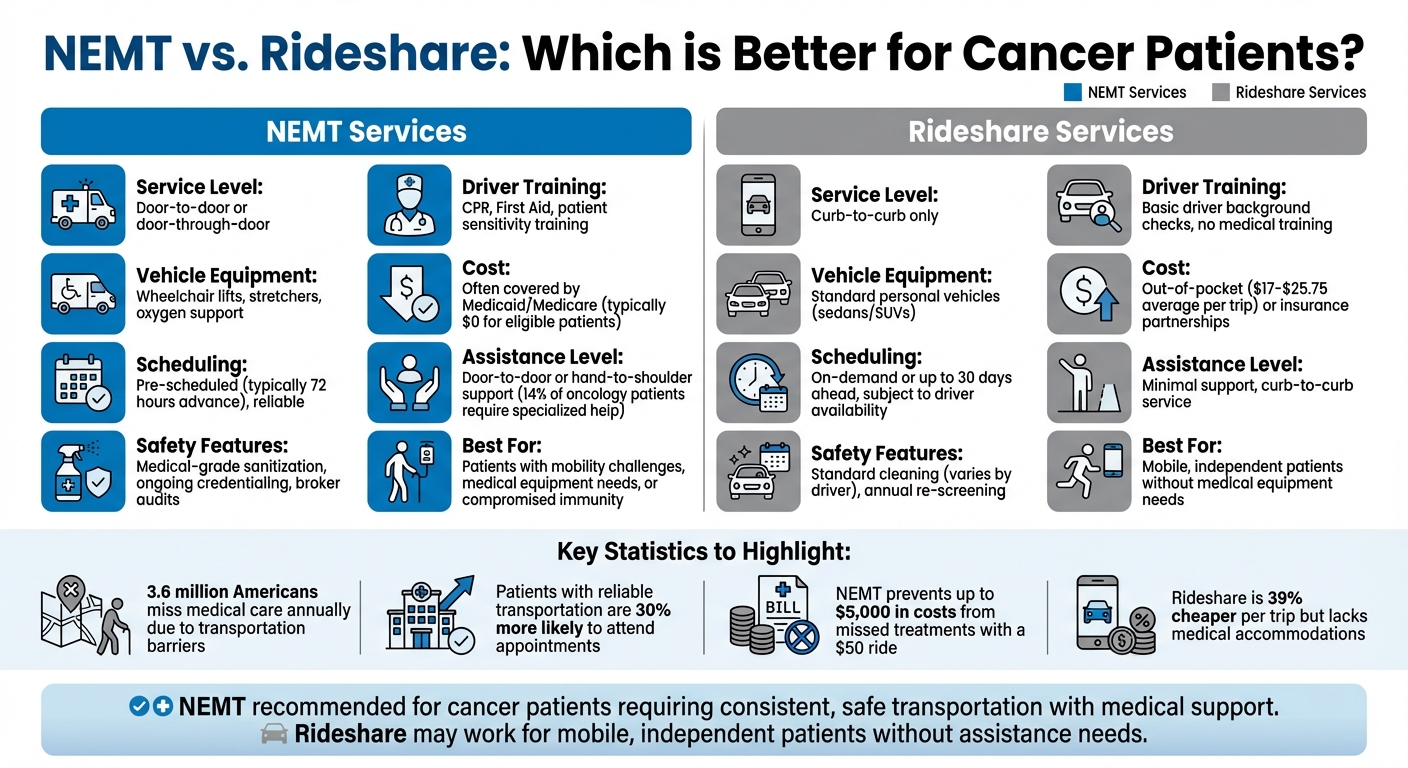
NEMT vs Rideshare Services Comparison for Cancer Patients
What is Non-Emergency Medical Transportation (NEMT)?
Non-Emergency Medical Transportation (NEMT) is a specialized service designed to provide safe and reliable transportation for patients who need to get to medical appointments but face challenges getting there on their own. Unlike emergency services like 911 or a standard taxi ride, NEMT is specifically tailored to help individuals overcome physical or financial obstacles that make driving or arranging transportation difficult.
This service is especially important for seniors, individuals with disabilities, and low-income Medicaid beneficiaries who either can’t drive due to medical conditions or lack access to a vehicle. For example, cancer patients undergoing chemotherapy or radiation often rely on NEMT because the side effects of treatment can make driving unsafe or impossible.
NEMT vehicles are equipped to meet the specific needs of patients. For those who can walk independently, standard sedans are used. Patients needing mobility assistance may ride in wheelchair-accessible vans with ramps or hydraulic lifts. Meanwhile, non-ambulatory patients requiring a stretcher for transport are accommodated with specialized stretcher vans. This range of vehicles ensures that patients receive the right level of care and comfort during their journey.
Drivers for NEMT services are trained and credentialed to handle the unique needs of patients, including those with mobility challenges. They undergo background checks and safety training to ensure a professional and secure experience. Scheduling is carefully coordinated to align with medical appointments, ensuring patients arrive on time and avoid interruptions in their care. This is particularly crucial for oncology patients who need consistent treatment schedules. Robbins Schrader, CEO of SafeRide Health, highlights the value of this service:
“By connecting the most vulnerable Medicare Advantage and Medicaid members with critical healthcare services through technology, SafeRide Health is at the epicenter of delivering reliable, individualized transportation, and more human-centered, value-based care solutions”.
The numbers speak volumes about the importance of NEMT. Each year, around 3.6 million Americans miss medical care because of transportation barriers, while Medicaid provides rides to approximately 3 to 4 million enrollees annually. For cancer patients and others requiring frequent medical visits, NEMT can make the difference between receiving consistent care and facing treatment delays.
Features of NEMT Services
Non-Emergency Medical Transportation (NEMT) services are designed with cancer patients in mind, addressing the unique challenges that come with mobility issues and health vulnerabilities. These services go beyond standard transportation, offering features specifically crafted to meet the needs of medically fragile passengers.
NEMT vehicles are equipped with specialized features like lifting ramps, wheelchair tie-downs, stretcher accommodations, and essential onboard medical supplies, including oxygen tanks and first-aid kits. As UnitedMedTrans puts it:
“NEMT services aren’t regular pick-up and drop-off transportation services. They’re specifically tailored to transport patients with medical needs, so they’re fully equipped with medical equipment”.
The drivers operating these vehicles bring another layer of care. They receive training in patient assistance, CPR, and first aid to ensure they can handle the needs of immunocompromised passengers. Beyond medical training, these drivers undergo rigorous background checks and specialized safety training to prepare them for transporting individuals with significant health conditions.
NEMT services also provide hands-on support that goes far beyond what traditional rideshare services offer. With door-to-door and door-through-door assistance, drivers help patients navigate obstacles like stairs, parking lots, and long distances – all while continuously monitoring the passenger’s well-being throughout the trip to ensure comfort and stability.
Safety is a top priority for NEMT providers. Advanced systems like GPS tracking and driver-monitoring tools ensure safe driving practices, while strict infection control measures protect immunocompromised cancer patients. Vehicles are routinely sanitized and detailed to minimize exposure to bacteria and other risks. These protocols are especially critical for cancer patients, as maintaining a safe and stable environment directly supports their ability to stick to treatment schedules.
As Stellar Transport emphasizes:
“Reliable transportation is not just a convenience – it’s a medical necessity”.
This combination of specialized vehicles, trained drivers, hands-on assistance, and stringent safety measures ensures that NEMT services provide a secure, dependable solution for cancer patients’ transportation needs.
How NEMT Helps Cancer Patients
Cancer treatment often demands consistent and reliable transportation. For many patients, the physical toll of daily radiation or regular chemotherapy makes getting to appointments a significant challenge. Non-Emergency Medical Transportation (NEMT) services address this need by providing dependable, patient-focused solutions.
Take services like Zyvra Mobility, for example. They offer standing orders for recurring treatments, allowing patients to pre-schedule rides for their entire treatment cycle. This eliminates the stress of coordinating transportation for each appointment, ensuring patients stick to their demanding treatment schedules.
Here’s a telling statistic: patients with reliable transportation are 30% more likely to attend their medical appointments. This connects with findings from the National Breast and Cervical Cancer Early Detection Program, where up to 90% of women identified transportation as a significant barrier to care. Dr. Evan M. Graboyes from the Medical University of South Carolina highlights the critical importance of transportation in cancer care:
“Transportation insecurity has the potential to increase the rates of cancer recurrence and mortality as well as exacerbate disparities in cancer incidence, severity, and outcomes.”
Clinical data backs these benefits. The University of Pennsylvania Health System ran a pilot program from May 2022 to July 2023 for gynecologic oncology patients, using a dedicated NEMT platform. During this period, 48 patients completed 417 rides, with 14% requiring specialized door-to-door services for wheelchairs or portable oxygen. On average, patients saved 19.5 minutes per one-way trip compared to public transit – an important factor for those already fatigued from treatment.
Beyond convenience, NEMT offers a safe and controlled environment. These services minimize infection risks for immunocompromised patients, with door-to-door support that reduces delays and limits exposure. Drivers are trained to handle medical equipment like oxygen tanks, ensuring patients receive the care they need during transit. In states like Texas, Medicaid covers these services at no cost through the Medical Transportation Program, while self-pay options range from $50 to $150+ per trip, depending on distance and required assistance.
With these features, NEMT plays a crucial role in ensuring cancer patients can maintain consistent and effective treatment, making it a lifeline for many.
What are Rideshare Services?
Rideshare services take a tech-forward approach to transportation, connecting passengers with drivers through smartphone apps. Companies like Uber and Lyft have popularized this model, offering on-demand, point-to-point rides using personal vehicles. Drivers are thoroughly vetted, licensed, and insured, and payments are handled digitally, making the process simple and cash-free for users. Unlike the hands-on support provided by Non-Emergency Medical Transportation (NEMT), rideshare services operate with a more independent, self-service framework.
These services were initially developed as budget-friendly transportation options. According to the RAND Corporation, rideshare fills a “generally unique, economical, efficient, and otherwise unoccupied niche of the NEMT ecosystem”. While some studies suggest rideshare can cut down travel times, this convenience doesn’t address the lack of personalized assistance that many cancer patients require. For instance, a University of Pennsylvania pilot study reported a median one-way cost of $25.75 for rideshare services, which some may find reasonable, but it doesn’t account for the specific needs of patients dealing with fatigue or mobility issues.
The rideshare model follows a “curb-to-curb” approach, meaning drivers pick up and drop off passengers at designated locations without offering additional help. This setup works well for individuals who are mobile and can travel independently. However, for cancer patients who may need physical assistance or medical equipment during transport, this limitation can become a significant hurdle.
Another challenge is the reliance on technology. Using rideshare services typically requires a smartphone and some level of tech-savviness to navigate the app and handle digital payments. That said, platforms like Uber Health aim to bridge this gap by allowing healthcare providers to book rides on behalf of patients who lack smartphones. Still, the core rideshare model prioritizes quick, self-managed trips, which may not be suitable for everyone.
Rideshare Convenience and Availability
Rideshare services have become a go-to option in urban areas, offering a level of convenience that’s hard to beat. With just a few taps on an app, a driver can typically arrive within 10 minutes. This on-demand setup is especially helpful for urban patients dealing with last-minute needs or uncertain discharge times from medical facilities. But while this speed and accessibility are a major perk in cities, the same can’t be said for rural areas.
Between April 2022 and April 2024, Lyft drivers in Atlanta completed thousands of medical trips to places like the Winship Cancer Institute of Emory University. Of these trips, 75% were under 100 miles, 21% ranged between 100 and 200 miles, and 4% exceeded 200 miles. For rural cancer patients, however, the story is very different. Long commutes and a lack of available drivers make accessing rideshare services much harder. Dan Reid, President of Grove Transit, explains the challenge:
“The same holds true for someone trying to make a living as a ride share driver, to make money they need to be where the rides (e.g. people) are! Unfortunately, this makes it more difficult for riders in rural areas to find available drivers”.
Even in urban areas, rideshare services have their limitations, particularly for oncology patients. Many drivers avoid hospital trips due to the curb-to-curb nature of the service, which doesn’t include physical assistance. Rideshare driver Damian Durand openly shares:
“When I can see that the ride is going to the hospital, I try to avoid or cancel the ride”.
This hesitation often comes down to compensation. Drivers aren’t paid extra for the additional time or effort required to assist medical passengers, making these trips less appealing.
For patients without smartphones, options like Uber Health and Lyft Concierge allow caregivers or medical staff to book rides on their behalf. Nonprofit initiatives, such as ChemoCars, have also stepped in to provide free rides for patients. While these solutions can be helpful, they often add extra layers of coordination, which can be overwhelming for those already juggling complex treatment schedules.
The cost of rideshare services is another hurdle. The average trip runs about $17, but prices can spike depending on distance and surge pricing. Rochelle Schube, a cancer support group facilitator, highlights the financial strain:
“If I give a patient $250 in Uber cards and they live far away, that gets spent quickly”.
In 2024, some improvements emerged, with 36% of individual Medicare Advantage plans and 88% of special needs plans offering transportation benefits that may include rideshare. However, these benefits vary greatly and don’t address a key issue: standard rideshare vehicles lack medical features like wheelchair ramps, oxygen hookups, or drivers trained in patient care.
These challenges reveal why, despite its convenience, rideshare often falls short for cancer patients. Non-emergency medical transportation (NEMT) services provide a more suitable alternative, offering door-to-door assistance and medically equipped vehicles tailored to the needs of oncology patients.
Rideshare Challenges for Cancer Patients
The curb-to-curb approach of rideshare services leaves cancer patients in a tough spot. While convenient for many, this model doesn’t work well for those who need extra help getting from their door to the car or into medical facilities. For patients dealing with extreme fatigue, neuropathy, or the need for supplemental oxygen, being dropped off at the curb just isn’t enough.
Another issue is the lack of driver training in critical areas like CPR, first aid, or patient assistance. A study by the RAND Corporation highlighted that rideshare services are only suitable for trips requiring “minimal assistance or monitoring”. That’s a big problem for patients who might feel dizzy, overwhelmingly tired, or experience other chemotherapy side effects. Without proper medical protocols in place, these rides can pose serious health risks.
The cleanliness of rideshare vehicles is another concern. Unlike medical transport, these cars don’t follow strict cleaning standards, which puts immunocompromised patients at risk of infection. For example, when neutrophil counts drop below 1,000 cells/µL, patients are especially vulnerable to severe infections like viral pneumonia. Disturbingly, studies show that nearly half of these cases could lead to pneumonia, with mortality rates exceeding 50%.
Accessibility is also a major hurdle. Most rideshare vehicles aren’t equipped with wheelchair ramps, lifts, or enough room for medical equipment. As Sophia Pringle points out, this makes rideshare options nearly impossible for people with mobility challenges. In fact, 21% of U.S. adults without a car report they’ve missed medical care because they couldn’t find suitable transportation.
All of these challenges make one thing clear: cancer patients don’t just need a ride – they need transportation designed with their health, safety, and mobility in mind.
NEMT vs. Rideshare: Side-by-Side Comparison
When it comes to cancer patients traveling to treatment, the choice between Non-Emergency Medical Transportation (NEMT) and rideshare services can make a big difference in terms of safety and comfort. NEMT is designed with patients’ unique needs in mind, while rideshare services are more general-purpose, often leaving gaps in care.
One of the most noticeable differences is the level of assistance provided. NEMT offers door-to-door or even door-through-door service, meaning drivers assist patients from inside their homes all the way to the treatment area in the clinic. On the other hand, rideshare services operate on a curb-to-curb basis, where patients must get themselves from their door to the vehicle and then from the vehicle to the entrance of the medical facility. For patients dealing with chemotherapy fatigue or neuropathy, these extra steps can be a significant challenge.
Another key distinction is driver training. NEMT drivers are trained in CPR, First Aid, defensive driving, and caring for elderly or medically fragile individuals. In contrast, rideshare drivers only need a standard driver’s license and must pass a background check. They do not receive any specialized medical training. For example, in a pilot program conducted by Harborview Medical Center in Seattle from February 2022 to August 2023, Lyft was used for transporting 31 post-sedation patients. While all patients reached their destinations safely, one noted the difficulty of managing without any assistance.
Vehicle capability is another critical factor, especially for patients with mobility challenges. NEMT fleets are equipped with specialized vehicles that include wheelchair ramps, lifts, and stretcher systems. Rideshare vehicles, being personal cars, generally lack these features and are best suited for ambulatory patients or those with mobility devices that can fit in a standard trunk.
The table below outlines some of the key differences between NEMT and rideshare services:
| Feature | NEMT Services | Rideshare Services |
|---|---|---|
| Service Level | Door-to-door or door-through-door | Curb-to-curb |
| Driver Training | CPR, First Aid, and sensitivity training | Standard driver’s license only |
| Vehicle Equipment | Wheelchair lifts, stretchers, oxygen support | Standard personal vehicles |
| Advance Notice | Typically 72 hours in advance | On-demand or up to 30 days ahead |
| Medical Monitoring | Real-time tracking | GPS tracking |
| Cost Structure | Often insurance-covered; no surge pricing | Out-of-pocket; subject to surge pricing |
| Average Trip Cost | Varies by insurance coverage | $24.66 (range: $9.99–$54.49) |
This comparison makes it clear why NEMT is often the better choice for patients with complex medical needs, particularly those undergoing treatment for cancer. It offers a level of care and support that rideshare services simply can’t match.
sbb-itb-8e5d2ef
On-Time Performance and Scheduling
Missing a chemotherapy session or radiation appointment can disrupt treatment schedules and potentially impact treatment outcomes. That’s why Non-Emergency Medical Transportation (NEMT) services prioritize on-time performance, allowing patients to book rides well in advance for critical, time-sensitive procedures. As Safr Care explains:
“NEMT providers understand that punctuality is essential, especially when attending time‐sensitive medical procedures or follow‐up visits”.
Unlike NEMT, rideshare services operate on an on-demand basis, offering last-minute convenience but with unpredictable availability. Factors like driver supply, traffic, and surge pricing can affect reliability. For example, a study at a safety-net hospital found that 30% of clinic visits were missed during a rideshare intervention, compared to 32.7% before rideshare was introduced. While tools like Uber Health and Lyft Business now allow clinical teams to schedule rides for patients, their reliability still hinges on real-time driver availability.
One of NEMT’s key strengths is its ability to adapt to delays. If an oncology appointment runs over time, NEMT can adjust pickup schedules and routes to ensure continuity of care. Rideshare drivers, on the other hand, typically stick to fixed bookings and may not wait for patients if appointments take longer than expected.
That said, NEMT isn’t without its own challenges. Issues like no-shows – where scheduled vehicles fail to arrive – have been reported. Additionally, in 2018, fewer than 5% of Medicaid beneficiaries used traditional NEMT services, partly due to complex scheduling systems and inconsistent availability. For cancer patients undergoing daily radiation treatments over several weeks, even one transportation failure can disrupt an entire treatment cycle.
Safety Features and Accessibility
Cancer patients face unique safety concerns when it comes to transportation. Treatments like chemotherapy and radiation often weaken the immune system, which makes strict infection control measures a necessity. While rideshare drivers undergo basic background checks, they typically lack specialized training in handling patients, as highlighted by Uber Health.
On the other hand, Non-Emergency Medical Transportation (NEMT) services prioritize safety through extensive driver training in patient sensitivity and handling techniques. These services also use broker systems to continuously monitor their vehicles, ensuring they meet strict safety standards. For immunosuppressed cancer patients, even minor exposure to infections could delay critical treatments, making these enhanced safety protocols indispensable. This focus on safety makes NEMT services especially well-suited for individuals undergoing cancer care.
Accessibility is another area where NEMT services stand out. They operate ADA-compliant vehicles equipped with wheelchair lifts, ramps, and stretcher systems. Many of these vehicles also feature lowered floors, hydraulic lifts, and specialized securement systems, which directly improve safety and comfort for patients with mobility challenges. In comparison, rideshare services typically rely on standard sedans, with limited availability of wheelchair-accessible options.
The level of assistance provided by these services also varies significantly. Rideshare services generally follow a curb-to-curb approach, where drivers may help stow mobility devices but rarely offer in-home assistance. In contrast, NEMT services provide door-to-door or even hand-to-shoulder assistance. This is crucial for patients who may struggle with stairs or need help managing equipment like supplemental oxygen.
Here’s a side-by-side look at how these services compare:
| Feature | NEMT Services | Standard Rideshare |
|---|---|---|
| Driver Training | Trained in patient sensitivity and handling; often includes CPR/first aid | Basic background checks; no medical training |
| Vehicle Equipment | ADA-compliant with wheelchair lifts and stretcher capabilities | Standard sedans with limited accessibility |
| Infection Control | Medical-grade sanitization protocols | Standard cleaning; varies by driver |
| Assistance Level | Door-to-door or hand-to-shoulder support (14% of oncology patients require specialized help) | Curb-to-curb service with minimal support |
| Safety Oversight | Ongoing credentialing and broker audits | Annual re-screening of driving records |
Comfort and Stress Levels
When it comes to transportation for cancer patients, comfort plays a critical role alongside safety and timely service. Treatments like chemotherapy and radiation often come with side effects such as nausea, dizziness, extreme fatigue, and neuropathy, making even simple tasks – like walking to a vehicle or getting into one – much more difficult. Because of this, the type of transportation patients choose can significantly affect both their physical comfort and emotional stress.
Rideshare services typically offer curb-to-curb service, meaning patients are responsible for getting themselves from their doorstep to the vehicle. On the other hand, Non-Emergency Medical Transportation (NEMT) provides a much more supportive experience, offering door-to-door or even bed-to-bed assistance. NEMT drivers are also trained in medical sensitivity, which helps create a more reassuring and less stressful environment for patients.
The design of the vehicle also plays a big part in ensuring comfort. NEMT vehicles are often specialized vans equipped with wheelchair ramps, stretchers, and enough space for oxygen tanks or other medical equipment. These features are essential for patients who may be non-ambulatory or too weak to sit upright. In contrast, rideshare services typically use standard sedans or SUVs, which lack these accommodations and can make the ride less comfortable for those with specific medical needs.
The table below highlights the key differences in comfort features between NEMT services and standard rideshare options:
| Comfort Feature | NEMT Services | Standard Rideshare |
|---|---|---|
| Enhanced In-Transit Comfort | Door-to-door or bed-to-bed support | Curb-to-curb drop-off |
| Medical Sensitivity Training | Drivers trained in compassionate care protocols | Basic passenger service |
| Vehicle Type | Specialized vans with wheelchair and stretcher access | Standard sedans or SUVs |
| Equipment Accommodation | Designed for oxygen tanks, wheelchairs, and stretchers | Limited or no medical accommodations |
| Emotional Support | Provides reassurance and reduces anxiety | Standard passenger service |
Pricing and Insurance Coverage
Cancer patients often grapple with steep transportation expenses due to frequent medical appointments. For eligible Medicaid enrollees, NEMT rides come at no cost. This is particularly beneficial for those undergoing chemotherapy or radiation, as they may require numerous trips over several months. On the other hand, rideshare services like Uber and Lyft usually demand out-of-pocket payments unless a patient’s insurance plan includes a specific partnership. This creates a clear contrast between the affordability of NEMT and the convenience of rideshare options.
For patients paying out of pocket, the cost difference is noticeable. Studies indicate that Lyft rides are, on average, 39% cheaper than traditional NEMT rides. For example, one-way rideshare trips for gynecologic cancer patients averaged $25.75, with costs ranging from $13.83 to $129.91, depending on the distance traveled.
Coverage also varies significantly by insurance type. Around 36% of Medicare Advantage plans and 88% of Special Needs Plans include NEMT benefits. A notable example is the partnership between Amerigroup Tennessee and Lyft, which provided over 3,000 rides to Medicaid beneficiaries between August 2019 and March 2020. This initiative led to a 63% increase in primary care claims among users. These examples highlight the importance of NEMT’s enhanced support and safety for oncology patients.
“NEMT is a required benefit under Medicaid and is free to Medicaid enrollees.” – Social Needs Investment Lab
Here’s a quick comparison of the pricing and coverage differences between NEMT and rideshare services:
| Cost Factor | NEMT Services | Rideshare Services |
|---|---|---|
| Medicaid Coverage | Mandatory benefit, $0 for eligible enrollees | Covered only through specific partnerships |
| Medicare Advantage | Often included as a supplemental benefit | Available in select plans |
| Average Cost Per Trip | Higher due to specialized equipment/staff | $17–$25.75 average |
| Out-of-Pocket Expense | Typically $0 for eligible patients | Full market price paid by patient |
| Long-Term Savings | Significant for frequent appointments | Costs add up without coverage |
| Radiation Treatment Cycle | Covered for eligible patients | Average $323 over 4–5 weeks |
For cancer patients with Medicaid or Medicare Advantage plans that include transportation benefits, NEMT provides crucial financial relief. However, those without such coverage face a tough decision: opting for the lower per-trip cost of rideshare services or the specialized care and support offered by NEMT.
Why NEMT Works Better for Oncology Appointments
When it comes to ensuring consistent access to treatment, Non-Emergency Medical Transportation (NEMT) stands out as a better option for oncology patients. Its specialized equipment, close clinical coordination, and insurance-covered rides make it a dependable choice for those facing regular, time-sensitive treatments.
Medicaid provides NEMT rides to approximately 3–4 million enrollees annually, free of charge. In contrast, rideshare services often require out-of-pocket payments. Research shows that a $50 NEMT ride can prevent costs of up to $5,000 associated with missed treatments, underscoring its financial and operational benefits. This aligns with previous findings that NEMT plays a pivotal role in minimizing treatment disruptions.
For patients undergoing daily radiation or weekly chemotherapy, reliability is non-negotiable. NEMT brokers work directly with healthcare providers to coordinate pick-up times, ensuring patients arrive on time for their appointments. Vehicles are equipped with features tailored to oncology patients, such as wheelchair lifts and oxygen support, making the transportation process smoother and more accommodating.
“Access to transportation can determine whether a person receives timely care, so NEMT is considered a crucial benefit to ensure patients get the healthcare they need.”
– SafeRide Health
What also sets NEMT apart are its enhanced safety measures, designed to protect patients and provide peace of mind. For individuals with compromised immune systems, like those undergoing chemotherapy, these protocols are essential. Drivers receive ongoing credential checks and specialized training, which helps minimize infection risks. NEMT services also offer personalized assistance, whether it’s door-to-door or hand-to-shoulder support, ensuring patients receive the care they need, especially when treatments leave them feeling weak or unsteady.
Zyvra Mobility: NEMT Services for Cancer Patients in Austin, TX
Zyvra Mobility, founded by Wesley Burris, offers specialized Non-Emergency Medical Transportation (NEMT) services tailored for cancer patients in the Austin area. Recognizing the unique challenges faced by oncology patients, Zyvra provides door-through-door assistance, ensuring patients are escorted from their homes to check-in at facilities such as St. David’s Medical Center and Ascension Seton. This hands-on approach reflects NEMT’s dedication to delivering thoughtful and reliable care.
The service operates a fleet of ADA-compliant vehicles equipped with hydraulic lifts and securement systems, designed to provide safe and dignified transport for patients who may be weakened by chemotherapy or unable to drive due to medications like Benadryl administered during treatment. Drivers are professionally trained, with expertise in both oncology care needs and handling medical equipment.
Zyvra also simplifies the scheduling process with advanced systems that allow for standing orders, streamlining transportation for multi-week treatments. Families can stay informed with real-time SMS updates, offering peace of mind throughout the journey.
“We don’t just provide rides; we provide premier, dependable service elevating care standards.”
– Wesley Burris, CEO, Zyvra Mobility
To ensure the right vehicle configuration, patients are encouraged to book 24–48 hours in advance and specify any equipment needs, such as wheelchair accessibility or stretchers. Rides are covered at no cost for Texas Medicaid recipients through the Medical Transportation Program. For self-pay patients, rates range from $50 to $150+ per trip, depending on distance and equipment requirements. The service also works with various Medicare Advantage and private insurance plans.
FAQs
Why is non-emergency medical transportation (NEMT) often a better choice for cancer patients than rideshare services?
Cancer treatments, such as chemotherapy and radiation, often come with challenging side effects like fatigue, nausea, dizziness, and cognitive difficulties. These symptoms can make getting to and from appointments a real hurdle. That’s where Non-Emergency Medical Transportation (NEMT) services step in, offering a solution tailored to meet the unique needs of oncology patients. With door-to-door assistance, trained drivers, and vehicles equipped for medical transport, NEMT ensures a safer and more comfortable journey to critical appointments.
What sets NEMT apart is its focus on reliability and professionalism – qualities that are essential for time-sensitive medical visits. For patients who need extra support, such as wheelchair accessibility, NEMT goes a step further by providing ADA-compliant vehicles and personalized care. This makes it a far better choice than standard rideshare options, especially for those requiring specialized attention.
What are the differences in insurance coverage for cancer patients using NEMT versus rideshare services?
When it comes to transportation for cancer patients, the differences in insurance coverage between Non-Emergency Medical Transportation (NEMT) and rideshare services are striking. NEMT, particularly through programs like Medicaid or Medicare, is often fully funded for eligible individuals. This means patients can access rides to oncology appointments and other medical visits without worrying about costs. These services include features like ADA-compliant vehicles and trained drivers equipped to handle specific medical needs, ensuring a safe and supportive experience. For patients, these rides are typically free, as they are directly supported by government funding.
In contrast, rideshare services are generally not covered under standard insurance plans. While there may be some instances where programs or plans offer reimbursements or discounts for medical rides, these are rare and often come with hurdles like prior approvals or extra documentation. Additionally, rideshare services lack the specialized vehicles and trained support that NEMT provides – features that can be essential for many cancer patients.
For dependable, safe transportation tailored to medical needs, NEMT is usually the more practical and patient-centered option for those undergoing cancer treatment.
What safety features make NEMT a good choice for cancer patients?
Non-Emergency Medical Transportation (NEMT) services prioritize both safety and comfort, making them an excellent option for cancer patients traveling to medical appointments. These services often utilize ADA-compliant vehicles equipped to handle mobility aids like wheelchairs and walkers, ensuring passengers have a secure and comfortable experience.
Drivers in NEMT services are specially trained to meet the unique needs of patients, including those dealing with fatigue or side effects from treatments like chemotherapy. They adhere to strict safety protocols, such as infection control measures and proper techniques for assisting patients, to reduce risks during transit. For many cancer patients, these features offer a dependable and stress-free way to reach critical healthcare appointments.