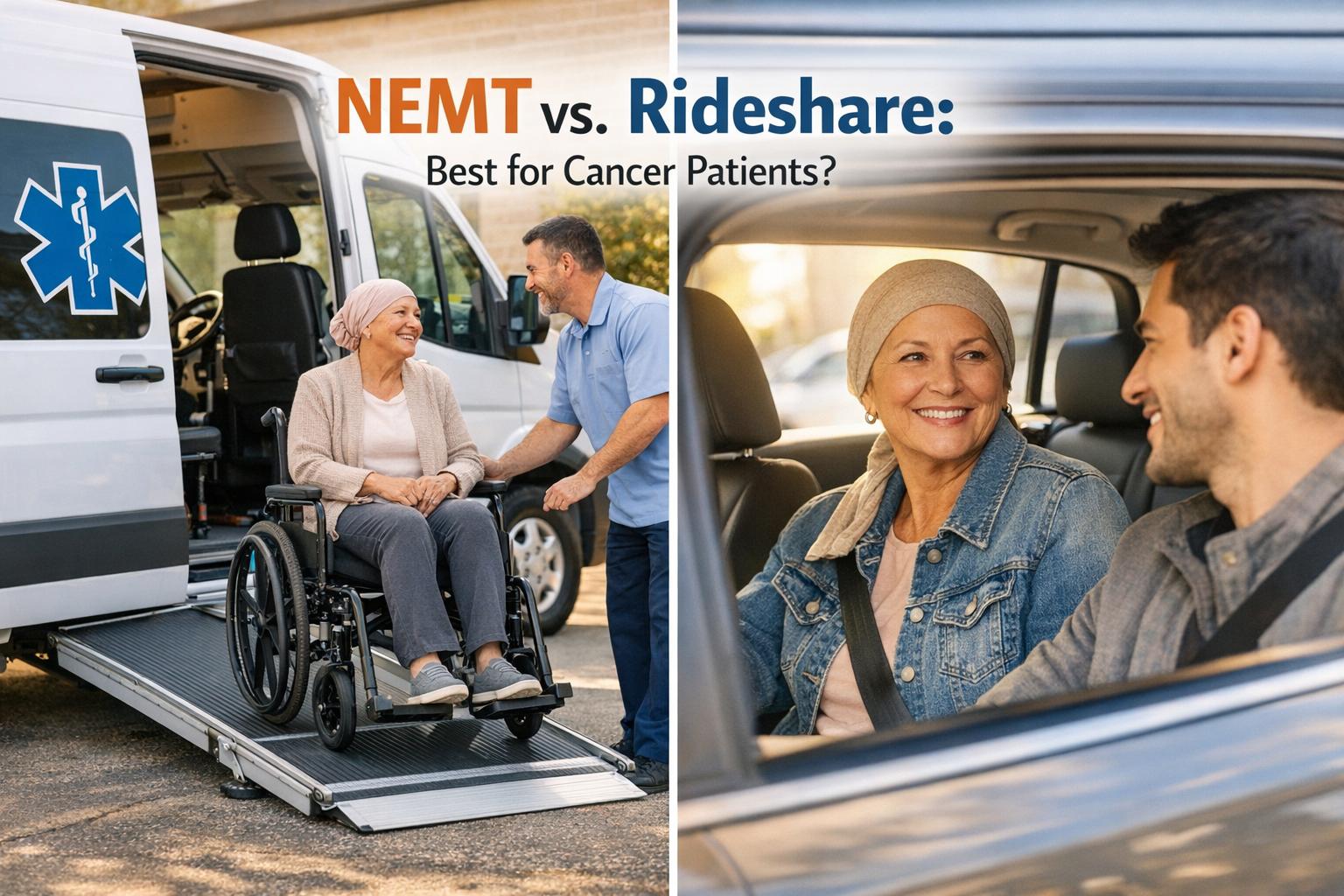
When choosing transportation for medical appointments, understanding your needs is key. Non-Emergency Medical Transportation (NEMT) and rideshare services like Uber or Lyft serve different purposes.
- NEMT is ideal if you need medical support, wheelchair-accessible vehicles, or assistance getting to and from your door. These services include trained drivers, specialized equipment, and door-to-door help.
- Rideshare works well for independent travelers who don’t need medical assistance. It’s faster to book and often cheaper, but lacks features like wheelchair lifts or trained drivers.
Quick Comparison
| Feature | NEMT Services | Rideshare (Uber/Lyft) |
|---|---|---|
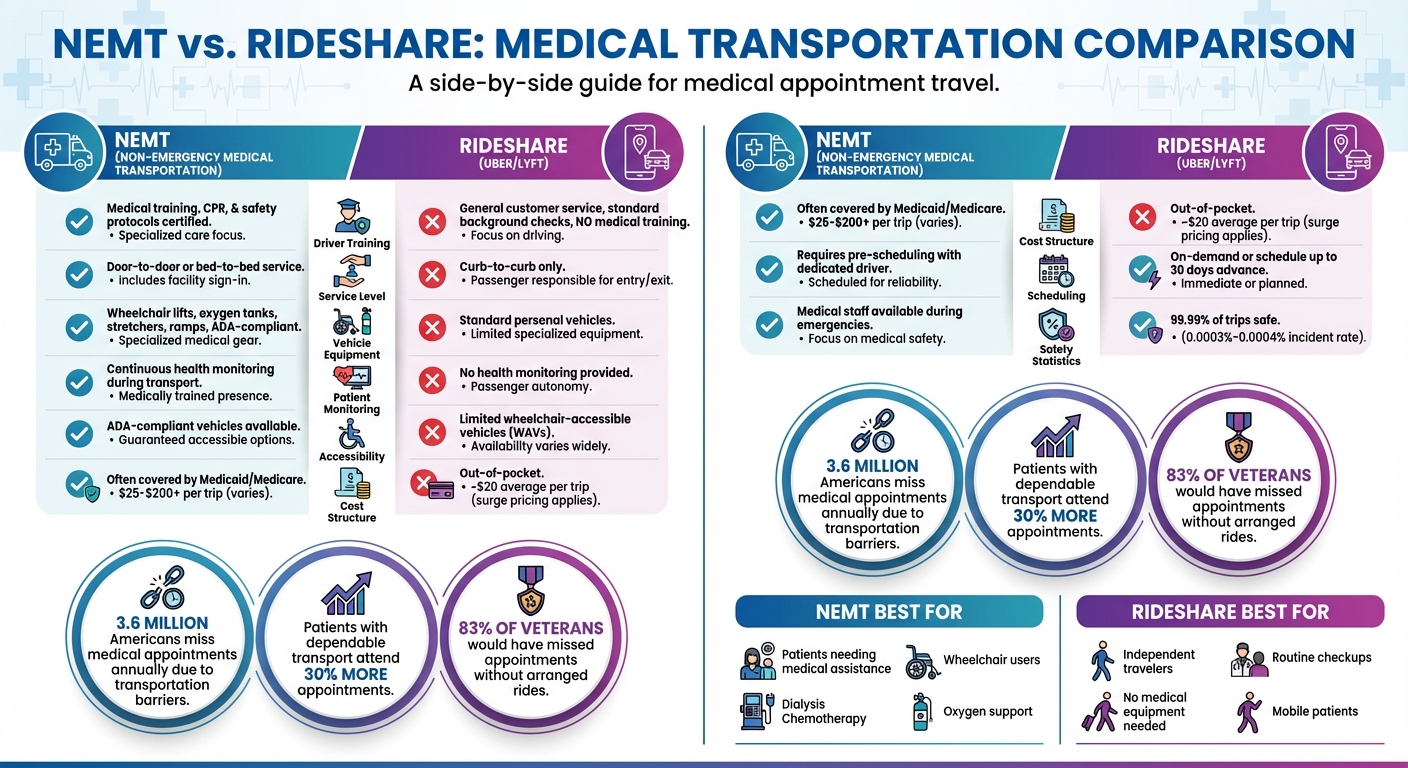
| Driver Training | Medical training, CPR, and safety protocols | General customer service, no medical training |
| Service Level | Door-to-door or bed-to-bed | Curb-to-curb only |
| Vehicle Equipment | Wheelchair lifts, oxygen tanks, stretchers | Standard personal vehicles |
| Cost | Often covered by Medicaid/Medicare; $25–$200+ | Out-of-pocket; ~$20 per trip |
| Accessibility | ADA-compliant vehicles available | Limited wheelchair-accessible options |
For patients in Austin, Zyvra Mobility offers reliable NEMT services, including ADA-compliant vehicles and trained drivers. Whether you need help with mobility or can travel independently, your choice should reflect your medical needs and appointment type.
NEMT vs Rideshare Services Comparison for Medical Transportation
NEMT Ambulatory Rides: Why Not Uber or Taxi? NEMT Experts Podcast Highlights
NEMT Services for Medical Transportation
Non-Emergency Medical Transportation (NEMT) services are designed to provide safe and dependable rides for patients who need assistance getting to medical appointments. These services address challenges like managing mobility equipment and ensuring timely arrivals. Let’s dive into the key aspects of NEMT services, including driver training, vehicle features, and scheduling systems.
For patients who can travel independently with minimal assistance, Ambulatory NEMT is often the most efficient and cost-effective option.
Driver Training and Safety Standards
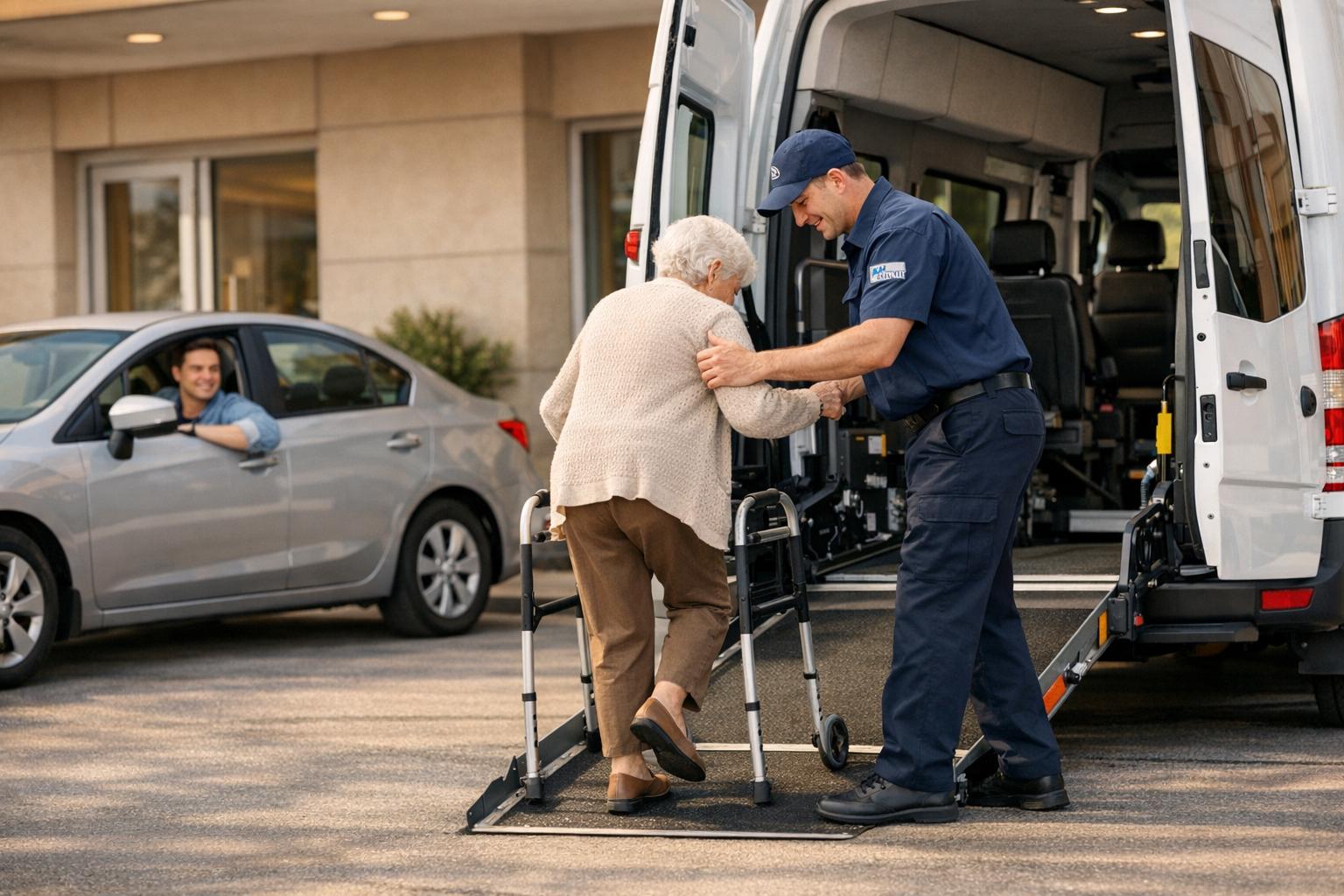
NEMT drivers undergo specialized training that goes beyond regular driving qualifications. They are taught how to handle mobility equipment such as wheelchairs, scooters, ramps, and lifts with care, ensuring passengers and their devices are securely fastened during transit.
In addition to safe loading and unloading, drivers assist patients in transitioning to and from vehicles, guiding them to their homes, medical facilities, or even directly to appointment desks. For more complex situations, like stretcher-based transport or “protected transportation” for medically fragile individuals, drivers and attendants receive additional, in-depth training. These safety protocols are governed by state regulations. For instance, Minnesota Statutes 174.29 and 174.30 outline specific requirements for both drivers and vehicles in NEMT services.
Next, let’s explore how NEMT vehicles are tailored to meet diverse medical needs.
Vehicle Accessibility Features
NEMT vehicles are equipped with specialized features to accommodate patients with varying mobility requirements. These include ramps, lifts, and configurations designed for specific needs:
- Mode 5 vehicles: Equipped with ramps or lifts to accommodate wheelchairs and scooters.
- Mode 7 vehicles: Designed for patients who need to remain on stretchers during transport.
- Mode 6 (Protected): Used for medically fragile patients, requiring drivers and attendants with additional training.
- Mode 4 (Assisted): Offers direct assistance from the driver to help patients reach their appointment desks.
These features ensure patients are transported safely and comfortably, no matter their mobility challenges.
Scheduling and On-Time Performance
To ensure timely arrivals, NEMT providers rely on advanced scheduling systems that are HIPAA-compliant. These platforms use algorithms to match patient needs with the right vehicle, reducing delays and improving efficiency.
Transportation coordinators play a crucial role in keeping everyone on the same page. They collaborate with patients, clinical case managers, and drivers to ensure pickups align perfectly with appointment times. Patients can book rides through various methods, including phone, email, or electronic health portals. Systems are designed to handle both advance bookings for regular medical visits and urgent same-day requests. This flexibility ensures that patients receive reliable transportation, whether for routine care or last-minute needs.
Rideshare Services for Medical Appointments
Rideshare platforms offer a convenient option for getting to specialist appointments, but they come with limitations – particularly when it comes to medical support. Knowing how these services work and where they fall short can help you decide if they’re right for your medical travel needs.
Service Model and Limitations
Rideshare operates on a curb-to-curb model, meaning drivers pick you up and drop you off at the curb. They’re not required to assist you from your door or accompany you into a medical facility. While this setup works well for independent patients, it’s not ideal for those needing physical assistance.
Drivers on these platforms aren’t trained in CPR, medical care, or handling patients with specialized needs. As Uber Health explains:
“Drivers are not trained in CPR, medical assistance, or specialized patient handling, as trips are intended for non-emergency passengers”.
If you require supervision during the ride or need help managing medical equipment, rideshare services aren’t equipped to meet those needs.
That said, healthcare providers can use tools like Uber Health to arrange rides on behalf of patients. This service eliminates the need for patients to own a smartphone or download an app. It also supports patients with limited tech skills by offering trip details through text or even landline calls. With multilingual support in more than 15 languages, this feature is particularly helpful for diverse patient groups. Notably, 83% of veterans reported they would have missed medical appointments without rides arranged through Uber Health.
Driver Training and Safety Considerations
Rideshare drivers undergo general customer service training and annual background checks, but they don’t receive medical or specialized training. This can pose challenges for passengers who need extra care, patience, or understanding.
Drivers may cancel trips if they realize a passenger has special needs or equipment, which can leave patients without transportation. Additionally, the “hands-off” nature of how trips are assigned can create difficulties for passengers with service animals or those requiring more personalized support. For instance, a University of Pennsylvania study offered free Lyft rides to 506 Medicaid patients in West Philadelphia between August and October 2016. While the appointment attendance rate improved from 54% to 68%, the study excluded patients who needed wheelchair-accessible vehicles, as standard rideshare couldn’t reliably accommodate them.
These gaps highlight the challenges rideshare services face in addressing the needs of passengers requiring specialized care.
Accessibility Limitations
Accessibility remains a significant hurdle for rideshare services. Wheelchair-accessible vehicles (WAVs) are scarce, with Uber WAV only available in select markets – and even less so in rural areas. In a study of Medicaid patients, 8% of those eligible for transportation assistance couldn’t use rideshare services because they required a wheelchair-accessible vehicle or lived outside the service area.
For patients in surrounding areas like Round Rock NEMT services, planning ahead helps ensure reliable and timely transportation.
For patients without mobility challenges, standard rideshare can work, though drivers will only assist with luggage or stowage upon request. However, for those using non-collapsible wheelchairs, stretchers, or requiring medical supervision, traditional NEMT (non-emergency medical transportation) remains the better option. The RAND Corporation underscores this point:
“Current RB-NEMT [Rideshare-Based NEMT] capabilities are most appropriate for… rides requiring minimal assistance or monitoring”.
sbb-itb-8e5d2ef
NEMT vs. Rideshare: Side-by-Side Comparison
Feature Comparison Table
When deciding between NEMT and rideshare services like Uber or Lyft for specialist visits, it’s essential to weigh key factors like training, accessibility, and service levels.
| Feature | NEMT Services | Rideshare (Uber/Lyft) |
|---|---|---|
| Driver Training | Drivers are certified in medical assistance, CPR, and safety protocols | Drivers undergo standard background checks but lack medical training |
| Service Level | Offers door-to-door or bed-to-bed service, including facility sign-in | Provides curb-to-curb service only |
| Vehicle Equipment | Vehicles come equipped with oxygen tanks, stretchers, wheelchairs, ramps, and lifts | Personal vehicles typically lack specialized equipment |
| Patient Monitoring | Includes continuous health monitoring during transport | No health monitoring is provided |
| Scheduling | Requires pre-scheduling with a dedicated driver | Allows on-demand booking or scheduling up to 30 days in advance |
| Accessibility | Uses ADA-compliant vans with specialized features | Limited availability of wheelchair-accessible vehicles |
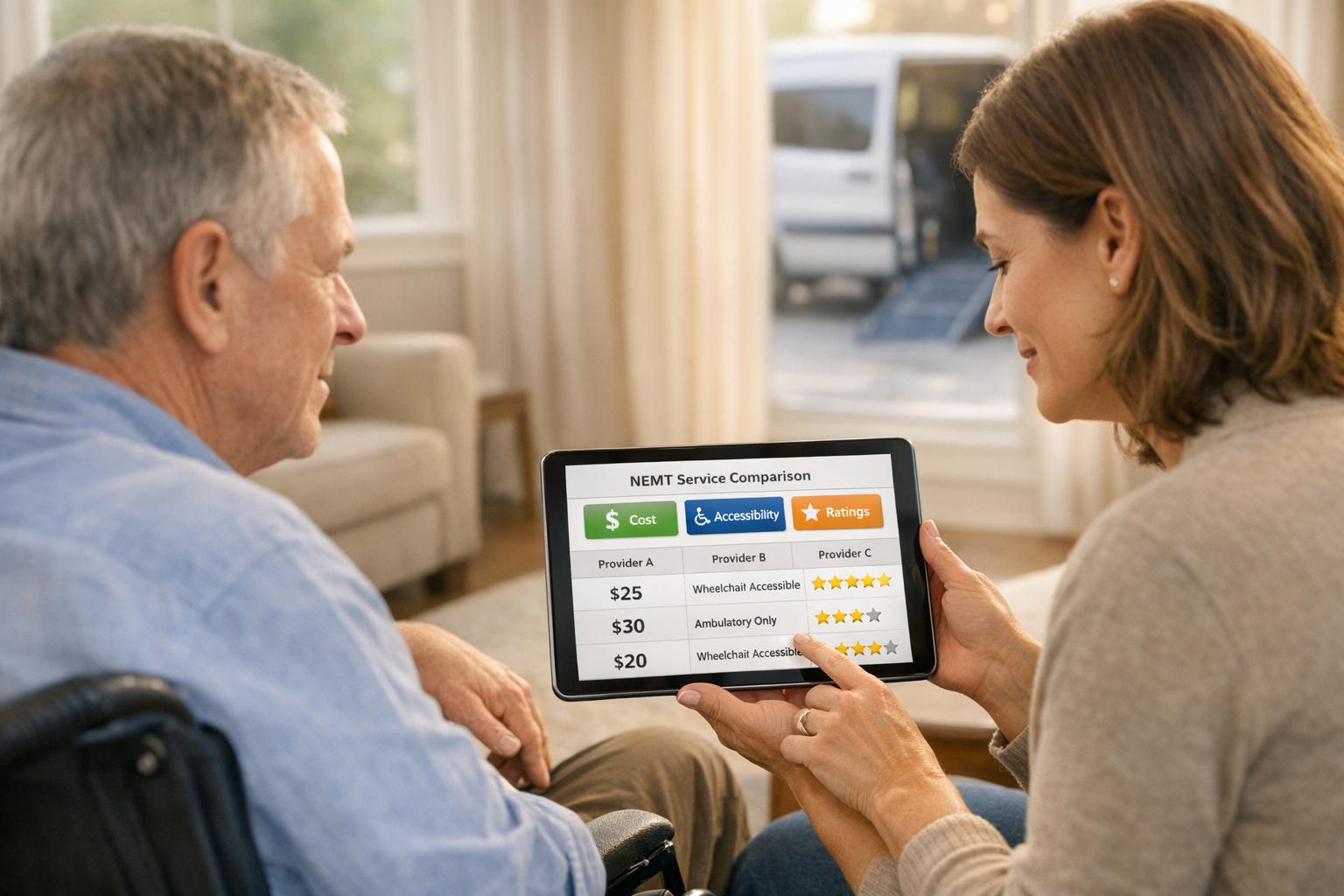
| Cost Structure | Often covered by Medicaid/Medicare; base fees range from $25 to $200+ | Out-of-pocket costs with dynamic surge pricing; average trip cost is around $20 |
| Safety Incidents | Medical staff is available during emergencies | Incident rate is 0.0003%–0.0004%, with over 99.99% of trips being safe |
This table provides a clear breakdown of the distinct features, helping you choose the right service for your needs.
Summary of Strengths and Weaknesses
Here’s a quick rundown of what each option does best – and where they might fall short.
NEMT shines in situations where patients require physical assistance, medical supervision, or specialized equipment. Whether it’s post-surgical care, oxygen support, or wheelchair accessibility, NEMT offers the safety and reliability needed for these scenarios. The door-to-door or bed-to-bed service ensures patients are well-supported throughout the journey.
On the other hand, rideshare services are ideal for those who don’t need medical assistance or monitoring. With faster booking, shorter wait times, and lower costs, rideshare is a convenient solution for routine follow-ups or appointments where patients can travel independently. It’s especially appealing when insurance doesn’t cover transportation expenses.
How to Choose the Right Transportation Option
Evaluating Your Medical and Mobility Needs
Start by assessing your physical abilities and medical needs. Can you walk on your own, get in and out of a regular car without help, and travel without medical equipment? If so, rideshare services might work well for routine appointments. However, if you need a wheelchair-accessible vehicle, oxygen support, or help with mobility, non-emergency medical transportation (NEMT) is likely the safer and more practical option.
Think about the type of appointment you’re attending. Routine checkups or screenings can often be handled with rideshare services if you’re fully mobile. But for more demanding treatments – like dialysis, chemotherapy, post-surgery follow-ups, or physical therapy – NEMT provides the reliability and physical assistance you may need. This is particularly important when you consider that transportation issues lead to about 3.6 million missed medical appointments each year. Patients with dependable medical transport are shown to attend 30% more of their scheduled visits.
Next, review your insurance coverage. For example, Texas Medicaid members can access free NEMT through the Medical Transportation Program (MTP), though rides usually need to be booked 48 to 72 hours in advance. On the other hand, rideshare trips in Austin generally cost around $19, while self-pay NEMT services range from $50 to $150, depending on distance and any special accommodations. If you’re on Original Medicare, know that it typically doesn’t cover routine medical transport. However, some Medicare Advantage plans include NEMT benefits, so it’s worth checking with your provider.
For those living in Austin, there are specialized NEMT services tailored to local needs.
NEMT Options in Austin, Texas
Austin is home to specialized NEMT providers that cater to major medical facilities across the metro area. Zyvra Mobility is one such service, covering locations like St. David’s Medical Center in Central Austin, Ascension Seton Medical Center, Baylor Scott & White in North Austin and Round Rock, Encompass Health Rehab Hospital in South Austin, and multiple Austin Regional Clinic (ARC) sites. This service is especially helpful when navigating challenges like heavy traffic on I-35 or Mopac and limited parking at large medical campuses.
“Finding reliable wheelchair transport for my father’s physical therapy appointments was a constant worry. Since we started using a local NEMT service, that stress is completely gone.” – Maria R., Daughter of NEMT Rider
Zyvra Mobility offers ADA-compliant vehicles equipped with hydraulic lifts and secure four-point tie-down systems. Their drivers are trained in CPR and first aid, providing door-through-door service – helping patients from their home all the way to the clinic’s check-in desk. For recurring appointments, like dialysis or physical therapy, they even allow you to set up standing orders for regular pickups. To ensure they can meet your needs, contact them directly to confirm service availability for your medical facility and discuss any specific equipment requirements, such as bariatric transport or portable dialysis accommodations.
Conclusion
Choosing the right transportation for specialist visits is crucial for ensuring consistent and reliable care. Your decision ultimately depends on your individual needs. For patients requiring extra help or specialized equipment, Non-Emergency Medical Transportation (NEMT) services are a great fit, offering tailored support and resources. On the other hand, rideshare services are more suitable for patients who can manage getting in and out of vehicles on their own without additional assistance.
The impact of these choices is significant. Transportation barriers cause about 3.6 million Americans to miss medical appointments annually. Meanwhile, patients with dependable transportation are able to attend approximately 30% more appointments. This reliability becomes even more critical for ongoing treatments like dialysis, chemotherapy, or physical therapy, where consistent attendance directly supports long-term health.
For those in the Austin area, Zyvra Mobility offers specialized NEMT services, including door-through-door assistance at major medical facilities. Even better, these services may be available at no cost through Texas Medicaid’s Medical Transportation Program.
You can easily schedule a ride that fits your needs and timing.
Our calculator focuses on planned rides where cost planning matters most.
FAQs
What makes NEMT services different from rideshare options for medical appointments?
Non-emergency medical transportation (NEMT) services are tailored for patients needing safe and reliable travel to medical appointments. These services feature ADA-compliant vehicles equipped with mobility aids like wheelchairs and stretchers, ensuring accessibility for those with specific needs. Drivers are professionally trained to assist individuals with medical or mobility challenges, providing an added layer of support. Patients can schedule rides in advance, and healthcare providers can track these trips. Additionally, many NEMT services are covered by Medicaid, Medicare, or private insurance, helping to reduce out-of-pocket expenses.
In contrast, rideshare services operate through mobile apps and use standard vehicles driven by individuals without medical training. While these services are often convenient and affordable, they lack the specialized equipment and expertise required for patients with more complex needs. Rideshare options may work well for those needing minimal assistance, but they fall short in addressing the needs of individuals requiring additional care or accessibility.
Ultimately, NEMT focuses on safety, accessibility, and reliability, making it a better fit for patients with specific medical requirements. Meanwhile, rideshare services are more suitable for quick, budget-friendly trips that don’t demand extra support.
How does NEMT provide safe and accessible transportation for patients with mobility challenges?
Non-Emergency Medical Transportation (NEMT) is designed to support patients who face mobility challenges, ensuring they can get to their medical appointments safely and comfortably. These services use ADA-compliant vehicles equipped with features like wheelchair lifts, secure straps, and spacious interiors, removing obstacles such as stairs, uneven sidewalks, or inaccessible transportation options. With a door-to-door approach, NEMT is especially helpful for individuals with physical or mental disabilities or those who cannot travel on their own.
NEMT providers prioritize safety and reliability by implementing rigorous standards. This includes thorough background checks for drivers, regular vehicle inspections, and adherence to Medicaid regulations. Companies like Zyvra Mobility, based in Austin, Texas, take it further by employing trained drivers and leveraging advanced scheduling tools to ensure timely and dependable rides. Whether it’s a trip to a specialist, a hospital discharge, or a rehab session, NEMT focuses on accessibility, professionalism, and safety, making it a critical service for those with mobility needs.
Do non-emergency medical transportation (NEMT) services provide wheelchair-accessible vehicles for specialist visits?
Non-emergency medical transportation (NEMT) services are tailored to meet the needs of patients with mobility challenges, including those who need wheelchair-accessible vehicles. These vehicles are generally ADA-compliant and equipped to prioritize both safety and comfort throughout the journey.
Providers such as Zyvra Mobility take it up a notch by employing professionally trained drivers and using advanced scheduling tools. This ensures dependable and hassle-free transportation for specialist visits and other medical appointments.