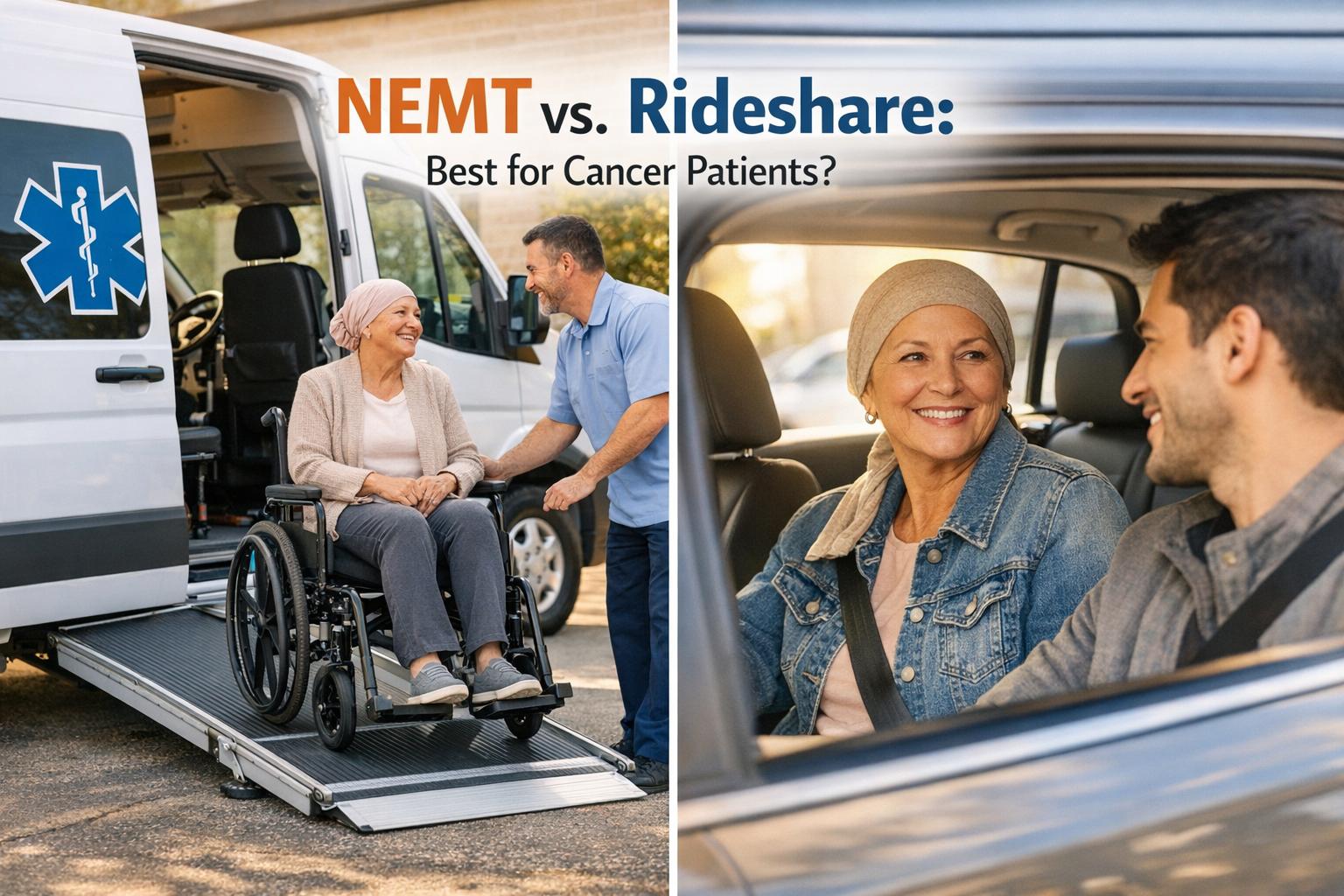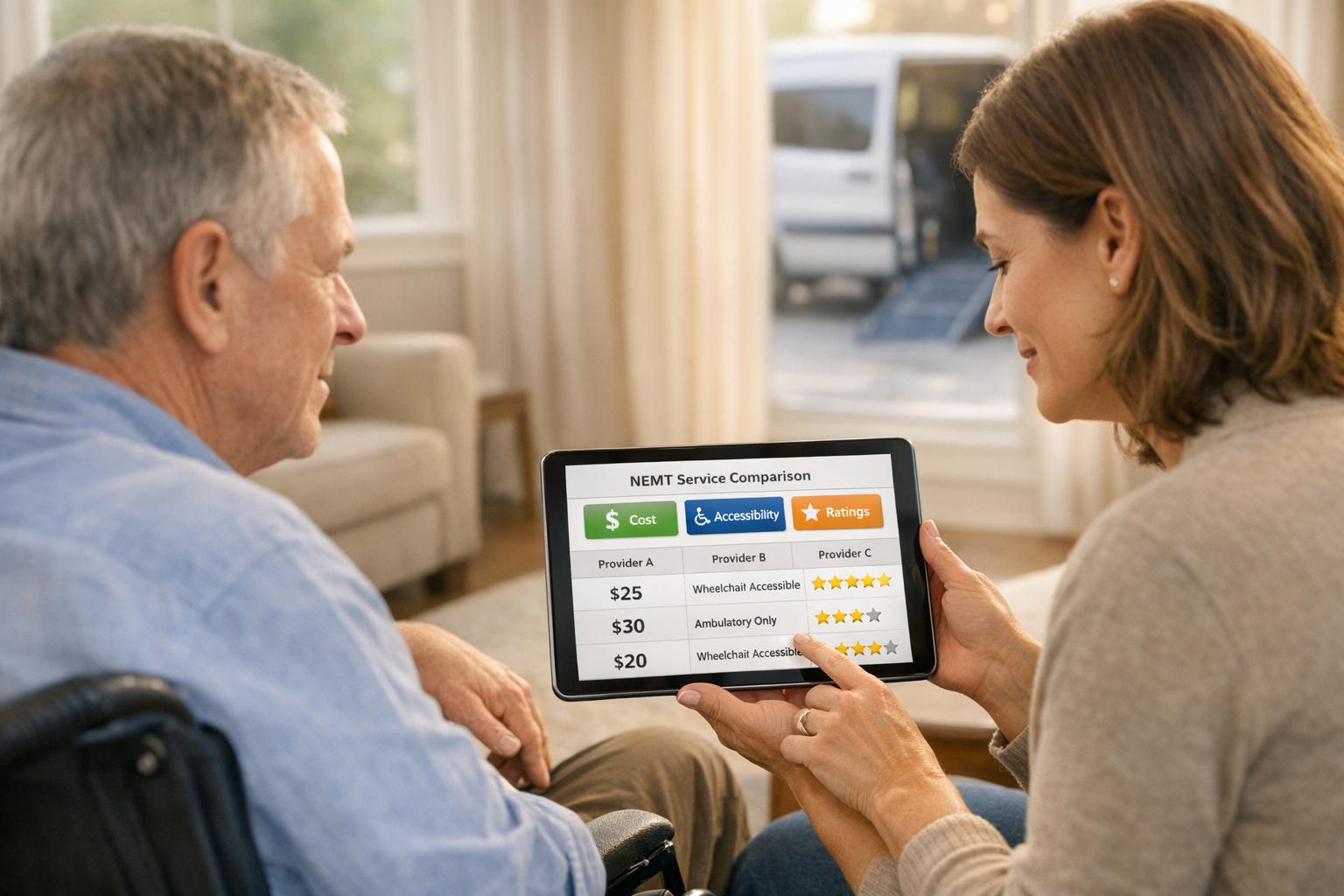

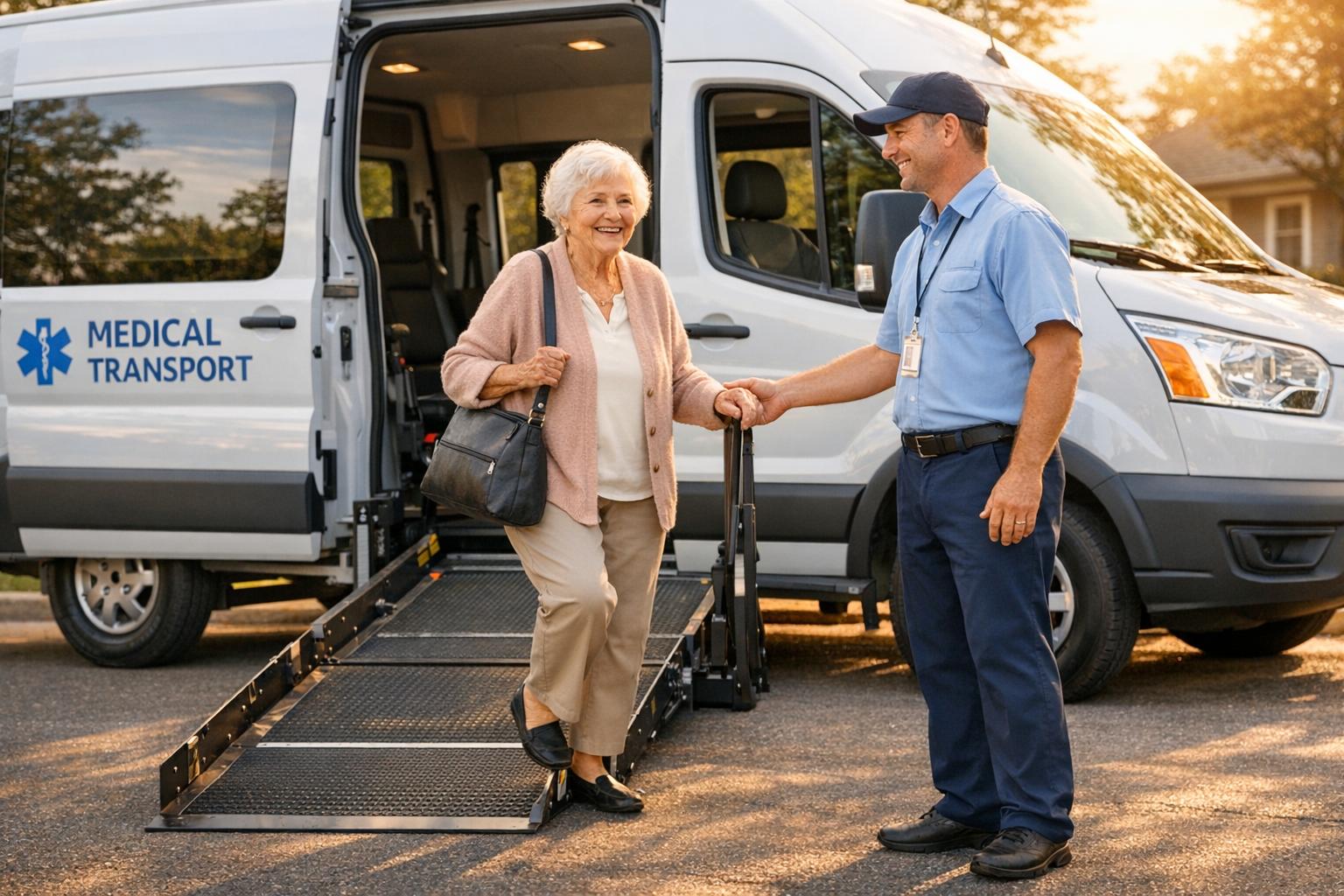
Non-Emergency Medical Transportation (NEMT) helps seniors without reliable transportation get to medical appointments. These services include rides to doctors, pharmacies, and therapy sessions, offering options like wheelchair-accessible vehicles or fuel reimbursements for family drivers. Here’s what you need to know:
- Why it matters: Seniors often face challenges like mobility issues or rising vehicle costs. NEMT ensures they don’t miss critical care.
- Medicaid options: Free rides for eligible seniors, covering medical visits, pharmacies, and more. Requires advance booking (2–5 days).
- Local community programs: Area Agencies on Aging (AAA) and senior centers provide affordable or free transportation, including volunteer driver services and paratransit options.
- Specialized features: ADA-compliant vehicles, door-to-door assistance, and options for wheelchair or stretcher needs.
- Austin spotlight: Zyvra Mobility offers tailored NEMT services for seniors, focusing on safety, comfort, and healthcare-related trips.
NEMT services bridge gaps in transportation, improving access to care and reducing caregiver stress. Seniors can explore Medicaid programs, local AAA services, or private providers like Zyvra Mobility to find the right fit.
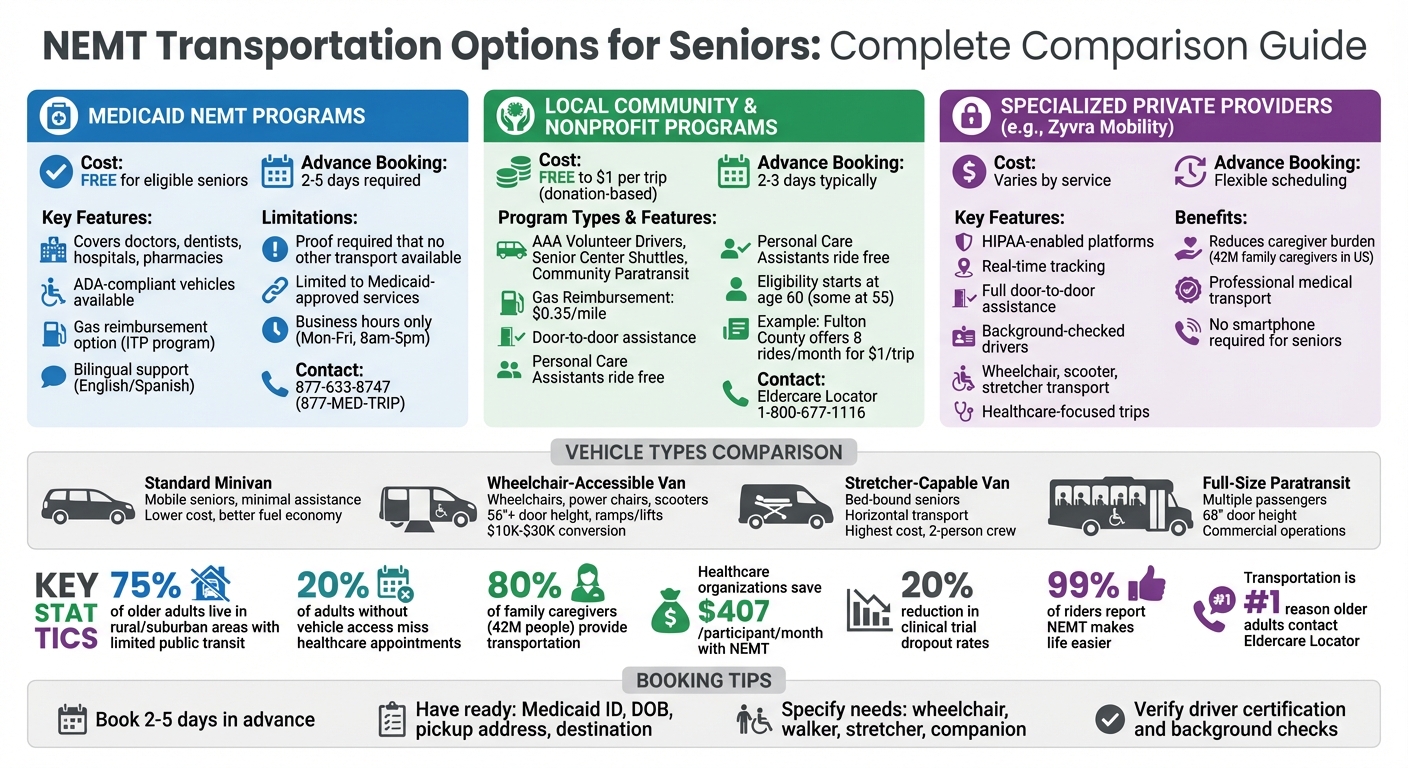
Comparing NEMT Transportation Options for Seniors: Medicaid, Community Programs, and Specialized Services
Medicaid NEMT Programs for Seniors
How Medicaid NEMT Services Work
Medicaid offers free transportation for eligible seniors who need help getting to medical appointments and don’t have a reliable way to get there. This typically applies to those who don’t own a working vehicle, can’t drive themselves, or don’t have someone available to assist them. In Texas, seniors qualify if they are actively enrolled in Medicaid and lack other transportation options.
If you’re part of a Medicaid managed care plan, the first step is to call the number on your insurance card. If not, you can reach out to the state’s Medical Transportation Program (MTP) at 877-633-8747 (877-MED-TRIP). This service covers transportation to doctors, dentists, hospitals, pharmacies, and any other locations offering Medicaid-covered health care services. The program is designed to provide flexible options tailored to individual needs.
Transportation options include public transit, taxis, van services, and even commercial flights for longer trips. For seniors who own a car but struggle with fuel costs, the Individual Transportation Participant (ITP) program offers fuel reimbursements. This program can also reimburse friends, relatives, or neighbors for driving seniors, as long as the driver has a valid license, current registration, and insurance.
To schedule a ride, local trips should be arranged two workdays in advance, while out-of-county trips require five workdays’ notice. When calling, have your Medicaid ID or Social Security number handy, as well as the contact details of the medical provider, your pickup address, and the reason for your visit. If you need a wheelchair-accessible vehicle, extra space for a walker, or a vehicle with a lift, make sure to mention these details during booking. Same-day rides are usually reserved for urgent needs like pharmacy trips, hospital discharges, or emergency care visits.
Knowing how these services work can help seniors make the most of Medicaid NEMT options while being aware of potential limitations.
Pros and Cons of Medicaid NEMT
| Pros | Cons | Texas Program Examples |
|---|---|---|
| Free rides for Medicaid-eligible seniors | Proof required that no other transportation is available | Medical Transportation Program (MTP) |
| Covers trips to doctors, dentists, hospitals, and pharmacies | Most trips require advance scheduling (2–5 days) | Managed Care Organization (MCO) transport services |
| Offers gas reimbursement for personal vehicles or family drivers | Limited to Medicaid-approved health services | Individual Transportation Participant (ITP) program |
| ADA-compliant vehicles available upon request | Possible delays or wait times for pickups | Wheelchair-accessible van services through MTP |
| Bilingual support in English and Spanish | Scheduling only available during business hours (Monday–Friday, 8 a.m.–5 p.m.) | 877-MED-TRIP call center |
What Transportation Services Are Available For Seniors? – CountyOffice.org
Local Community and Nonprofit NEMT Programs
In addition to Medicaid, local community and nonprofit transportation programs provide seniors with flexible and personalized options to help them stay independent. While Medicaid offers structured transportation services, these community initiatives go a step further, offering transportation solutions tailored to meet the unique needs of seniors.
Area Agencies on Aging (AAA) Transportation Services
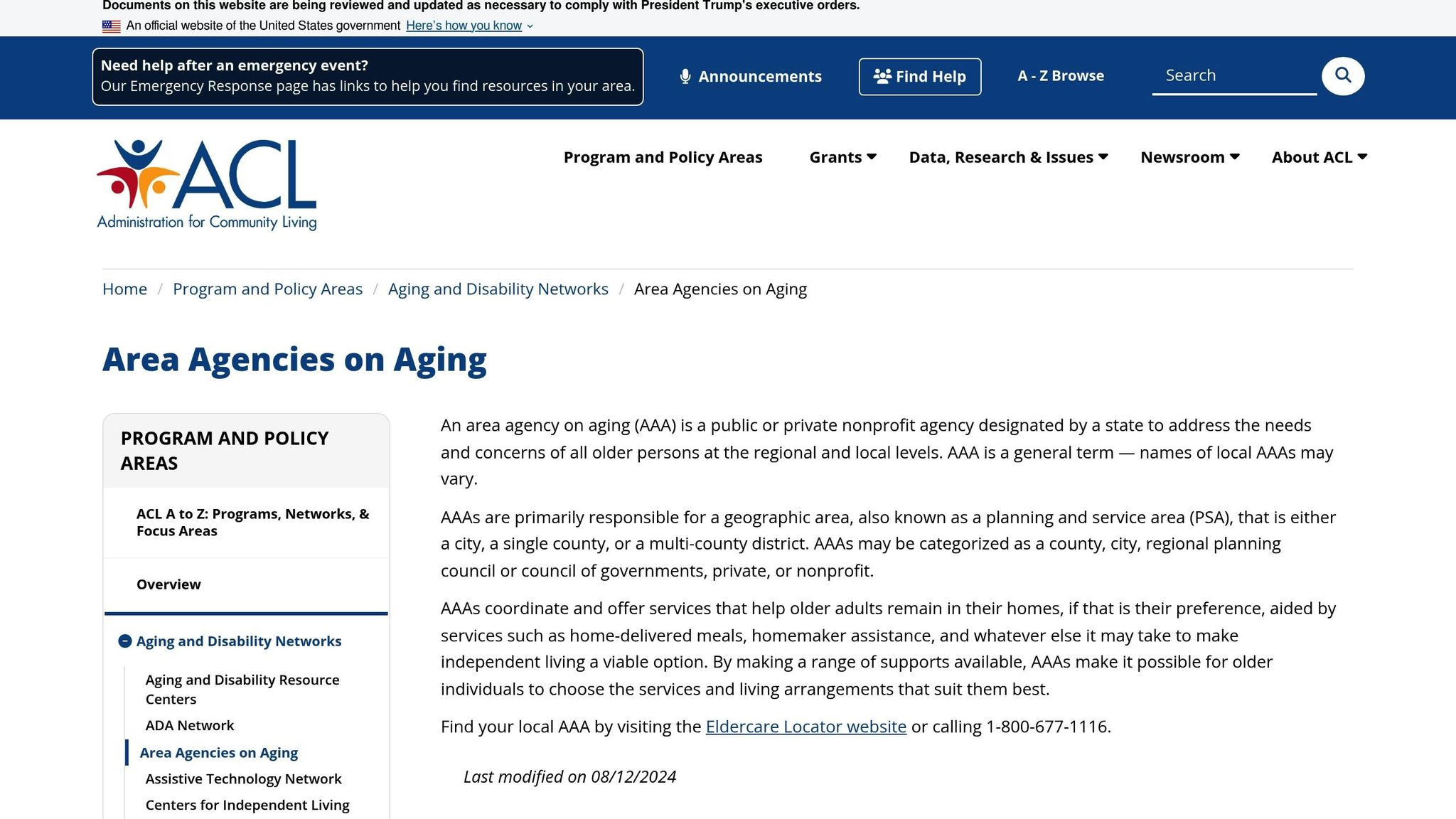
Area Agencies on Aging (AAA) act as key resources for senior transportation across the U.S. These organizations coordinate a variety of ride options based on what’s available locally, ranging from volunteer driver programs to contracted shuttle services. It’s no surprise that transportation is the top reason older adults reach out to the national Eldercare Locator hotline, emphasizing just how crucial these services are.
"Access to transportation is key to support the health and well-being of older adults and ensure their ability to age in place in the community." – USAging
To connect with your local AAA, call the Eldercare Locator at 1-800-677-1116 and provide your zip code. They can link you to programs in your area, which might include AAA-operated vans, gas voucher programs, or mileage reimbursements for friends or family who provide rides. For example, some AAAs in Washington offer $0.35 per mile reimbursements for volunteer drivers. In Missouri, services range from free bus passes to direct transportation provided by local agencies.
Eligibility typically starts at age 60, though some programs begin at 55. Many AAAs also serve as "mobility managers", offering travel counseling and one-call resource centers to help seniors navigate their transportation options. These services complement Medicaid by addressing specific needs within local communities.
Senior Centers and Para-Transit Options
Senior centers often operate van services to assist with medical appointments, errands, and social activities. Unlike curb-to-curb services, many of these programs provide door-to-door assistance, meaning drivers help seniors from their front door to the vehicle and back.
For instance, the Enumclaw Senior Activity Center in Washington offers a van service for adults aged 55 and older or those with disabilities, covering residents within their rural service area. Similarly, the Clallam Transit System in Washington provides paratransit services for adults 80 years and older, regardless of disability status. These services include door-to-door assistance, and Personal Care Assistants can ride along at no additional cost.
Community programs like these are often much more budget-friendly than commercial options. For example, Fulton County Senior Services in Georgia partners with Uber and Lyft to provide up to 8 rides per month for seniors aged 60 and older. The program requires a one-time $15 registration fee and charges just $1 per trip, with medical trips capped at 15 miles and social or shopping trips at 10 miles.
Most of these programs require booking 2 to 3 business days in advance. When scheduling, you’ll need to provide your birthdate, pickup address, and the contact details of your destination. If you need a wheelchair-accessible vehicle or an escort, be sure to mention it during booking. Many programs allow one attendant to accompany you for free.
| Program Type | Typical Cost | Ideal For | Advance Notice |
|---|---|---|---|
| AAA Volunteer Drivers | Free or donation-based | Seniors needing one-on-one assistance | 2–3 days |
| Senior Center Shuttles | Free to $1 per trip | Local medical appointments and errands | 2–3 days |
| Community Paratransit | $1–$15 per trip | Seniors with mobility devices or disabilities | 2–7 days |
| Gas Reimbursement Programs | $0.35 per mile | Seniors with family/friends who can drive | Varies by program |
Specialized NEMT Features for Seniors
ADA-Compliant Vehicles and Accessibility
ADA-compliant vehicles are designed to provide safe and respectful transportation for seniors with mobility challenges. These vehicles come equipped with ramps that can handle at least 600 pounds, featuring slip-resistant surfaces and a safe incline. For smaller vehicles, under 22 feet in length, the door openings must be at least 56 inches high, allowing for easy access for wheelchairs and scooters.
"For individuals with mobility challenges or those who care for them, having safe and accessible transportation is not just a convenience; it’s a necessity." – Southern Bus & Mobility
Inside these vehicles, Wheelchair Tie-down and Occupant Restraint Systems (WTORS) are installed, including four tie-downs along with lap and shoulder belts to ensure passengers remain secure during transit. Safety interlocks prevent the vehicle from moving while ramps or lifts are in use. Additional features like grab bars, slip-resistant flooring, and generous headroom make boarding and riding more comfortable. Doorways are also well-lit, with a minimum of two foot-candles of illumination, and boarding edges are marked with contrasting color bands to assist seniors with vision impairments.
For bed-bound seniors, stretcher-capable vans are equipped with antler and rail systems to safely transport individuals who need to remain on a stretcher. Rear-entry vehicles are particularly convenient because they can park in standard spaces without requiring additional room for side ramp deployment.
These features make it easier to choose the right NEMT vehicle based on the specific needs of seniors requiring transportation.
Comparing NEMT Vehicle Types for Seniors
With these accessibility features in mind, NEMT vehicles come in various types to address different mobility requirements. Standard minivans are a practical option for seniors who are mobile but may need minimal assistance. They are fuel-efficient and relatively affordable. For seniors using manual wheelchairs, power chairs, or scooters, wheelchair-accessible vans (WAVs) are a better fit. These come with lowered floors, ramps or lifts, and securement systems. Converting a regular vehicle into a WAV typically costs between $10,000 and $30,000.
For seniors who cannot sit upright due to medical conditions, stretcher-capable vans are essential. These vehicles provide horizontal transport and require more interior space and specialized equipment, which makes them more expensive. They also usually need a two-person crew – one to drive and another to assist with loading and monitoring. Meanwhile, full-size paratransit vans are ideal for commercial operations, as they can accommodate multiple wheelchairs with door heights of 68 inches.
| Vehicle Type | Accessibility Features | Best Suited For | Cost Considerations |
|---|---|---|---|
| Standard Minivan | Compact, fuel-efficient, basic seating | Mobile seniors needing minimal assistance | Lower initial cost; better fuel economy |
| Wheelchair-Accessible Van | Ramps/lifts, WTORS securement, 56"+ door height | Seniors using wheelchairs, power chairs, or scooters | Conversion costs $10,000–$30,000; higher maintenance |
| Stretcher-Capable Van | Gurney securement, horizontal transport | Bed-bound seniors or those unable to sit upright | Highest cost; requires two-person crew |
| Full-Size Paratransit Van | Multiple wheelchair positions, 68" door height | Commercial services for multiple passengers | Highest purchase price; lower fuel efficiency |
When scheduling transportation, it’s important to specify whether wheelchair or stretcher accommodations are needed. Aim to book at least three to five business days in advance to ensure the appropriate vehicle is available. Also, check that the vehicle displays a USDOT number or state certification on both sides to confirm it meets safety standards.
sbb-itb-8e5d2ef
Zyvra Mobility: Austin-Area NEMT for Seniors
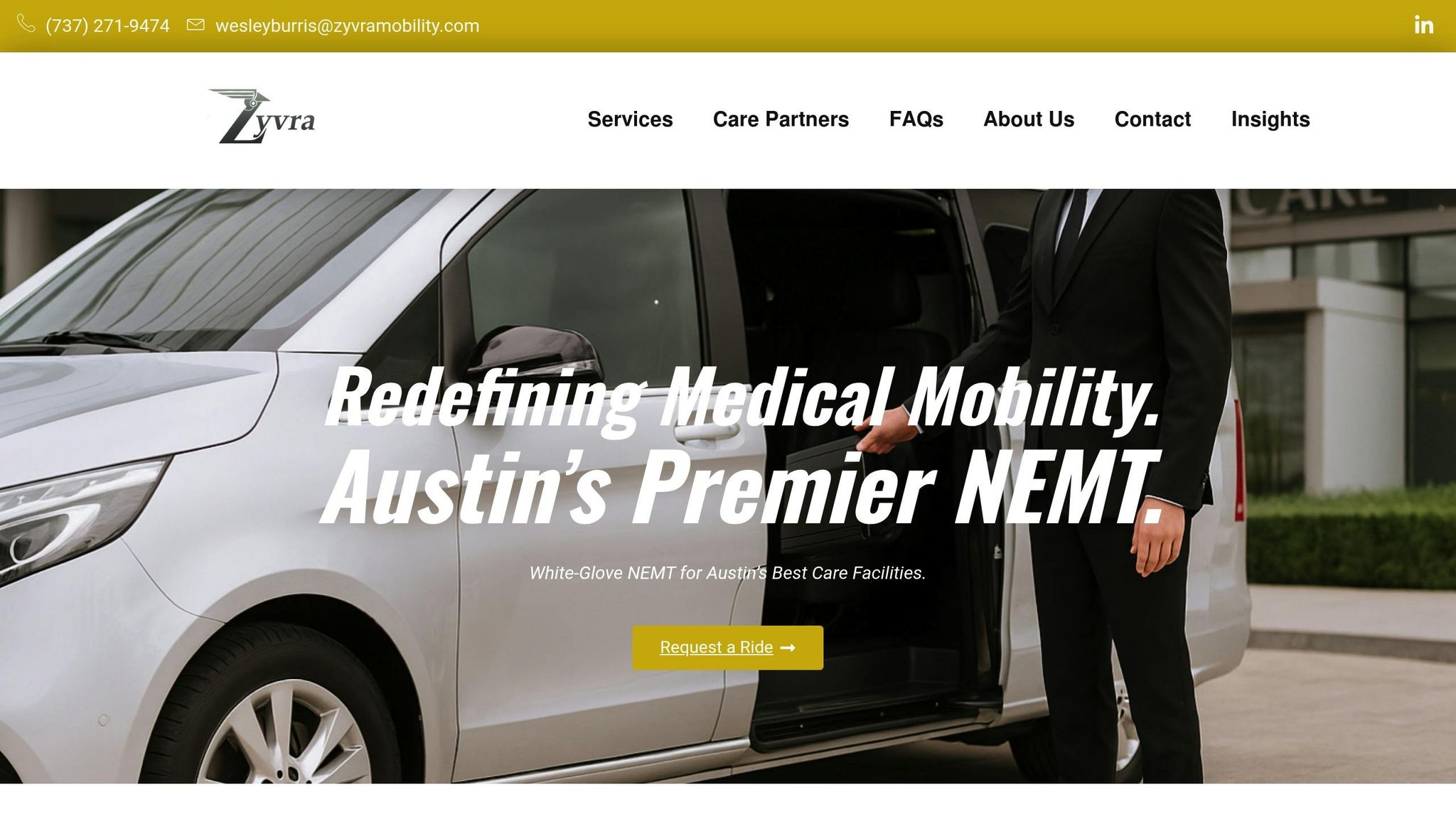
Zyvra Mobility steps in to provide a high-quality, local solution for senior transportation in Austin, complementing broader efforts by community and Medicaid programs to improve mobility for older adults.
Key Features of Zyvra Mobility
Zyvra Mobility specializes in non-emergency medical transportation (NEMT) designed specifically for seniors in Austin, Texas. Using HIPAA-enabled platforms, healthcare providers and coordinators can request and monitor rides without requiring seniors to navigate smartphones – a thoughtful touch that simplifies the process [13]. The fleet includes ADA-compliant vehicles, all equipped with ramps or lifts to accommodate wheelchairs, scooters, and even stretchers for those who are bed-bound or unable to sit upright .
Drivers go beyond simply offering a ride. They provide full door-to-door assistance, helping seniors from their homes all the way to their appointment desks. This includes assistance with carrying bags, loading wheelchairs, and navigating building access . Safety is a top priority: drivers undergo thorough background checks, license verification, and annual re-screening [13]. They’re also trained to secure wheelchairs and stretchers properly and ensure seat belts are fastened correctly. Advanced scheduling tools enable real-time tracking and efficient route planning, keeping caregivers and medical facilities informed every step of the way [13].
Zyvra Mobility’s Focus on Senior Care
Zyvra Mobility is more than just transportation – it’s a service built around the unique needs of seniors. Founded by Wesley Burris, the company emphasizes dignity, comfort, and safety for healthcare-related trips, including medical appointments, hospital discharges, outpatient procedures, and rehabilitation visits. This focus addresses a pressing issue: 1 in 5 adults (20%) without access to a vehicle or public transit miss critical healthcare appointments due to transportation challenges.
The service also eases the strain on family caregivers. In the U.S., approximately 80% of family caregivers – over 42 million people – provide transportation for older adults or individuals with disabilities. By offering professional NEMT services, Zyvra Mobility helps reduce this burden, ensuring seniors have reliable transportation while giving families peace of mind. Care coordinators can use a centralized dashboard to schedule rides and track their status in real time, aligning with broader community efforts to improve senior care [13].
How to Access Community NEMT Resources
Finding and Contacting Local NEMT Providers
If you’re looking for transportation options for seniors, national databases can be a great starting point. For instance, Rides in Sight offers a comprehensive list of over 10,000 transportation providers and operates a hotline at 855-607-4337 to help match services to local mobility needs.
For those enrolled in Medicaid, reaching out to your local county or tribal human services agency is key. They can guide you to eligible providers and explain how your state’s program operates. Additionally, the Eldercare Locator (eldercare.acl.gov) connects seniors to Area Agencies on Aging and nearby transportation services. If you’re in a rural area, the National Rural Transit Assistance Program directory can help you find transit managers by state.
Before contacting a provider, it’s important to determine the type of transportation required. For seniors with significant mobility challenges, Mode 4 (door-to-door with assistance) is ideal. On the other hand, Mode 3 (curb-to-curb) works well for those who can walk independently. Once you’ve identified the right provider, you can move forward with scheduling the ride, ensuring all details are accurate and clear.
Booking and Preparing for NEMT Services
When scheduling Medicaid-funded rides, aim to book at least two business days in advance. Be prepared with essential details like the senior’s full name, Medicaid or health ID, date of birth, pickup address, and destination information.
If the senior has specific needs – such as requiring a standard wheelchair, a bariatric wheelchair (up to 34 inches wide), or stretcher transport – make sure to communicate these requirements clearly when booking. Also, if a family member or caregiver will accompany the senior, mention this upfront to ensure the vehicle can accommodate everyone.
For urgent ride requests that need to be arranged within 90 minutes, contact the provider directly. If you’re seeking mileage reimbursement, keep track of odometer readings, obtain the provider’s signature, and confirm the most direct route. Lastly, for peace of mind, verify that drivers are certified in passenger assistance and have undergone background checks before the first trip.
Following these steps ensures that rides are timely, safe, and meet the standards expected from community NEMT services.
Conclusion
Community Non-Emergency Medical Transportation (NEMT) services play a crucial role in keeping seniors healthy, independent, and connected to essential care. With 75% of older adults living in rural or suburban areas where public transportation is either scarce or nonexistent, these services fill a critical gap that traditional transit systems simply can’t address. Whether it’s Medicaid-funded programs, nonprofit volunteer initiatives, or specialized providers like Zyvra Mobility in Austin, NEMT ensures seniors can attend medical appointments, manage chronic health conditions, and maintain their overall quality of life.
The numbers speak volumes about the impact of reliable NEMT services. For instance, healthcare organizations have seen average savings of $407 per participant per month, while access to dependable transportation has reduced clinical trial dropout rates by 20%. These figures translate to meaningful changes: fewer missed treatments, improved medication adherence, and, most importantly, the chance for seniors to age with dignity rather than in isolation.
Modern NEMT services go beyond just providing a ride – they remove barriers that once left seniors stuck at home. Caregivers and healthcare coordinators can schedule rides for seniors who may not have access to smartphones, and 99% of riders report that these services make their lives easier. Features like door-to-door assistance, wheelchair-accessible vehicles, and the option to bring a companion along turn what could be a stressful ordeal into a manageable and supportive experience.
If you’re looking to make use of these services, start by exploring national resources like Rides in Sight or reaching out to your local Area Agency on Aging for region-specific options. When booking, be sure to communicate any special needs – whether it’s a wheelchair lift, stretcher service, or extra wait time – and aim to schedule rides at least two days in advance to ensure availability.
At their core, community NEMT services are about more than just transportation. They help seniors maintain their independence, ensure consistent access to healthcare, and provide the freedom to live life fully during their later years. With a little planning, these services can make a world of difference.
FAQs
Who qualifies for Medicaid’s Non-Emergency Medical Transportation (NEMT) services for seniors?
To access Non-Emergency Medical Transportation (NEMT) services under Medicaid, seniors must meet federal Medicaid enrollment criteria as well as specific state-level requirements. Here’s what typically qualifies someone:
- Active Medicaid enrollment: The individual must be a current Medicaid beneficiary, often enrolled through a state program.
- Lack of transportation options: Seniors need to show they don’t have access to a private vehicle, public transportation, or assistance from family or friends.
- Medically necessary trips: Transportation must be for Medicaid-approved services, like doctor appointments, dialysis, or physical therapy, as prescribed by a healthcare provider.
- Dual eligibility: Those eligible for both Medicare and Medicaid often meet the NEMT criteria automatically.
States may impose additional restrictions or conditions, such as limiting eligibility to specific Medicaid programs. For those who qualify, services may include wheelchair-accessible vehicles, ADA-compliant vans, or stretcher transport, providing safe and dependable transportation to essential medical appointments.
How can seniors arrange transportation through local community programs?
Seniors looking to book a non-emergency medical transportation (NEMT) ride can usually do so by contacting their local transportation program or aging agency. This process often involves calling a toll-free number and sharing key details like the rider’s name, date of birth, address, Medicaid or state health plan ID, and specifics about the medical appointment – such as the date, time, and location. If additional support is needed, like a wheelchair, stretcher, or an escort, it’s important to mention that during the call.
Many states also provide online portals or mobile apps to make scheduling easier. These tools allow seniors or their caregivers to arrange transportation quickly and efficiently. Keep in mind, though, that some programs require reservations to be made at least two business days in advance. Whether by phone or online, these options ensure that everyone, regardless of their tech-savviness, has a way to access transportation.
What features make NEMT vehicles suitable for seniors with mobility challenges?
NEMT vehicles designed for seniors with mobility challenges come equipped with features that prioritize safety, comfort, and ease of access. Many of these vehicles meet ADA standards and include wheelchair lifts or ramps capable of accommodating various wheelchair types, including oversized and electric models. The interiors are thoughtfully designed with spacious layouts and secure tie-downs to keep wheelchairs and stretchers firmly in place, catering to patients who may need to lie flat or require additional support during transit.
Additional features often include oxygen delivery systems for passengers who need supplemental oxygen, as well as low floors and support for navigating steps or thresholds. Drivers are specially trained in CPR, defensive driving, and assisting patients, ensuring that seniors are treated with care and professionalism throughout their journey. These thoughtful adaptations make NEMT vehicles a dependable option for older adults with a variety of mobility needs.