
Non-Emergency Medical Transportation (NEMT) ensures patients without reliable transportation can attend crucial therapy and rehabilitation appointments. It’s a scheduled service designed for non-urgent medical needs, offering options like wheelchair-accessible vehicles, stretcher vans, and standard cars. Reliable NEMT services help reduce missed appointments, improve recovery outcomes, and lower healthcare costs.
Key Points:
- Who Benefits: Seniors, post-surgery patients, wheelchair users, and those managing chronic conditions or attending mental health therapy.
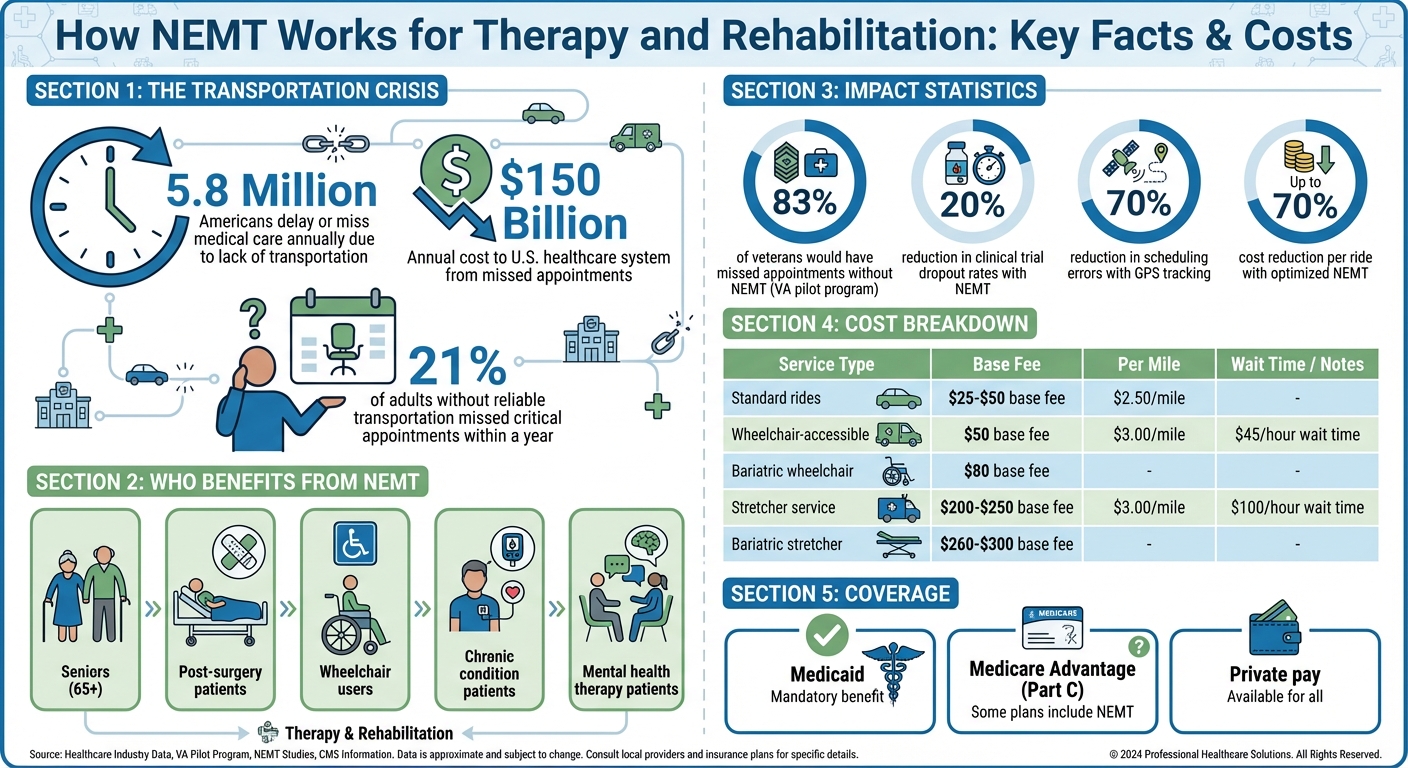
- Why It Matters: Missed medical appointments due to transportation issues cost the U.S. healthcare system $150 billion annually.
- How It Works: Medicaid often covers NEMT, while private pay costs range from $25–$50 for standard rides and $45–$250 for specialized vehicles.
- Booking: Patients can schedule rides in advance, including recurring appointments, ensuring consistent therapy attendance.
- Providers like Zyvra Mobility: Focus on safety and convenience with ADA-compliant vehicles and trained drivers.
NEMT bridges the gap for patients needing dependable transportation, ensuring recovery stays on track.
NEMT for Therapy: Key Statistics and Cost Breakdown
When Patients Need NEMT for Therapy and Rehabilitation
Patient Types That Use NEMT Services
Non-emergency medical transportation (NEMT) plays a critical role for individuals who face challenges getting to their therapy appointments. A significant portion of users includes seniors aged 65 and older, many of whom no longer drive or struggle with mobility issues. Additionally, post-surgery patients transitioning from hospital care to home rely on NEMT to attend follow-up physical therapy sessions.
Patients managing chronic conditions – like those undergoing dialysis, chemotherapy, or extended physical rehabilitation – depend on NEMT to stick to their often rigorous appointment schedules. For wheelchair users and bedridden patients, specialized vehicles equipped with lifts, ramps, or stretchers are essential. Moreover, behavioral health patients attending therapy for mental health or substance use disorders benefit greatly from the reliability of NEMT services.
The impact of NEMT is evident in real-world examples. During a two-year pilot program, the US Veterans Health Administration provided rides for veterans, with 83% of surveyed participants stating they would have missed their appointments without the service. Similarly, a 2019 study by Adams Clinical found that offering NEMT to clinical trial participants helped reduce dropout rates by an estimated 20% over two years.
These examples highlight the importance of addressing transportation challenges to ensure patients can follow through with their treatment plans.
Overcoming Mobility Barriers and Maintaining Treatment Plans
For patients in therapy or rehabilitation, overcoming transportation challenges is vital to staying on track with their recovery. In the United States, 5.8 million people delay or miss medical care each year because they lack reliable transportation. Missing therapy sessions, even occasionally, can disrupt progress and lead to setbacks that might require more intensive – and costly – care.
NEMT bridges this gap by offering door-to-door service for individuals who cannot drive due to physical limitations, cognitive impairments, or medication effects. Providers can also assist patients without internet access by scheduling rides and recurring appointments in advance, reducing the likelihood of missed sessions. This is particularly beneficial for seniors and people with disabilities who might otherwise depend on overburdened family members or unreliable public transportation.
"NEMT itself supports employment by allowing beneficiaries to attend appointments and services they need to remain as healthy as possible and continue working, and by allowing caregivers to continue to work rather than having to take time off to transport loved ones." – Medical Transportation Access Coalition (MTAC)
How NEMT Works for Therapy and Rehabilitation Appointments
Eligibility and Insurance Coverage for NEMT
For many patients, Non-Emergency Medical Transportation (NEMT) is their lifeline to essential therapy and rehabilitation appointments. Medicaid beneficiaries, in particular, can rely on this service since transportation is a mandatory benefit for those who don’t have reliable means to get to medical care. If you don’t have access to a vehicle, a valid driver’s license, or the ability to travel independently, you likely qualify. Additionally, some Medicare Advantage (Part C) plans offer NEMT as a supplemental benefit. To check if your plan includes this, review your annual Evidence of Coverage.
To confirm eligibility, reach out to your state’s Medicaid office or the NEMT broker assigned to your area. These brokers use scheduling systems to verify your coverage and pair you with the right type of vehicle. Some therapy centers and hospitals even organize transportation for patients as part of their care programs – so it’s worth asking your provider if they can arrange rides for you. If insurance doesn’t cover your transportation, private pay options are available, with costs typically ranging from $25 to $30 for standard rides and $45 to $50 for wheelchair-accessible vehicles during regular business hours.
"NEMT is a required benefit in the Medicaid program, where a large number of low income, disabled, and elderly beneficiaries do not have access to reliable transportation." – Medical Transportation Access Coalition (MTAC)
Once your eligibility is confirmed, scheduling a ride is a simple process.
Booking Rides and Setting Up Recurring Appointments
Getting started with NEMT often begins with creating an account. You’ll need to provide your contact information, medical details, and any specific accessibility requirements. From there, enter your pickup location, destination, and appointment time. If a caregiver will be accompanying you, be sure to note this – most plans allow one companion at no additional charge. For recurring appointments, such as weekly therapy sessions, you can schedule rides at regular intervals (weekly, bi-weekly, or monthly). Keep in mind that you should allow 24–48 hours for confirmation, or up to three business days if you need a specialized vehicle.
"Recurring rides are pre-scheduled transportation arrangements that allow patients to set up ongoing rides for regular medical appointments, such as weekly therapy sessions." – DreamCareRides
These systems are designed to simplify the process, helping patients stick to their therapy schedules and improve their recovery. Once your ride is booked, here’s what you can expect on the day of your appointment.
What to Expect on the Day of Your Therapy Ride
On the day of your ride, it’s best to be ready about 60 minutes before your scheduled pickup time. Have your insurance card, birth date, and the correct address for your clinic on hand. The vehicle, which will meet ADA compliance standards, will take the most direct route to your destination. Drivers are trained to handle basic emergencies, such as performing CPR or checking vital signs, but they don’t provide medical care during the trip. If you’re feeling unwell or have symptoms of a contagious illness, notify your healthcare provider in advance so that appropriate safety measures can be arranged.
These steps ensure a smooth and safe journey, allowing you to focus on your therapy and recovery.
What Is Non-emergency Medical Transportation (NEMT)? – CountyOffice.org
sbb-itb-8e5d2ef
Types of NEMT Services for Therapy and Rehabilitation
When it comes to therapy and rehabilitation, Non-Emergency Medical Transportation (NEMT) services offer a variety of vehicle options tailored to meet different mobility needs. Here’s a closer look at the primary types of transportation available:
Wheelchair-Accessible Vehicles
Wheelchair-accessible vehicles (WAVs) are specifically designed for individuals who use wheelchairs and cannot transfer to a standard seat. These vehicles are equipped with hydraulic lifts or ramps, along with securement systems to safely lock wheelchairs in place. This setup allows patients to remain in their wheelchair throughout the ride.
Providers typically offer two options: standard and bariatric WAVs. Standard WAV services usually include a base fee of $50, with additional charges of about $3.00 per mile and $45 per hour for wait times. For patients weighing over 250 lbs, bariatric options start at a higher base fee of approximately $80. Some services may also provide extra support, such as oxygen administration or stair chair assistance, to accommodate specific needs.
Standard Transportation for Walking Patients
For patients who are mobile but either lack access to a vehicle or are unable to drive, standard NEMT services provide a reliable solution. These rides typically use private cars, taxis, or standard vans. Drivers are available to help patients get in and out of the vehicle, and many providers go the extra mile by offering door-to-door or hand-to-shoulder assistance – ensuring patients are guided from their front door to the therapy center’s check-in desk.
Costs for standard rides generally range from $15 to $50 as a base fee, with an additional charge of around $2.50 per mile. For those with more severe mobility challenges, specialized transportation options are also available.
Stretcher Transportation for Bedridden Patients
For patients who need to remain in a lying position during transit, stretcher vans, also known as ambulettes, are the ideal choice. These vehicles are equipped with secure straps and cushioning to ensure comfort and safety. The base fee for this service typically ranges from $200 to $250, with mileage costs of about $3.00 per mile and wait-time fees around $100 per hour. For bariatric stretcher services, which cater to heavier patients, base fees start between $260 and $300.
Due to the specialized nature of these services, it’s recommended to book at least three to five days in advance to guarantee availability.
Getting the Most from NEMT for Therapy and Rehabilitation
How Reliable Transportation Improves Recovery Results
Reliable transportation is key to a successful recovery. Missing therapy sessions can disrupt your treatment plan and delay progress. In fact, studies reveal that 21% of American adults without dependable transportation missed critical medical appointments within a year.
Beyond personal setbacks, missed appointments cost the U.S. healthcare system around $150 billion annually. Even a modest 1% drop in emergency visits could generate over a 1,100% return for the state. Reliable transportation not only keeps your recovery on track but also ensures your therapy regimen remains consistent and effective.
"You can provide the best care in the world, but it doesn’t matter if the patient has no way to get to it." – DecisivEdge
NEMT services also prioritize your physical safety during recovery. Unlike standard transportation, professional NEMT drivers use advanced monitoring systems to ensure smooth rides, minimizing risks like sudden stops or jolts that could harm surgical sites. This extra care helps prevent complications such as torn stitches, falls, or displaced implants, which could set your recovery back by weeks or even months.
Tips for Managing Your NEMT Services
To get the most out of NEMT services, a little planning goes a long way. Here are some practical tips:
- Clearly communicate your mobility needs. Whether you require a wheelchair lift, oxygen support, or walker assistance, make sure to specify these when booking with Zyvra Mobility. This ensures the right vehicle is dispatched.
- Build in extra time. Adding 15–30 minutes to your schedule can help you navigate traffic, last-minute medical approvals, or delays in lab results. This buffer reduces stress and ensures punctuality.
- Prepare a pre-transport checklist. Include details like vehicle accessibility, necessary medical equipment, and mobility aids. Confirm with your care team when you’re ready to avoid "no-show" fees.
- Schedule recurring rides. If your therapy plan involves multiple sessions, like three times a week for eight weeks, book all your trips at once. This streamlines scheduling and guarantees availability. For frequent therapy, check with your insurance provider to see if prior authorization is needed to avoid unexpected charges.
How Zyvra Mobility Delivers On-Time, Comfortable Service
Zyvra Mobility takes these strategies one step further by combining cutting-edge technology with expert care to enhance your experience.
With GPS tracking and real-time communication tools, Zyvra Mobility provides accurate arrival times and adjusts routes instantly if delays arise. This technology reduces scheduling errors by over 70%. Drivers are trained in CPR, first aid, and defensive driving techniques to ensure your safety throughout the journey.
Additionally, Zyvra Mobility offers door-through-door assistance, helping you from your home all the way to the therapy center’s check-in desk.
"Comfort plays a vital role in ensuring passengers feel secure and cared for throughout their journey. NEMT care isn’t just about getting individuals from point A to point B – it’s about ensuring they feel at ease along the way." – Michelle McCullough, Marketing Manager, Broda Seating
Efficient NEMT management can cut costs by up to 70% per ride compared to unoptimized transportation services. By choosing Zyvra Mobility in Austin, TX, you’re not just arranging a ride – you’re securing a reliable partner in your recovery journey, ensuring every step supports your therapy goals and long-term health.
Conclusion
Accessing therapy and rehabilitation shouldn’t depend on your ability to drive. That’s where Non-Emergency Medical Transportation (NEMT) steps in, making sure your recovery stays on track. With wheelchair-accessible vehicles, stretcher services, and drivers trained to assist patients, NEMT ensures you can make it to every appointment, no matter your mobility needs.
Research backs this up: the majority of patients would miss their appointments without NEMT services[21]. A lack of reliable transportation often disrupts therapy schedules, which can slow down recovery and drive up healthcare costs. This highlights just how essential NEMT is for maintaining consistent care.
"NEMT is a core healthcare component that keeps people connected to the care they need to lead healthier lives." – Dan Reid, President, The Transportation Alliance
Zyvra Mobility brings this vital service to Austin, TX, offering ADA-compliant vehicles, skilled drivers, and advanced scheduling tools. Whether you need regular rides for physical therapy or a one-time trip after surgery, their door-through-door assistance ensures you’re supported every step of the way, from home to your appointment.
By combining these specialized services, Zyvra Mobility helps make your recovery journey smoother and safer.
Reliable transportation shouldn’t be a worry during recovery. With NEMT designed for therapy and rehabilitation, you can focus entirely on what matters most – healing.
FAQs
Am I eligible for Non-Emergency Medical Transportation (NEMT) services?
To find out if you’re eligible for Non-Emergency Medical Transportation (NEMT) services, certain conditions must be met:
- Medicaid enrollment: Since NEMT is a Medicaid benefit, you need to be enrolled in Medicaid or a state program that offers this service.
- Transportation challenges: You must show that you don’t have a safe or practical way to get to medical appointments. This could mean not having access to a working vehicle, lacking a valid driver’s license, or being unable to travel due to physical or cognitive limitations.
- Medical need: In many states, a healthcare provider must verify that NEMT is essential for your medical care. This might apply to situations like attending physical therapy sessions or recovering from surgery.
Because each state has its own rules and processes, it’s a good idea to contact your state’s Medicaid agency or speak with your caseworker for the exact details. Once you confirm your eligibility, you can request a ride. If your request is denied, you have the option to appeal through your state’s Medicaid office.
What does NEMT typically cost for therapy and rehabilitation transportation?
The price of Non-Emergency Medical Transportation (NEMT) for therapy and rehabilitation depends on factors such as travel distance, equipment requirements, and the type of service needed. Standard ambulatory rides typically cost between $25 and $30, while wheelchair-accessible transportation can range from $45 to $90. For longer trips or more specialized services, costs may vary from $50 to $200.
These fees reflect the focus on providing safe and dependable transportation tailored to support patients during their recovery process.
How does NEMT support recovery and rehabilitation?
Non-Emergency Medical Transportation (NEMT) plays an essential role during recovery by offering safe and dependable rides to therapy sessions, rehabilitation, and follow-up appointments. After surgery or while healing, many patients deal with challenges like pain, reduced mobility, or exhaustion, making driving not only uncomfortable but potentially unsafe. NEMT takes away that burden, helping patients avoid unnecessary risks, lowering stress, and ensuring they make it to their appointments on time.
With its consistent, door-to-door service, NEMT supports patients in sticking to their treatment plans. Whether it’s physical therapy, occupational therapy, or post-surgical check-ins, showing up regularly is key to rebuilding strength and mobility. Reliable transportation helps maintain that continuity of care, which can lead to quicker recoveries, fewer complications, and better overall health in the long run.